
BRICS Business Council Pushes for Enhanced Economic Cooperation
According to the International Desk of Webangah News Agency, …
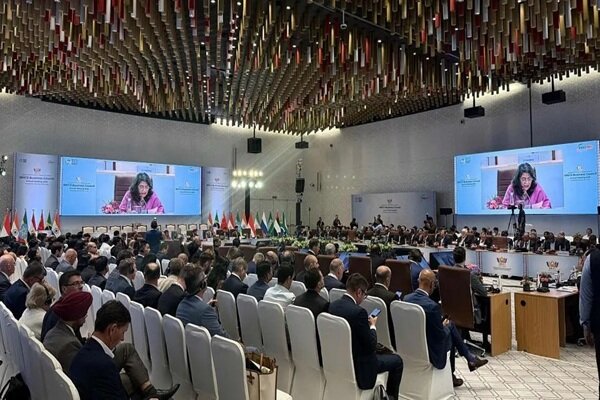
The BRICS Business Council has underscored the importance of reinforcing practical economic cooperation, as detailed in data released by the Mehr News Agency, citing TV BRICS. A meeting of the council in New Delhi saw participants review the outcomes of the council’s work during India’s presidency, approve an annual report, and define future cooperation priorities.
This report is slated for presentation to the BRICS leaders at the upcoming summit on September 13th.
Jaya Shroff, Head of the Indian chapter of the BRICS Business Council, highlighted the work of various working groups over the past year. These groups have examined topics including boosting trade and investment, enhancing supply chain resilience, and leveraging technology. Cooperation in infrastructure, agriculture, energy, finance, aviation, and industry were also key areas of focus for these groups.
Shroff emphasized the economic capacities of the member states, noting that BRICS nations possess large markets, natural resources, manufacturing capabilities, technological firms, financial institutions, and significant research potential. He stressed the need to identify pathways to interconnect these capabilities.
He further added that BRICS countries do not need to establish identical systems or approaches. Instead, it would be more beneficial to identify areas with genuine commercial interests and pursue specific collaborative initiatives.
Liao Lin, Head of the Chinese chapter of the BRICS Business Council, proposed four key areas for the group’s future activities. The first involves implementing the achievements of India’s presidency and expanding trade and economic cooperation.
Lin underscored the alignment of economic cooperation with the ‘BRICS Economic Partnership Strategy 2030’ and the bloc’s new priorities. He stated that the BRICS Business Council should strengthen its role as a bridge connecting the business communities of member states.
Developing new economic growth sources through innovation, artificial intelligence, and green development, strengthening production chains, increasing investment, and expanding the use of national currencies in transactions were other areas proposed by the Chinese chapter.
Andrei Goryev, Head of the Russian chapter of the BRICS Business Council, commented that the priorities of India’s presidency—resilience, innovation, cooperation, and sustainability—are now reflected in the group’s digital projects, green energy initiatives, and food security efforts.
However, he identified differing regulations, customs procedures, and product certification requirements as existing obstacles to economic cooperation, emphasizing the need to remove these impediments.
Goryev also announced that the Russian chapter had presented proposals in nine areas and called for a focus on more advanced projects and increased participation from small and medium-sized enterprises.
Taye Letta Alemu, Head of the Ethiopian chapter of the BRICS Business Council, outlined Ethiopia’s investment capacities and invited member countries to cooperate in industry, energy, agriculture, and electric vehicle manufacturing.
Alemu noted that Chinese investment is present in over 30 industrial parks and special economic zones in Ethiopia, with collaborations progressing towards assembling advanced products and manufacturing solar cells.
Alemu also extended an invitation to Brazilian agricultural companies to develop dairy complexes and clean ethanol production projects, viewing cooperation with Russia in mining and energy as promising. His proposed projects included the production of potassium fertilizer, boron processing, caustic soda production, and geological mapping.
He further discussed cooperation potential with Egypt in the textile sector, maritime logistics, and trade along Mediterranean and Red Sea routes. Alemu also suggested investments from the UAE and Saudi Arabia in clean energy and tourism, as well as cooperation with Iran in the production of fertilizers and pharmaceutical raw materials.
Ennin Diaz Bakrie, Head of the Indonesian chapter of the BRICS Business Council, announced Indonesia’s readiness to become a manufacturing base for Southeast Asia and a gateway to the global market. He identified food and energy security, processing of critical minerals, and the development of modern industries as key areas for cooperation.
Ahmed El Wakil, Head of the Egyptian chapter of the BRICS Business Council, reported that 29 working group meetings were held over the past year, with participation from over 50 specialized working groups and professional associations.
El Wakil emphasized the crucial role of the private sector in BRICS countries and the necessity of strengthening collaboration between public and private sectors to achieve tangible results.
El Wakil also confirmed that the Egyptian chapter of the BRICS Business Council will continue its activities during China’s chairmanship of the group in 2027.


