Iran-US War Redefines Power Dynamics in West Asia
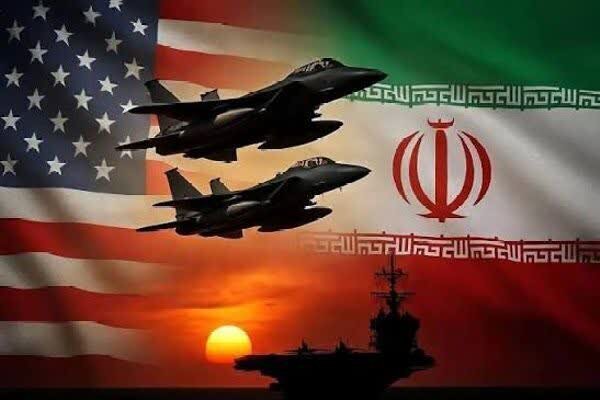
According to the International Desk of Webangah News Agency, the protracted Iran-US war, which began on February 28, 2026, and has now entered its seventh month, is compelling a re-evaluation of the concept of power in West Asia. Experts argue that power can no longer be solely measured by the quantity of military assets such as aircraft, missiles, naval vessels, bases, or defense budgets. While military capability remains a primary condition for survival, the critical distinction lies in the ability to translate military strength into tangible political outcomes.
The conflict’s duration raises fundamental questions for the region about the limits of military, economic, and political endurance for a major military power engaged in a protracted engagement, and its capacity to achieve objectives under such strain. The financial burden is becoming increasingly apparent, with a recent U.S. Congressional Budget Office report indicating that the Department of Defense’s war expenditures had surpassed $38 billion by August 1, 2026. The report also warned of pressure on U.S. ammunition stockpiles and defensive systems, projecting monthly additions of $2 to $3 billion if current engagement levels persist.
These figures, while not determinative of the war’s final outcome, underscore a significant reality: even at the highest levels, power is not limitless. Military operations are ultimately constrained by time, resources, economic capacity, and the ability to sustain operations. The U.S. has articulated goals including weakening Iran’s missile and naval capabilities and preventing its acquisition of nuclear weapons. However, in an ongoing conflict, the number of targets destroyed is an insufficient measure of power. The central question is whether the adversary is ultimately compelled to make decisions regarding its security, foreign policy, and future according to the aggressor’s will. This transition signifies a shift in the concept of power from ‘strike capability’ to ‘influence capability’.
Iran did not initiate this war in a position of economic or technological parity with the United States. Therefore, a simple comparison of military hardware between the two sides presents an incomplete picture. The strategic challenge lies in how effectively a nation under intense pressure can maintain its capacity for response, its decision-making independence, and its ability to rebuild. If this capacity is preserved, the war equation becomes more complex. The opposing side then faces not just a military objective, but a nation capable of making decisions, imposing costs, rebuilding its strength, and leveraging time as a strategic factor.
In such a scenario, power is defined not merely by the moment of engagement but by the capacity to continue the struggle and force the adversary to recalculate. The Strait of Hormuz has emerged as more than just a maritime passage in this conflict; it serves as a testing ground for understanding the nexus between geography, military power, and the global economy. Reports from September 15 and 16 highlight a significant and sustained reduction in maritime traffic through this critical chokepoint. The importance of Hormuz lies precisely in this capability: a geographical point can project its impact from the battlefield to global energy prices, insurance rates, transportation costs, and supply chains across vast distances.
Consequently, Hormuz cannot be viewed solely as a ‘lever of pressure during wartime.’ Current experience demonstrates that geography, when integrated with military capability, energy, economics, and diplomacy, can become an integral component of the power architecture. The Bab el-Mandeb strait mirrors this logic on the other side of West Asia. Developments in Yemen and escalating tensions in the Red Sea indicate that the security of this waterway is intrinsically linked to the Iran-U.S. conflict. Hormuz in the southern Persian Gulf and Bab el-Mandeb at the entrance to the Red Sea are not isolated points but nodes within a larger network.
From this perspective, West Asia is no longer a collection of disparate crises. Energy, shipping, military bases, economies, diplomacy, and geography are interconnected within a single chain. This interconnectedness may represent one of the most significant shifts in the concept of power during the current conflict: an actor’s ability to exert influence can no longer be confined within its own geographical borders. While the war is not yet concluded, planning for its aftermath cannot be deferred until its cessation. Iran’s future challenge extends beyond repairing damaged equipment; a more critical imperative is translating the war experience into a sustainable logic for national power.
This logic must be founded on several pillars: economic resilience, dispersal and rapid reconstruction of vital capacities, strengthening supply chains, maintaining and enhancing deterrence, and transforming geographical assets into economic and diplomatic leverage. The objective should not be merely to retaliate in a future conflict but to ensure that no attack can compromise the nation’s strategic decision-making autonomy. In this context, social capital, national cohesion, and societal beliefs move beyond the periphery of military analysis. In prolonged wars, the capacity to persevere is sustained not only by the number of missiles and aircraft but also by a society’s resilience, hope, cohesion, and the meaning it derives from its stand.
Belief in divine promises, in this framework, can be understood not as a substitute for material power but as a component of a nation’s existential resilience. The war is ongoing, and its ultimate outcome remains uncertain. However, one reality is already observable: in West Asia, future power will not solely belong to the nation possessing more weapons. Power will reside with the actor capable of synergistically employing military strength, geography, economy, resilience, and diplomacy within a unified framework, capable of imposing costs, absorbing them, and crucially, preserving its decision-making independence. In this equation, time is not merely an eroding factor; for an actor with resilience, it can become a source of strength and a catalyst for altering calculations.
From this viewpoint, the current war is not merely a test of military might but a crucible for shaping the rules of tomorrow’s power dynamics. The most significant distinction may lie here: true power is not just the ability to alter the battlefield, but the capacity to transform the battlefield experience into the architecture of the future.