US Troops Conclude Combat Mission in Iraq, Shifting to Advisory Role
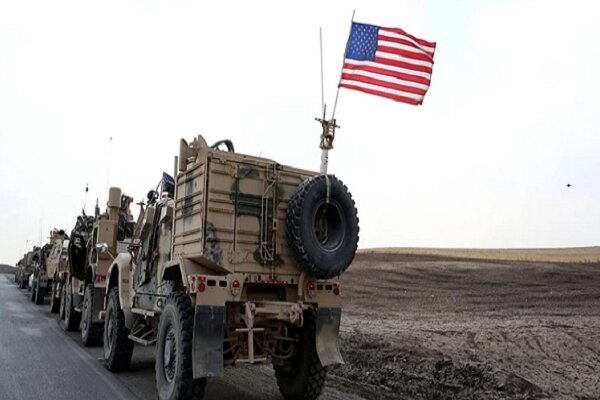
According to the International Desk of Webangah News Agency, Iraqi authorities have confirmed that American forces have departed their last remaining bases in the country on Wednesday, coinciding with the official conclusion of the international coalition’s mission mandate. This event initiates a four-day national holiday in Iraq, designated as “Sovereignty Days,” with the Prime Minister’s office proclaiming October 1st as a “new day on the path of the Iraqi government.”
The withdrawal on Wednesday signifies the culmination of a process that began two years prior, rather than an immediate cessation of U.S. presence. A joint statement between Iraq and the United States on September 27, 2024, had previously outlined a two-phase approach to ending the coalition’s mission. The first phase involved the termination of the military mission within Iraq by the end of September 2025. The second phase, extending until September 2026, was designated for continued support of operations against ISIS in Syria, to be coordinated through a platform established by a high-level joint military committee between the two nations.
On January 18, 2026, the Iraqi Joint Chiefs of Staff formally announced the conclusion of the coalition’s mission and the complete evacuation of bases and command centers in federal regions by coalition advisors. This included major installations like Ain al-Asad Air Base and the Joint Operations Command headquarters. However, logistical support for Syrian operations was slated to continue from an air base in Erbil.
The U.S. withdrawal from its bases in Iraq occurs amidst significant geopolitical pressure, with reports suggesting that Iran’s military actions have compelled the U.S. to vacate numerous regional bases. This context implies that the reduction of forces in Iraq may be more a consequence of missile and drone attacks from Iran and the resulting human and financial damages incurred by American forces, rather than solely a result of security agreements with Baghdad. Despite this, American military presence has largely remained concentrated in northern Iraq.
The Associated Press, citing a U.S. military official, reported that the withdrawal is scheduled to be completed by September 30, with the majority of remaining personnel to be redeployed to Jordan and other regional countries. In recent years, the U.S. military presence in Iraq was approximately 2,500 soldiers, a significant decrease from its peak of over 170,000 troops during the height of operations in 2007. In addition to military personnel, military equipment, including air defense systems, is also being evacuated from Iraq, according to the Associated Press. U.S. officials claim that American air defense systems in Erbil played a role in intercepting Iranian ballistic missiles and drones during recent conflicts, although Iranian armed forces have targeted many American positions within the country.
The departure of troops from bases does not equate to Washington’s complete disengagement from Iraq’s security landscape. While the Iraqi government supports the withdrawal of American forces, the Kurdistan Region has expressed different concerns. The Ministry of Peshmerga has described the withdrawal of U.S. forces as “worrying” without the provision of any defense systems. The 2024 joint statement had initially emphasized a transition to “bilateral security partnerships,” with the U.S. intending to pursue its influence in Iraq through more modern and varied means. Security cooperation talks in July of that year resulted in an agreement for a new phase involving liaison officers, training, and traditional security cooperation programs. Both sides also discussed enhancing the capabilities of Iraqi forces through military aid, arms sales, and financial support, stressing the importance of maintaining American equipment in Iraqi hands and strengthening military training programs.
General Saad Maen, head of the Security Media Cell, stated during the handover of an American facility at Baghdad Airport that this transition would not impede continued security cooperation with international partners based on mutual respect and the preservation of Iraq’s decision-making independence. Consequently, the end of the U.S. military forces’ presence in Iraq does not signify the conclusion of American involvement in Iraqi internal affairs. Instead, Washington is concluding a phase that began with the 2003 invasion, was interrupted by the withdrawal in late 2011, and re-emerged in 2014 with the resurgence of ISIS in Iraq. Although the U.S. is ending its traditional military footprint, it will continue its military and security engagement in Iraq through its embassy, the largest U.S. embassy globally, under the umbrella of security and advisory cooperation.