
Israel’s Upcoming Elections: Four Scenarios for Future Coalition Government
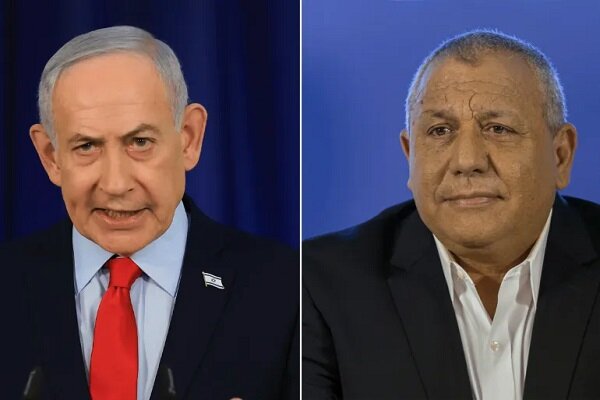
According to the International Desk of Webangah News Agency, with five weeks remaining until the Israeli parliamentary elections, internal polls from the occupied territories reveal significant ambiguity regarding the future balance of power and the opposition. A recurring theme in most analyses and surveys is the ‘precise balance’ between the two rival camps, with neither group yet guaranteed a decisive outcome.
On October 27th, 7.3 million eligible voters in the occupied territories, including 1.2 million Palestinian Arabs (16-17%), will cast their ballots to elect the 120 members of the next Knesset. Among the 38 registered lists, polls suggest that 12 are likely to cross the electoral threshold of 3.25%, equivalent to four seats.
With the exception of surveys conducted by outlets loyal to the Likud party and affiliated with Benjamin Netanyahu, other polls generally agree that neither of the two main rival blocs will secure an absolute majority of 61 seats unless an unforeseen event occurs. Current projections indicate that the ruling coalition or the far-right camp led by Netanyahu, including participants like Ben Gvir and Smotrich alongside other religious parties, could win between 50 to 54 seats, with potential to reach 58 or 60.
The opposing camp, comprising moderate right-wing opposition parties, faces a similar situation. Most polls suggest they are likely to secure 52 to 56 seats. Breakdown of projected seats includes Yesh Atid (21-24), the Blue and White alliance (10-13), Democrats (9-10), and Yisrael Beiteinu (8-9). With the inclusion of the ‘United List’ or the potential accession of a small bloc, this camp could approach the critical mark of 61 seats.
Post-Election Scenarios
Given the current equilibrium between the two blocs, determining the identity of the future government and its prime minister is expected to be challenging. Consequently, four of the most probable scenarios for the Israeli elections are outlined below:
Scenario 1: Netanyahu and his Coalition Return to Power (Probability: Medium to High)
Netanyahu is expected to wage his battle for survival with utmost seriousness, viewing it as a personal struggle. The extremist and fascist right-wing elements perceive this contest not merely as a ‘decisive battle’ with Palestinians, Arab neighbors, and Iran, but as a ‘rare opportunity’ to reconstruct the ‘Jewish state’ in their own image and style. Netanyahu will leverage all his capabilities to sow discord among the opposition and entice wavering individuals with promises of ministerial portfolios. He will likely exploit his rivals’ weaknesses and vulnerabilities to dismantle them. Using the leverage of ‘alliance with the left and Democrats’ and relying on Arab votes to form a coalition, he might strategize against Benny Gantz. Similarly, employing the guise of ‘liberalism,’ which could threaten the project of ‘nationalism and Judaization of the state,’ he may target Naftali Bennett. Netanyahu has a proven track record of dividing his opponents, demonstrated in 2011 with Ehud Barak and Labor party members, in 2020 with Benny Gantz leading the Blue and White alliance, and in 2022 with Naftali Bennett’s Yamina party. By luring two Knesset members, Idit Silman and Amichai Chikli, to his side, he dissolved Bennett’s 61-seat coalition. These two later secured guaranteed spots on the Likud list and ministerial positions in Netanyahu’s cabinet.
Conversely, Gadi Eisenkot may benefit from Netanyahu’s declining public approval and the regional and international climate seeking Netanyahu’s ouster. This sentiment is evident in European and American positions, as well as in the clear implications of regional warnings issued before October 7th that were not heeded.
Scenario 2: Coalition Led by Gadi Eisenkot and the Opposition (Probability: Equal to Scenario 1)
Gadi Eisenkot might have the opportunity to form a government, but he will face considerable difficulties. Key elements of the opposition coalition, specifically Bennett and Lieberman, are reluctant to rely on Arab votes, whether within or outside the coalition. He will also encounter opposition from the leader of ‘Yisrael Beiteinu’ against the inclusion of religious parties like Shas in the coalition—parties that previously allied with Labor and Likud to secure their budgetary share.
Gadi Eisenkot will capitalize on Netanyahu’s declining public approval and the international inclination to end the Netanyahu era. He will lean on the opposition’s unifying slogan today: ‘Anything but Netanyahu.’
Scenario 3: The Isaac Herzog Scenario (Probability: Weak to Medium)
This scenario is termed the ‘Isaac Herzog Scenario.’ The President of the Israeli regime has demonstrated readiness to utilize all legal, judicial, and moral tools to resolve the governmental formation deadlock. He is strongly opposed to Netanyahu’s far-right government, believing its policies and actions have severely damaged the regime’s image and international standing, leading to its isolation on the global stage.
Following the official announcement of election results, which must occur within eight days, Herzog will consult parliamentary factions and then task an individual capable of forming the broadest possible coalition within 14 days. This assignment does not necessarily require the winning coalition to be the one to form the government. Israeli sources suggest Herzog may extend deadlines for the designated coalition builder. He is also prepared to make consultations public to expose any party causing delays in government formation to public scrutiny.
However, the most significant obstacle Herzog faces is Netanyahu’s objection to a ‘rotation’ where Gadi Eisenkot would serve as Prime Minister first. Furthermore, Eisenkot’s refusal to partner with Netanyahu in a single cabinet, a stance shared by other opposition leaders, presents another hurdle.
Scenario 4: A Vicious Cycle of Early Elections in the Occupied Territories
If the process of forming a government does not proceed according to the legal timelines stipulated in the Israeli Basic Law, a five-month period may ensue for the formation of a new cabinet. During this phase, the Knesset would be compelled to dissolve itself and call for early elections within three months. The current government would continue to function as a ‘caretaker government,’ possessing sufficient authority for routine operations.
Israel has experienced early elections, notably between April 2019 and March 2021, which saw four elections within two years, culminating in the formation of the Bennett-Lapid government, which proved short-lived. Such a scenario could serve as Netanyahu’s ‘third line of defense,’ particularly if he fails to form a right-wing government from his current coalition or cannot persuade Gadi Eisenkot to agree to a rotational government where he serves as Prime Minister first. This scenario would keep him in power, even as a caretaker government, potentially shielding him from impending trials and investigations or at least allowing him to control their pace.


