
Brazil Election Heads to Runoff: Bolsonaro Leads Lula in First Round
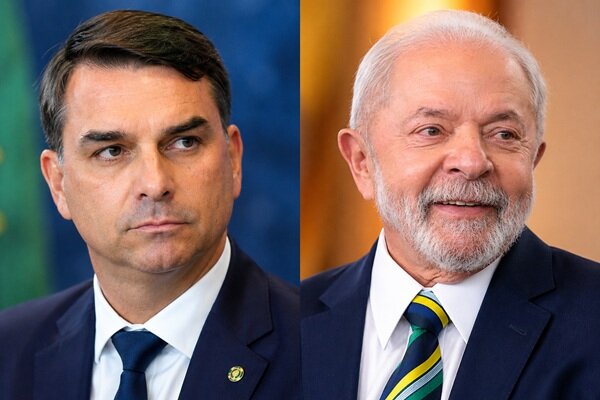
According to the International Desk of Webangah News Agency, Brazil’s Supreme Electoral Court announced that with 99.99 percent of votes counted, Jair Bolsonaro of the Liberal Party secured 56,104,268 votes, representing 47.03 percent of valid ballots, placing him in the lead. Incumbent President Luiz Inácio Lula da Silva followed with 53,876,617 votes, or 45.16 percent.
As neither candidate surpassed the 50 percent threshold for valid votes, Bolsonaro and da Silva will compete in a runoff election scheduled for October 25, 2026 (November 3, 1405 in the Iranian calendar). Da Silva expressed surprise at the first-round results, having anticipated a victory, but vowed to launch a new campaign for the second round starting Monday. Bolsonaro, conversely, stated the outcome indicates Brazil’s desire for change.
Official data indicates 125,272,513 valid votes were cast. Additionally, 2,300,781 blank votes and 3,674,149 invalid votes were registered.
Defeated Parties Declare Neutrality
Following the confirmation of Bolsonaro and da Silva advancing to the runoff, other candidates reacted to the first-round results. Romeu Zema of the Novo Party declared opposition to the Workers’ Party in the second round, without explicitly naming Bolsonaro. Augusto Cury of the AVAANTE Party announced he would not endorse either candidate and hoped the victor would consider proposals from his and other eliminated candidates’ campaigns. Ronaldo Caiado and the Brazilian Social Democracy Party (PSDB) decided to allow party members freedom in choosing between the two runoff contenders. Gilberto Kassab, the party leader, noted that this approach would be maintained for the second round, aligning with the autonomy of state chapters in electoral alliances. Renan Santos, the fourth-place finisher from the Patriota Party, also stated he would not support either candidate and granted his party members free choice.
Right-Wing Figures Welcome Bolsonaro’s Lead
U.S. President Donald Trump was among the first world leaders to react to Brazil’s election results. In a post on Truth Social, Trump mistakenly conflated the Brazilian election with India’s, claiming 125 million people voted in the ‘Indian presidential election’ with immediate results. He then contrasted this with the protracted vote counting in U.S. cities like Detroit and Philadelphia, and in California, calling the U.S. voting system ‘corrupt’ and initially typing ‘rigged’ before correcting it to ‘calculated.’ Javier Milei, a right-wing ally of Trump in Latin America, also responded. After Bolsonaro’s lead became apparent, Milei posted on X in support, stating, ‘Freedom advances in Brazil. Congratulations to my dear friend Jair Bolsonaro for this historic election against the communist Lula.’ He expressed hope for increased cooperation between their countries in trade, culture, and politics. Former Colombian President Iván Duque congratulated Bolsonaro on his first-round lead while commending Brazil’s electoral institutions and voters, noting the election strengthened Brazil’s institutions and public participation. Prime Minister Benjamin Netanyahu of Israel also congratulated Bolsonaro and wished him success in the final round, stating, ‘I look forward to reviving the fantastic friendship between Israel and Brazil.’
Significant Role of Blank and Invalid Votes in Runoff
Pre-election polls showed da Silva leading Bolsonaro by 47 percent to 46 percent, a margin within the 2 percent margin of error. An AtlasIntel/Bloomberg poll showed Bolsonaro ahead at 47.7 percent to da Silva’s 47.6 percent, with a 1 percent margin of error. The final CNT/MDA poll indicated da Silva leading 47.3 percent to Bolsonaro’s 43.1 percent, but this difference was considered a statistical tie given a 2.2 percent margin of error. Analyses of final campaign polls suggested no candidate had a stable lead outside the margin of error, with some favoring da Silva and others Bolsonaro. The actual result differed from many late polls, with Jair Bolsonaro securing 47.03 percent of valid votes to da Silva’s 45.16 percent. Reuters reported Bolsonaro’s stronger-than-expected performance in the first round, as most pre-election surveys had placed da Silva in the lead. Political analyst Rafael Favetti noted that protest votes might initially benefit Bolsonaro, but his ability to attract new votes in the second round would depend on how these votes are transferred.
Augusto Cury, who finished third, has declared neutrality in the runoff, as have Ronaldo Caiado and Renan Santos. Approximately 8 percent of the votes from these candidates remain undecided for the second round. The key variable for the runoff will be the distribution of votes from eliminated candidates and the turnout, including blank and invalid votes. The second round of the election is scheduled for October 25, 2026 (November 3, 1405 in the Iranian calendar).


