
Ukraine and Russia Intensify Attacks on Critical Infrastructure Amidst Ceasefire Proposals
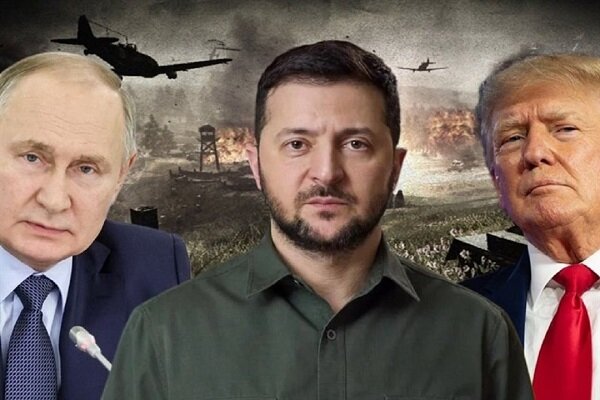
According to the International Desk of Webangah News Agency, amidst ongoing diplomatic efforts and the emergence of four limited ceasefire proposals for the war in Ukraine, battlefield realities are indicating a rise in tensions rather than a de-escalation. Both Russia and Ukraine have intensified their strikes on each other’s critical infrastructure, with Moscow targeting bridges in Kyiv and Kyiv reporting an increase in attacks on Russian oil refineries. Concurrently, diplomatic initiatives continue to seek a halt to parts of the conflict, and the possibility of further negotiations has been raised.
This situation appears contradictory at first glance: on one hand, the United States, India, Turkey, and Egypt have put forward proposals for a partial cessation of hostilities; on the other hand, reciprocal attacks have intensified. However, recent developments suggest that increased military pressure may be part of both sides’ efforts to strengthen their positions before any potential negotiations.
Kyiv’s Bridges Under Scrutiny
In recent days, bridges in Ukraine’s capital have become a focal point for Russian operations. Vitali Klitschko, the Mayor of Kyiv, announced that during an attack on Sunday, a Russian drone struck a northern bridge over the Dnipro River, damaging its roadway. Two people were injured in the incident, and a section of the heating system was also affected. The Russian Ministry of Defense confirmed targeting the bridge, stating it is used for the transfer of military personnel and cargo. Moscow also reported striking two cargo ships which, according to their statement, were transporting military equipment towards the port of Odesa.
These attacks come after three other bridges in Kyiv had already been closed entirely or partially due to Russian assaults, disrupting urban transit. Volodymyr Zelenskyy reacted to these developments by stating, “They are targeting bridges; do they really think we won’t respond?” The Ukrainian President further alleged that Russia’s objective is to weaken Ukraine’s capacity to continue its resistance.
Kyiv’s Response: Russian Refineries
In response, Ukraine has focused its pressure on Russia’s energy infrastructure in recent months, with Zelenskyy announcing Kyiv’s intention to escalate attacks on Russian refineries. The Ukrainian President described this action as a response to what he termed Russia’s “new doctrine,” asserting that Moscow’s increased pressure on Ukrainian infrastructure aims to diminish the country’s ability to maintain normal operations and life. Consequently, a form of confrontation has emerged between two types of infrastructure: Russia is applying pressure on Ukraine’s communication and logistical routes, while Kyiv is targeting Russia’s refineries and energy infrastructure.
This confrontation is not solely military in nature. Energy and transport infrastructure impacts both sides’ operational capabilities and can also increase the economic and social costs of continuing the war.
Four Ceasefire Proposals
Amidst this context, Ukraine’s Foreign Minister announced the receipt of four proposals for limited ceasefires from the United States, India, Turkey, and Egypt. According to Andrii Sybiha, India’s proposal is more comprehensive than the others. Turkey and Egypt have put forward proposals concerning a halt to hostilities in the Black Sea, while the U.S. has called for an end to attacks on energy facilities. Kyiv has indicated its readiness to consider a simultaneous ceasefire in the energy and Black Sea sectors, even expressing preparedness for an unconditional ceasefire on the front lines.
Based on the Foreign Minister’s explanations, a cessation of hostilities in the energy sector could encompass all energy facilities and even port infrastructure. One of the most significant proposals put forth by Kyiv is that if Russia ceases attacks on Ukraine’s power grid, Ukraine will halt attacks on Russian refineries. This proposal effectively suggests a mutual cessation of pressure on the vital infrastructure of both countries.
However, Moscow has not yet accepted such an exchange. Last Thursday, Vladimir Putin described the proposal to halt attacks on Russian refineries in return for stopping attacks on ships as “ridiculous” at the Valdai Forum.
Why Military Pressure Increases Amidst Ceasefire Talks?
This is a crucial point in recent developments. Increased military pressure does not necessarily signify the abandonment of diplomatic avenues. In many negotiations concerning military conflicts, parties strive to possess greater leverage before seriously engaging in dialogue. From this perspective, Russia’s targeting of bridges could be an attempt to limit Ukraine’s capacity for troop and equipment movement, while Kyiv’s increased pressure on Russian refineries might aim to raise Moscow’s economic and energy costs.
In other words, both sides may wish to enter negotiations from a position of greater leverage if they are to sit at the negotiating table. Of course, this interpretation does not imply that a ceasefire agreement is imminent or certain. Russia’s opposition to some of the proposals and the continuation of reciprocal operations indicate that the gap between the parties’ positions remains significant.
New Negotiations on the Horizon?
Alongside these developments, Zelenskyy announced that two U.S. peace envoys are working to facilitate a tripartite technical-level meeting by the end of October. Kyiv has expressed readiness for such a meeting to be held in the UAE or another country. However, no specific date for this meeting has been announced, and more importantly, it remains uncertain whether the battlefield conditions and existing disagreements will allow the ceasefire proposals to move beyond diplomatic concepts and materialize into a practical agreement.
Currently, Ukraine is facing a set of limited proposals for a cessation of hostilities, while military pressure simultaneously continues. The bridges of Kyiv and the refineries of Russia have become symbols of this situation, where diplomacy and military pressure advance in parallel. From this viewpoint, the main question is not only whether a new ceasefire will be formed, but whether the intensification of reciprocal pressures will serve as a prelude for the two sides to enter negotiations from a new position, or if the chasm between the battlefield and diplomacy will propel the war in Ukraine into a new phase.


