
Trump Faces Electoral Challenge as Iran Conflict Escalates, Posing Economic and Political Risks
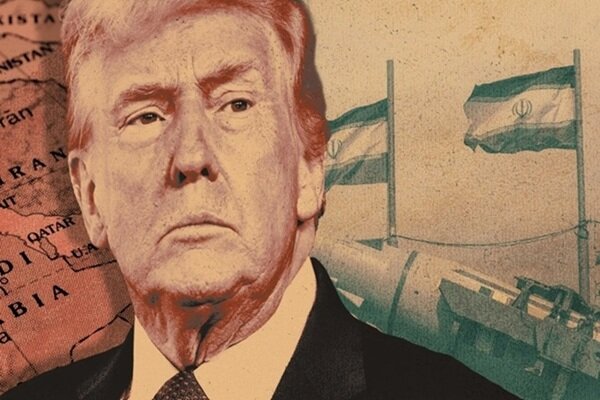
According to the International Desk of Webangah News Agency, Washington’s efforts to manage aggression against Iran are increasingly challenged as the geographic scope of the crisis expands beyond initial U.S. calculations. This escalation, from the Strait of Hormuz and soaring energy prices to the Bab al-Mandab strait where recent Ansarallah advances have intensified pressure on vital trade and energy routes, presents President Trump with a difficult test as the November 3, 2026, midterm elections approach. All 435 seats in the House of Representatives and 35 of the 100 Senate seats are up for grabs. The core question is whether a president insistent on demonstrating power and continuing military pressure against Iran can effectively manage the escalating costs of war, economic discontent, and declining public support until election day.
A drop in Trump’s approval rating to 33 percent and a decline in support for military action against Iran to 31 percent, coupled with widespread American concerns about a prolonged conflict, indicate that the ongoing confrontation is no longer solely a foreign policy issue but could become a direct electoral liability for Republicans. Experts suggest that the belligerence against Iran is less a test of America’s long-range strike capabilities and more a trial of its capacity to sustain military power in a war of attrition. Brookings assessments highlight that Iran’s strikes have targeted hundreds of U.S.-used sites, challenging the long-held assumption of immunity for American forward bases and naval vessels. The strain on ammunition reserves and the need for replenishment further increase operational costs, indicating that while Washington retains operational capacity, sustaining this level of military engagement is no longer as simple as it once was.
This vulnerability is also evident at the regional level. The U.S. faces a network of bases and allies that, in the event of war expansion, could become points of reciprocal pressure rather than solely supporting Washington’s power. Simultaneously, Ansarallah’s advances in western Yemen, including the capture of Mukha and the strategic island of Miyun, have extended pressure to the Bab al-Mandab. This strait, alongside Hormuz, has become a second critical chokepoint in the conflict, threatening the security of energy and trade routes. The simultaneous importance of Hormuz and Bab al-Mandab cannot be overstated. While disruptions at Hormuz significantly affect oil transit, Ansarallah’s consolidation of its position in Bab al-Mandab also jeopardizes alternative energy transfer routes. The attack on Saudi Arabia’s oil infrastructure temporarily halted operations on its East-West pipeline, while oil prices have surged past $100 per barrel amidst these conditions. Consequently, Washington is confronting not just one adversary in a single geography but must simultaneously bear the costs of securing two strategic chokepoints and supporting its allies.
In this context, the central question is no longer whether the U.S. can launch attacks, but rather if it can sustain this level of conflict, protect its forces and bases, ensure ammunition supply, and maintain the security of energy routes over the long term to achieve a clear political gain. When a conflict strains military reserves and capacity, renders U.S. bases more vulnerable, and extends the crisis from Hormuz to Bab al-Mandab, America’s power limitations transform from a political assertion into an operational and strategic challenge.
Contrary to expectations that the approaching midterm elections might prompt greater caution, Trump has not only refrained from withdrawing from attacks against Iran but has resumed military aggression after temporary lulls, despite past setbacks. The continuous aggressive strikes for thirteen consecutive nights, followed by targeting civilian areas, including an attack on a wedding ceremony in Kouhestak, demonstrate Washington’s continued hope that military pressure can be leveraged to impose its demands, even at the cost of increased political and security repercussions. The U.S. attack on a wedding ceremony in Kouhestak, Sirik, occurred as follows: [//media.mehrnews.com/d/2026/09/02/3/6158591.jpg?ts=1788326404406].
Trump’s actions appear to be more an attempt to evade political defeat than a clear strategy for ending the war. While Washington can target facilities and objectives despite significant costs incurred by Iran’s response, it has not achieved the complete destruction of Iran’s nuclear and missile capabilities, which have become indigenous industries, nor has it fundamentally altered the country’s political structure to achieve what could be definitively termed a victory. Consequently, Trump is inclined to escalate attacks to raise the cost of Iranian resistance while simultaneously deferring the war’s end to a later date, recently suggesting a potential end to the conflict after the midterm elections.
This contradiction is also evident within the United States. While Trump justifies the war as a necessity to showcase American power, public opinion remains unsupportive. A Reuters/Ipsos poll reveals that only 31 percent of Americans back military action against Iran, with 83 percent expecting the conflict to continue for an extended period. Concurrently, rising fuel prices and concerns about the economic costs of the war have widened the gap between the government’s narrative of victory and the daily experiences of citizens. To bridge this divide, Trump has resorted to domestic political and economic tools. The promise of a $5,000 “Trump dividend” to every adult if Republicans retain control of Congress is a strategic attempt to shift the electoral narrative, transforming the war and its economic consequences from a political vulnerability into a tangible promise for voters.
This promise, however, faces questions regarding its cost exceeding one trillion dollars, its funding sources, and its impact on the budget deficit. Therefore, Trump finds himself in a position where, prior to the elections, he has no easy exit from the war and cannot disregard its costs. This leaves him oscillating between escalating pressure to project an image of victory and preventing the war from becoming a symbol of Republican defeat.
The U.S. midterm elections are approaching for Republicans at a time when the war with Iran is no longer a distant foreign crisis, but its effects are directly impacting voters’ economic lives. Disruptions in Hormuz and the growing threat in Bab al-Mandab have made rising oil and fuel prices a primary channel for transmitting the war’s costs into the United States. These costs, starting at the gas pump, ripple through transportation, production, and commodity prices, affecting the entire economy. The longer the war persists, the more Trump and Republicans will be compelled to provide answers for an electoral issue that, unlike many foreign policy matters, directly impacts voters’ monthly expenses and grocery budgets.
From this perspective, the promise of several thousand dollars per adult American cannot be viewed merely as an economic pledge. It is part of Trump’s effort to reframe the political calculus of the war. If rising fuel prices and conflict-related expenses have made the war a cost for the voter, the President is attempting to define a direct benefit for that same voter in return. In essence, Trump is trying to shift the war’s bill from “What has been taken from American pockets?” to “What will come to you from the government?”
This tactic, however, harbors a fundamental contradiction. A disbursement of approximately $1.2 to $1.35 trillion requires specific funding sources and congressional approval. If it leads to an increased budget deficit or inflationary pressures, it could exacerbate the very problem the electoral promise aims to neutralize. The deeper issue for Republicans lies in political trust. Polls indicate Trump’s approval rating hovers around 33 percent, with only 31 percent of Americans supporting military action against Iran. Conversely, 83 percent anticipate a protracted conflict. This combination of figures is significant, suggesting that the opposition is not merely to a specific military operation but reflects a broader American doubt regarding the government’s ability to conclude the crisis swiftly and cost-effectively.
If Trump fails to present clear achievements by the election, the narrative of power and victory could give way to one of prolonged war, expensive fuel, and escalating costs—a narrative far more perilous for Republican candidates in competitive districts than a simple dip in the president’s popularity. This context helps explain Trump’s insistence on continuing belligerent policies. A withdrawal without a presentable outcome would not just signify the end of a foreign operation but could imply an acceptance that U.S. military power failed to achieve Washington’s intended political objective. Thus, Trump is trapped in a difficult equation: continuing the war increases economic and electoral costs, while ending it without tangible gains risks turning the war into a symbol of governmental failure. Consequently, the midterm elections are not merely a contest for congressional seats for Republicans; voters will essentially be casting a ballot on the policy record that Trump is attempting to reframe from an electoral crisis into a victory narrative through displays of power, the $5,000 promise, and the pledge of ending the war post-election.


