US Public Opinion Shifts Against Iran Conflict, Posing Political Challenge for Trump
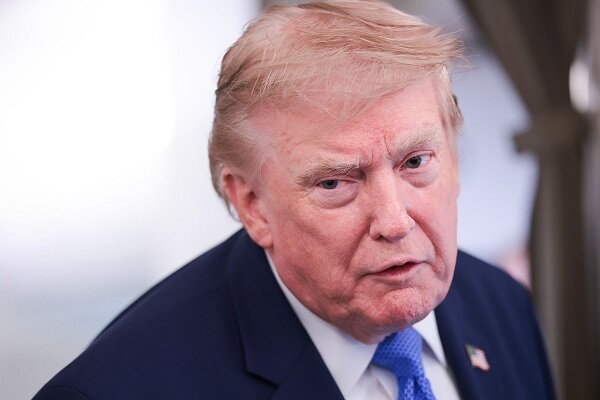
According to the International Desk of Webangah News Agency, mounting public disapproval in the United States regarding the unsuccessful conflict against Iran, alongside escalating fuel costs and anxieties about American military casualties, has become a critical issue for Donald Trump‘s administration. This challenge could extend beyond military implications, potentially weakening the Republican Party’s position in the upcoming midterm congressional elections and constraining the U.S. President’s political power.
A recent poll by the Pew Research Center reveals that 65 percent of Americans disapprove of Trump’s handling of the U.S. military action against Iran, with only 33 percent supporting his performance. These figures indicate a rise in dissatisfaction within American society compared to March, when opposition to Trump’s approach stood at 61 percent. The significance of this trend is amplified by the observation that opposition to the war is not confined to traditional Trump opponents, with emerging signs of shifting views among Republicans and independent voters leaning towards the party.
This development should be understood within the context of the disparity between Washington’s stated objectives and the costs borne by American society for the continuation of military operations. While the Trump administration may continue to emphasize the necessity of sustained pressure on Tehran, ongoing conflict, increasing economic burdens, and concerns about the expansion of operations are fueling public questions in the U.S. about the achievements of this policy and the duration for which citizens must bear its costs.
From Promise of Swift Victory to Fear of Prolonged War
A key indicator of the changing U.S. public sentiment is the increasing pessimism regarding the end of the conflict. According to the Pew Research Center survey, 47 percent of respondents believe the war will continue for over another year, and 30 percent expect the situation to last between six months and a year. These figures represent a substantial shift from March, when 43 percent of Americans anticipated operations concluding within six months or less.
These altered expectations carry political weight for the Trump administration, as the longer the conflict’s end horizon appears, the more difficult it becomes to justify its costs to the public. A war intended for a clear and swift resolution, if it devolves into a protracted struggle, will gradually erode the political capital of its initiators. In such circumstances, even without a decisive development on the ground, rising costs and the absence of a clear outlook for the operation’s conclusion can alter citizens’ evaluations of the government’s performance.
It is important to distinguish between opposition to the management of the war and opposition to the initial decision to employ military force. According to the same survey, only 34 percent of Americans consider the initial decision to use force against Iran to be correct—a figure that has decreased by four percentage points since March. Therefore, the issue is not merely the execution of operations but also the fundamental decision to engage militarily, which is now facing increased skepticism. This situation could complicate the White House’s efforts to portray the continuation of operations as a necessary and unavoidable path.
Expensive Gas: A Front Trump Faces Domestically
Despite the significance of military developments, one of the most crucial factors determining the political fate of the war is its impact on the daily lives of Americans. In U.S. domestic politics, fuel prices are among the indicators that citizens directly feel, and they typically hold the incumbent administration responsible for increased living costs. Consequently, rising gasoline prices can have repercussions beyond the economic sphere, becoming a factor in the president’s declining popularity.
According to published data, gasoline prices in the U.S. have reached approximately $4.36 per gallon, marking a roughly 40 percent increase compared to the previous year. Concurrently, 73 percent of Americans express significant concern about the rising prices of gasoline and fuel. Concerns from 71 percent of respondents about U.S. military personnel being wounded or killed, and 58 percent about the potential deployment of ground troops to Iran, indicate that public opinion is sensitive to human and military risks of the conflict, alongside economic costs.
In this context, an op-ed by Rex Hophke in USA Today has drawn a connection between rising fuel prices and the political responsibility of Trump and Republican members of Congress, who, according to the author, have taken no action to halt the war. This assessment reflects a significant reality in American politics: the cost of government decisions can ultimately become an electoral issue, holding representatives of the ruling party accountable.
Deploying More Troops: A Sign of Strength or Difficulty Exiting Crisis?
Amidst growing signs of public dissatisfaction, the Trump administration continues to emphasize the ongoing naval blockade of Iran, citing the prevention of Tehran acquiring nuclear weapons as one of its objectives. Reports also indicate the deployment of approximately 9,000 sailors and Marines and a third U.S. aircraft carrier to the region, movements that could bring the number of U.S. aircraft carriers stationed in the Middle East to three by late October.
Washington may present these actions as a demonstration of maintained military pressure and enhanced operational capability, but increased military presence alone does not prove the attainment of political and strategic goals. The decisive question is whether troop increases can lead to a sustainable outcome or merely escalate the costs and risks of continued engagement. If military operations fail to achieve their declared objectives within an acceptable timeframe, deploying more equipment and personnel might be perceived not as a display of success but as a sign of a more difficult path out of the crisis.
The decline in public support for the war is also significant in this context. CNBC, referencing the drop in support for military action against Iran, cited a joint Reuters-Ipsos poll from August, which found only 31 percent of Americans supported such action. While differences in polling dates and question phrasing should be considered when comparing results, the aggregate of this data points to a serious challenge for the Trump administration in securing public approval.
The ramifications of this situation could become more apparent in the midterm congressional elections. If voters attribute rising living costs, concerns about military casualties, and the prolongation of the war to the administration’s decisions, Republicans might lose some of their electoral support. A shift in the composition of Congress could also enhance Democrats’ oversight and investigative powers, making it more difficult for the administration to advance its agenda.
Ultimately, the conflict with Iran is more than just a foreign policy file for Trump; it has become a test of the credibility of his promises, the administration’s ability to manage costs, and the American public’s tolerance for a prolonged crisis. Increased public dissatisfaction alone does not necessarily signal a definitive defeat for Republicans in elections or the end of Trump’s power, but it can raise the political cost of continuing the war. If the White House fails to balance military objectives, economic costs, and the expectations of American society, the bill for these decisions may be presented at the ballot box—where even the U.S. President cannot ignore the consequences of public discontent.