
Moscow Security Assembly: National Health as a Pillar of Global Stability
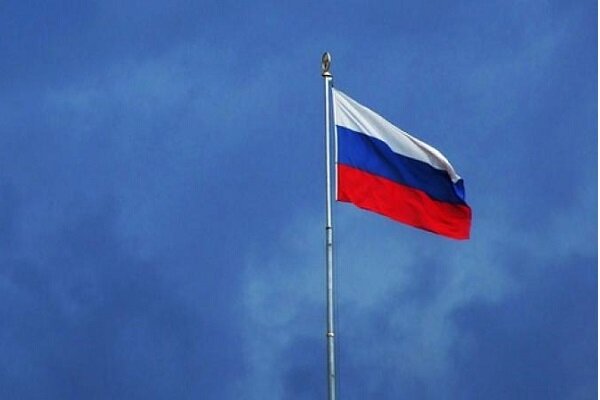
According to the International Desk of Webangah News Agency, the Moscow International Security Assembly, hosted by the Security Council of Russia in the Moscow region, has begun. The event is attended by over 140 foreign delegations representing more than 120 countries globally, including member states of BRICS, the Shanghai Cooperation Organization, the Association of Southeast Asian Nations (ASEAN), African nations, and countries from West Asia and Latin America.
On the inaugural day, a roundtable discussion titled “The Power of Cooperation for the Health of Nations” was initiated by the Russian Ministry of Health. Mikhail Murashko, the Russian Minister of Health, stated in his address that public health is a fundamental factor in a nation’s sustainability, asserting that the well-being of populations fosters governmental cohesion and stability. He underscored the necessity of international collaboration in this domain to effectively counter global threats.
Murashko highlighted that infectious diseases transcend borders and emphasized that a robust national healthcare system significantly contributes to global security. He further noted that efficient cooperation among nations aids in maintaining stability against worldwide challenges.
The Russian Health Minister also outlined Russia’s healthcare priorities for the period leading up to 2030. These priorities include strengthening primary healthcare services, disease prevention for non-communicable illnesses, advancing digital transformation within the sector, and increasing the healthcare workforce.
Murashko announced that Russia has achieved advancements in vaccine production technologies and possesses the capability to develop vaccines for various diseases, including Ebola. He pointed out that pandemics, biological threats, workforce shortages, and cyberattacks are interconnected not only with healthcare systems but also with national security.
Maria Zakharova, Director of the Information and Press Department of the Russian Ministry of Foreign Affairs, speaking with TV BRICS, emphasized the importance of cooperation among BRICS nations in the sphere of international information security. She mentioned that information security cooperation has been on the BRICS agenda since 2013, and member states have successfully developed common approaches to establish a comprehensive cybersecurity system. This system, she explained, is founded on the principles of sovereign equality of states, non-interference in internal affairs, and the pivotal role of the United Nations.
Zakharova further elaborated that a joint BRICS mechanism for information exchange and coordination in response to cyberattacks was launched in 2024, with ongoing cooperation in combating cybercrime and coordinating efforts between scientific and expert centers.
Khambudzo Vuyisile Ntsheleni, Minister in the Presidency of South Africa, referencing the experience of the COVID-19 pandemic, stated that global cooperation has demonstrated the ability to contain epidemics through international coordination.
Batyr Berdiklychev, the World Health Organization’s Representative in Russia, affirmed that international collaboration facilitates the swifter identification of threats, the exchange of research findings, and coordinated responses to crises. He added that experience has shown that the resilience of healthcare systems directly impacts economic stability, national security, and public trust within countries.


