Najab Resistance Official Denounces Calls for Disarmament, Cites U.S. Interference
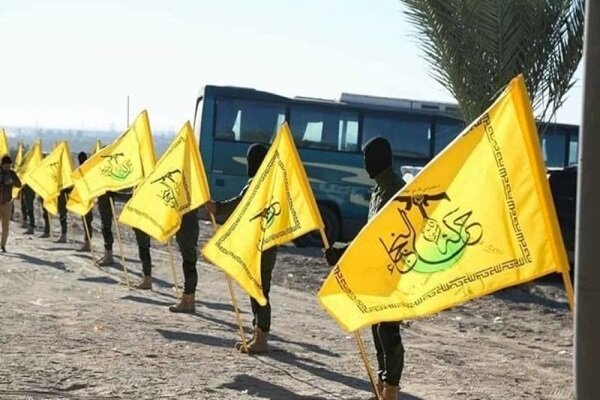
According to the International Desk of Webangah News Agency, Sheikh Nazem Al-Saidi, the deputy secretary-general and head of the executive council of the Iraqi Najab Resistance, stated that any discussion regarding weaponry must be comprehensive, fair, and adhere to a single standard. He questioned why there is no mention of disarming the Kurdish Peshmerga or the arms stockpiles belonging to influential individuals and parties.
Al-Saidi further elaborated that Iraqi Shiites have consistently been targets of hostile projects. He warned that resistance groups are currently under attack, followed by the Popular Mobilization Forces (PMF), and then the army itself, with the aim of leaving Iraq with no capacity to defend itself.
He described the politicization of the resistance and discussions about integrating the popular mobilization as a dangerous phenomenon, lamenting that the system of political quotas has corrupted many institutions.
Al-Saidi recalled that prior to the establishment of the PMF, the army and police possessed adequate numbers and equipment. The issue, he asserted, stemmed from cowardly and treacherous leadership, which was itself rooted in political quotas and pressures.
Addressing arguments that cite a statement from religious authority to justify disarming the resistance, Al-Saidi pointed out that the same statement also called for people’s rights, including governance based on merit and integrity, prevention of foreign interference, and the rule of law. He questioned whether these conditions have been met, with corruption ended, meritocracy established, and foreign interventions ceased.
He highlighted the free movement of the U.S. ambassador between Israel, the UAE, and Iraq, dictating Washington’s demands to Baghdad. Al-Saidi questioned Iraq’s sovereignty if it lacks complete control over its airspace, land, and major decisions.
The official emphasized that the resistance’s weaponry is currently the sole guarantor of Iraq’s security, and no patriotic, rational person would willingly relinquish this strong guarantee. He concluded that as long as the U.S. embassy interferes in Iraq’s affairs, the country will not see stability, citing the energy crisis and other sovereign issues as evidence of these interventions’ impact.