
Russia-Iran Trade Thrives Amid Geopolitical Tensions, Projects Advance
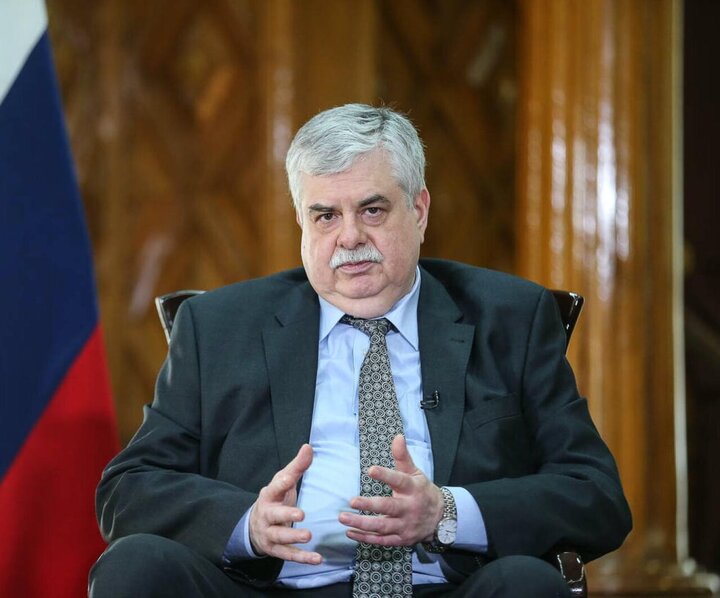
According to the International Desk of Webangah News Agency, Russian Ambassador to Iran Alexey Dedov stated that economic and trade cooperation between the Russian Federation and the Islamic Republic of Iran is maintaining an active and upward trend despite complex geopolitical circumstances. He highlighted that bilateral trade volume reached approximately $5.8 billion in 2025, a 21% increase from the previous year. This positive trajectory has persisted even amidst current conflicts, with a modest 2% growth in bilateral trade observed between January and April 2026, despite disruptions in some logistical chains. A significant factor in this growth is the full implementation of the free trade agreement between the Eurasian Economic Union (EAEU) and Iran, which became effective on May 15, 2025. In its first year, trade between Iran and EAEU member states increased by 15%, demonstrating the mechanism’s effectiveness in providing preferential trade conditions for about 87% of traded goods.
Official statistics from the Iranian side indicate that trade with EAEU member states reached approximately $7.3 billion in the Persian year 1404 (March 2025 to March 2026), marking a 22% increase. Russia continues to be Iran’s most significant trading partner within the EAEU. Ambassador Dedov also emphasized the ongoing redirection of goods to new routes and increased utilization of the International North-South Transport Corridor. In the first four months of 2026, Russian exports to Iran surged by over 56%, with the total volume of cargo transported along this route reaching approximately 2.2 million tons, an 87% increase. The completion of necessary legal and domestic procedures in Iran for the intergovernmental agreement on mutual recognition of Authorized Economic Operators, signed on May 17, 2023, is expected to further accelerate the development of trade and economic relations between the two countries by facilitating optimal customs conditions.
Regarding potential reconstruction efforts, Ambassador Dedov confirmed that Russian industrial, construction, design, engineering, scientific, and technological entities possess unique capabilities. He stated that upon receiving official requests and proposals from Iranian partners, Russia is prepared to promptly review them and present concrete cooperation proposals. Concerning the Bushehr nuclear power plant, he assured that the priority remains the full security of personnel and adherence to nuclear and radiation safety requirements. Decisions regarding the return of Rosatom specialists will be made in coordination with Iran, based on prevailing conditions and regulations. Specialists will return as soon as it is confirmed that there is no risk of renewed military conflict and the safety of personnel is guaranteed.
The operational status of other joint projects, including the Rasht-Astara railway and the Hormoz nuclear power plant, was also addressed. Excavation and field studies are ongoing for the Rasht-Astara railway project, with aerial surveys completed and Russian and Iranian experts examining water sources along the route. For the Hormoz nuclear power plant, Russian and Iranian companies are actively negotiating the contractual framework, with a joint meeting scheduled in Moscow in late June or early July. Discussions are also progressing regarding the potential construction of small-scale nuclear power plants in Iran, with Rosatom engaging with the Atomic Energy Organization of Iran on contractual mechanisms and intergovernmental protocols. Iranian officials, including the head of the Atomic Energy Organization, are welcome to visit Russia to discuss these matters.
On the matter of preferential treatment for Russian vessels passing through the Strait of Hormuz, Ambassador Dedov indicated that the current basis for transit is the Islamabad Memorandum of Understanding, which allows for free transit of commercial vessels through the Persian Gulf to the Sea of Oman and vice versa for 60 days. He added that the specifics of transit arrangements post-this period are still being finalized, and Russia is closely monitoring these developments.


