New York Times: Donald Trump’s Popularity Plummeting Ahead of 2026
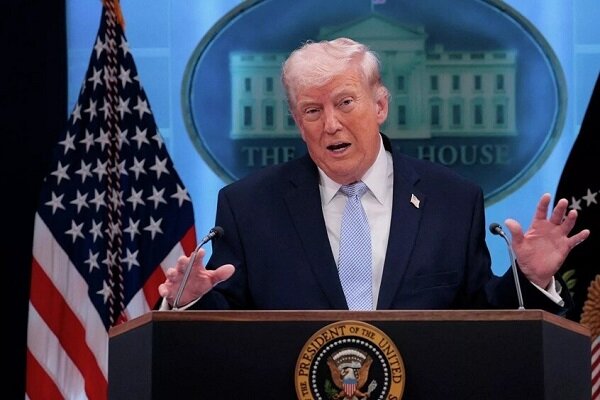
According to the International Desk of Webangah News Agency, the New York Times reported that President Donald Trump is facing a substantial drop in public approval less than two years after his return to the White House. Whispers within political circles suggest that the political and cultural momentum that accompanied his 2024 election victory is waning, with many who previously supported him now expressing disillusionment with his performance.
David Wallace-Wells, the author of the article, posits that the “Make America Great Again” campaign has not endured as expected and that the nation has, in fact, seen a reversal, returning the political landscape to a different point. He elaborates that conservatives and Trump’s supporters believed the country was entering a new phase focused on dismantling diversity and equality policies, intensifying immigration, and reviving extreme values. However, this narrative has gradually lost its appeal amidst escalating political and economic crises.
Trump’s post-election achievements have been overshadowed. His economic policies, particularly tariffs, contributed to a new wave of inflation, and his efforts to reform the government apparatus failed. His aggressive campaigns against immigrants in American cities have also drawn widespread criticism.
The New York Times highlights several indicators of Trump’s declining popularity, including his approval ratings falling to their lowest levels. This situation presents Democrats with a genuine opportunity to reclaim the Senate. Furthermore, public dissatisfaction has grown, exacerbated by the author’s description of the “humiliating” end to the conflict with Iran.
The author adds that U.S. military operations abroad have undermined Trump’s image as a president opposed to wars, leading to increased oil prices and exposing aspects of American power’s fragility. The New York Times emphasizes that the decline in Trump’s popularity is not confined to independent voters but also affects groups considered foundational to the future of the MAGA movement by Republicans. Polls indicate Trump’s support among young people has dropped by as much as 50 percent. His popularity has also significantly decreased among Black and Hispanic Americans, and even among the white working class, which has traditionally formed his electoral base.
In conclusion, the author asserts that election outcomes and party victories do not necessarily reflect deep-seated shifts in American society’s identity. Many, he argues, have exaggerated the belief that Trump’s victory signaled a permanent change in the nation’s direction.