
France Grapples With Overwhelmed Morgues Amid Record Heatwave Deaths
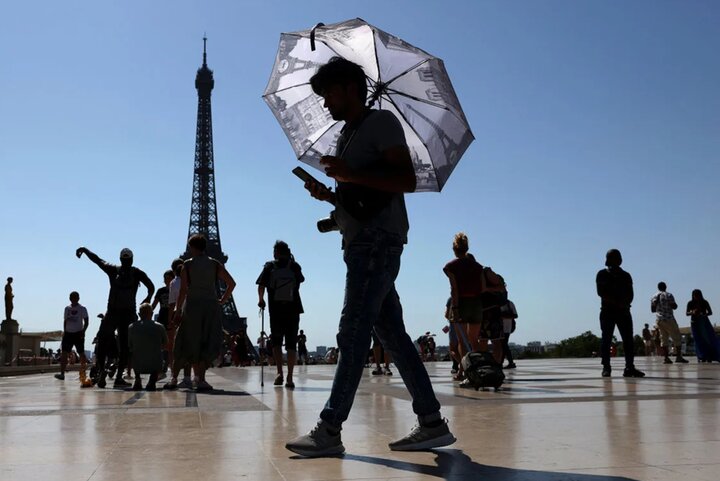
According to the International Desk of Webangah News Agency, France is facing a significant humanitarian crisis as an unprecedented heatwave, with temperatures exceeding 40 degrees Celsius in many regions and record-breaking nighttime lows, has led to a surge in fatalities. Preliminary estimates from France’s Public Health Agency indicate at least a thousand deaths above the usual rate in just three days, a figure expected to rise as death certificates are processed, particularly for those who passed away at home or in elder care facilities.
The intensity of the casualties has reportedly filled Paris’s morgues to capacity, creating severe space shortages for funeral service companies. Some bodies have been transferred to cold storage facilities in cities like Chartres and other areas surrounding the capital. Even temporary solutions implemented by the municipality and hospitals have struggled to alleviate the immense pressure.
This situation prompts a serious question: Why is a developed nation like France, despite the devastating experience of the 2003 heatwave, once again facing such a high death toll and infrastructural turmoil in the face of extreme heat?
Deadly Heatwave Factors: Beyond High Temperatures
The extensive fatalities from the current heatwave in France cannot be solely attributed to temperatures reaching 40 degrees Celsius. Many countries worldwide experience such heat levels, but the human cost is heavily influenced by the heat’s intensity, duration, nighttime conditions, demographic composition, building quality, and the preparedness of the healthcare and social systems. France’s crisis stems from a confluence of climatic, demographic, and infrastructural factors.
A. Persistent Heat and Unbearably Warm Nights
The sustained high temperatures over several consecutive nights denied bodies the opportunity to recover. This exerted constant pressure on the cardiovascular, renal, and respiratory systems, proving more dangerous for the elderly and those with chronic illnesses than a single day of higher temperatures.
B. Aging Population and Underlying Health Conditions
Eighty-five percent of the recorded deaths were among individuals over 65. A diminished ability to regulate body temperature, reduced thirst sensation, pre-existing heart and respiratory conditions, and the consumption of certain medications render the elderly more vulnerable to dehydration, kidney failure, stroke, and heatstroke.
C. Isolation and Weak Social Care Networks
Many victims died alone at home. An elderly person living alone may be unable to procure water, reach a cool space, or call for assistance. Consequently, the absence of regular check-ins from family, neighbors, or social services can transform a manageable situation into a fatal one.
D. Buildings Unsuited for Extreme Heat
A significant portion of French homes were constructed to retain heat in winter rather than dissipate it in summer. Densely packed apartments, upper floors, attics, limited ventilation, and heat absorption by walls mean some residences remain dangerously warm long after sunset.
E. Limited Access to Cooling
Most French homes and schools lack air conditioning, and the cooling systems in hospitals and nursing homes are not comprehensive across all wards. A traditional emphasis on insulation and concerns about electricity consumption and environmental impact have restricted the adoption of cooling systems, even as the escalating heat highlights the need for targeted cooling in critical facilities.
F. Paris’s Urban Heat Island Effect
Asphalt, concrete, building density, and a lack of shade absorb daytime heat and release it at night. As a result, temperatures in some Parisian neighborhoods do not decrease sufficiently overnight, leaving residents in small, unventilated homes exposed to heat stress for extended periods.
G. Insufficient Infrastructural Preparedness
The overcrowding of Paris’s morgues and the transfer of bodies to surrounding towns revealed a lack of emergency capacity commensurate with a sudden rise in mortality. While not a cause of fatalities, this indicates a clear gap between official warnings and the practical readiness of hospitals, funeral services, and urban management.
H. Ineffective Warnings Without Practical Support
Recommendations such as staying indoors, drinking water, and reducing activity are not feasible for everyone. Homes without ventilation, outdoor workplaces, or the inability of the elderly to meet daily needs render weather warnings less effective without cooling centers, on-site visits, and social support.
In summary, what made the heatwave in France so deadly was not merely the 40-degree Celsius temperatures, but the convergence of sustained heat with an aging population, isolation, an unsuitable urban environment, a lack of cooling, and inadequate preparedness.
France’s Higher Death Toll Compared to Hotter European Nations
The recent heatwave affected large parts of Europe simultaneously, with countries like Spain, Italy, and Greece also recording temperatures of 40 degrees Celsius or higher. In some areas of Spain, temperatures even reached around 44 degrees Celsius. However, initial figures reported 327 heat-related deaths in Spain, contrasting with approximately a thousand excess deaths in France. While the calculation methodologies differ, this disparity suggests that higher temperatures do not automatically lead to greater fatalities; the quality of preventative measures plays a decisive role.
Spain has implemented a national heatwave response plan since 2004, dividing the country into 182 health-meteorological zones. For each zone, warnings are issued based on temperatures linked to actual increases in mortality within that specific region, rather than a fixed national threshold. A three-day forecast, daily mortality monitoring, and coordination with social services allow for the identification of at-risk individuals, including the elderly, chronically ill, and isolated, before the heatwave arrives.
Italy maintains a three-day warning system in 27 major cities, and Athens has appointed a special envoy to combat heat, in addition to opening public cooling spaces. These countries have linked weather warnings with actions such as contacting high-risk individuals, alerting medical facilities, adjusting work hours, and guiding people to safe areas. Their primary advantage lies not in immunity to heat, but in the rapid translation of weather forecasts into targeted local interventions.
France also established warning and care programs following the 2003 disaster, but the recent crisis demonstrated persistent weaknesses in the execution of this system. The approximately 40 percent increase in deaths at home and the high mortality among isolated elderly individuals indicate that outreach, visits, and the transfer of vulnerable people were not conducted on the necessary scale. Therefore, the core difference lies in the gap between ‘issuing a warning’ and ‘delivering practical assistance to at-risk individuals’.
Lessons from 2003 and Future Prospects: France’s Necessary Actions
The 2003 heatwave, which claimed around 15,000 lives in France, prompted a broad review of warning systems, elder care, and the readiness of medical facilities. However, the recent crisis suggests that some of these reforms have either weakened over time or are insufficient for the new climatic conditions.
The overflowing morgues, the deaths of numerous elderly individuals at home, and the scarcity of cool spaces indicate that the experience of 2003 has not yet translated into a stable and fully operational system for confronting severe heatwaves.
According to experts, in the short term, France must move beyond general recommendations to protect high-risk groups. This includes creating precise lists of isolated elderly and ill individuals, conducting daily contact and check-ins, relocating vulnerable people to cool centers, bolstering the capacity of hospitals, nursing homes, and morgues, and limiting outdoor work during peak heat hours. These measures can directly reduce fatalities. Weather warnings are effective only when they lead to on-site intervention and tangible support.
In the medium term, France’s buildings and cities must adapt to the reality of hotter summers. Targeted installation of cooling systems in hospitals, schools, and nursing homes, coupled with appropriate insulation, shading, natural ventilation, cool roofs, and increased green spaces, can reduce reliance on air conditioning while safeguarding lives. Political debate surrounding air conditioning should move beyond a simple ‘AC versus environment’ dichotomy towards targeted, energy-efficient, and equitable cooling solutions.
In the long term, France will be compelled to view heatwaves not as exceptional events, but as an integral part of its future climate. Adjusting construction standards, redesigning dense neighborhoods, enhancing the resilience of the electricity grid, and allocating permanent budgets for climate adaptation are essential.
The central question following this crisis is whether the French government will once again settle for temporary measures, or if it will leverage the experiences of 2003 and the 2026 crisis to genuinely rebuild its health system, cities, and support policies.


