Russian Analyst Highlights Ayatollah Khamenei’s Legacy of Islamic Unity
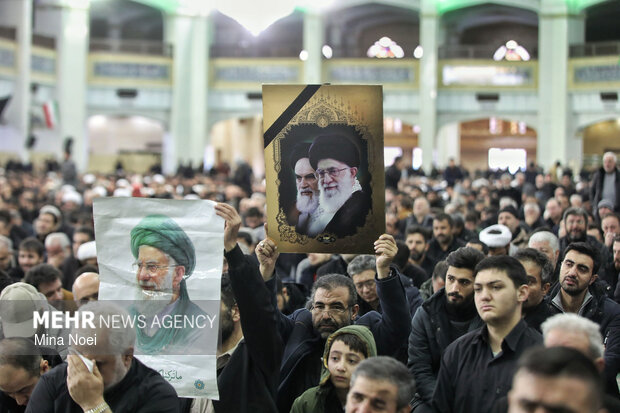
According to the International Desk of Webangah News Agency, Russian analyst Ruslan Siamasof has commented on the legacy of the martyred Leader of the Islamic Revolution, Ayatollah Seyyed Ali Khamenei.
Siamasof extended condolences on behalf of Muslims in the Russian Federation, including Grand Mufti Ravil Gainutdin and the Religious Administration of Muslims of the Russian Federation. He noted that the event has deeply saddened not only the people of Iran but the entire Islamic world.
Ayatollah Seyyed Ali Khamenei, the Leader of the Islamic Republic of Iran, was martyred during the month of Ramadan. Siamasof described him as a personality who dedicated his efforts to the unity of the Muslim community and the Islamic Ummah, as well as to convergence among different Islamic sects and movements. He was known as a kind, honest, and benevolent individual.
The analyst asserted that this incident once again demonstrated the disregard for sanctity shown by the Zionist regime and the United States. He pointed to attacks on schools resulting in the deaths of over 170 innocent children, including girls, due to missile strikes. He further stated that during Ramadan, the Leader of the Islamic Republic of Iran, along with his family and close associates, were martyred, thus exposing the aggressive nature of the US and Israel.
While Ramadan is a time for spiritual reflection and fasting, historically marked by efforts towards ceasefires and halting conflicts, the opposite occurred in this instance. Siamasof highlighted that actions, described as offensive and inhumane, were carried out without prior notification to the opposing party, despite ongoing negotiations and hopes for peaceful and diplomatic resolutions.
Consequently, Siamasof stated that the news was received with deep sorrow by the Russian Muslim community and the entire Islamic world. Prayers were offered for Ayatollah Seyyed Ali Khamenei and for the people of Iran who are currently facing pressure and aggression.
The analyst emphasized the significance of the legacy left by Ayatollah Khamenei, which he frequently referenced in his speeches. Siamasof recalled attending international conferences in Iran where Ayatollah Khamenei spoke, consistently calling for the unity of the Islamic Ummah. This message, he noted, aligns with the Quranic injunction for believers to hold fast to the rope of God and avoid division, and the principle that “believers are brothers to one another.”.
A key initiative under Ayatollah Khamenei’s direct guidance was the establishment of an organization dedicated to rapprochement between Islamic sects. This body actively engaged in conferences in Iran, Russia, and Arab and Islamic countries, focusing on identifying common ground and strengthening convergence among Muslims.
Support for the Palestinian people was also a central theme of Ayatollah Khamenei’s activities. This commitment was annually reaffirmed during Ramadan, particularly on the last Friday of the month, through gatherings expressing solidarity with the Palestinian people and Al-Quds, which has become a significant element in unifying the Islamic world.
While numerous other aspects of Ayatollah Khamenei’s work exist, Siamasof concluded that these points are among the most crucial to emphasize at present.