
US and Iran Exchange Fire, English-Language Media Report Escalating Tensions
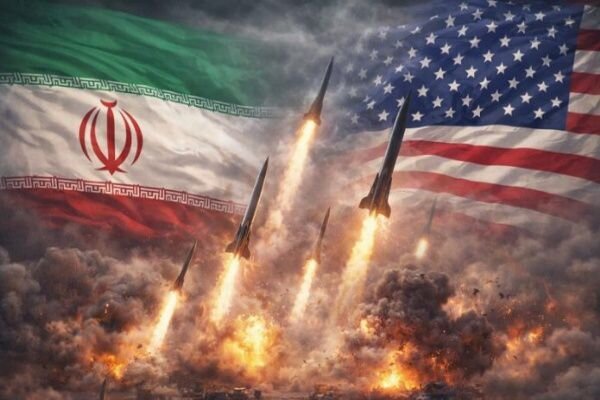
According to the International Desk of Webangah News Agency, recent tit-for-tat military actions between Iran and the United States have garnered significant attention in English-language media. Outlets are closely following the unfolding events, with reports suggesting a breakdown in de-escalation efforts.
NBC News, in a report detailing unprecedented tensions, stated that the U.S. and Iran have engaged in substantial new offensives against each other, pushing a fragile ceasefire and peace agreement towards collapse. The U.S. military claimed to have targeted approximately 90 military sites across Iran, including air defense systems, coastal surveillance facilities, missile and drone storage sites, naval capabilities, and logistical infrastructure along Iran’s coastline.
NBC News further reported that Iran’s Ministry of Foreign Affairs condemned these actions as a “blatant war crime,” asserting that civilian infrastructure, including two railway bridges leading to the holy city of Mashhad, were hit. The site of the attack is significant as it is the planned burial location for the late Supreme Leader of the Islamic Revolution, Ayatollah Seyyed Ali Khamenei, scheduled for Thursday. A local official also reported that a U.S. airstrike impacted the vicinity of the Bushehr nuclear power plant. Iran’s Ministry of Health announced that at least 14 individuals were killed and 78 injured during the two days of U.S. strikes.
The American network specified that Iran responded with retaliatory strikes targeting U.S. allies in the Middle East, triggering air raid sirens in Qatar, Bahrain, Kuwait, and Jordan. Jordan announced it had intercepted eight Iranian missiles. Donald Trump, attending a NATO summit in Turkey, issued a threatening statement, warning that the situation would “get much worse” if attacks continued. Conversely, analysts suggest that Trump’s options are dwindling, leaving him with little choice but to return to the negotiating table. These confrontations are occurring while peace talks were on hold due to the funeral ceremonies.
CNN reported on the collapse of the Iran-U.S. ceasefire and new strikes in the Middle East. According to its report, Iran announced it had fired ten ballistic missiles toward a U.S. military base in northern Jordan.
The CNN report continued, stating that U.S. forces had previously targeted 90 sites along Iran’s coast. In response, the Islamic Revolutionary Guard Corps attacked U.S. military bases in Kuwait and Bahrain. Iranian media also reported new U.S. strikes in Bushehr province around Thursday noon, hitting the area of a nuclear power plant and a fishing pier. Washington has not confirmed these recent attacks.
CNN added that the renewed attacks and Trump’s threats to reinstate a naval blockade have reduced shipping traffic in the Strait of Hormuz, compelling Iran to withdraw its oil tankers from the waterway. The Qatari Foreign Minister held high-level calls with his Iranian, Saudi, and Emirati counterparts, emphasizing the necessity of dialogue and diplomacy. Meanwhile, thousands of mourners gathered in Mashhad for the funeral of the late leader of the Islamic Revolution, with banners and flags calling for retribution visible among the crowd.
The Associated Press, reporting from Washington, stated that U.S. President Donald Trump announced his belief that the ceasefire with Iran had ended. Trump, speaking in a wavering tone, expressed uncertainty about pursuing a deal and asserted that the U.S. needed to “finish the job,” while simultaneously insisting that continued attacks did not signify a return to war or long-term military action. These contradictory messages and his green light for successive military strikes have created significant confusion regarding the future of the conflict.
According to the Associated Press, these aggressive remarks could be a strategy to increase pressure on Tehran to halt attacks on oil and gas tankers in the Strait of Hormuz and comply with Washington’s demands regarding its nuclear program. Prior to the new strikes, Trump had warned, “Whatever happens, it will happen very quickly. We are not looking for a long action.” Hours later, the U.S. military announced it had carried out new strikes against Iran.
The report emphasized that international mediators are desperately attempting to salvage a temporary agreement, with a regional intelligence official stating the conflict has reached a “critical stage.” Nevertheless, high-level communications continue around the clock to preserve the ceasefire. The Associated Press warned that the continuation of this trend could lead to increased gasoline prices, potentially causing serious problems for Republicans in the November midterm elections.
The Conversation, an analytical platform, published a report suggesting that, contrary to Donald Trump’s inclinations, the Islamic Republic of Iran is drawing the United States into a prolonged conflict. The analysis posited that the recent intensification of tensions indicates the ceasefire will not lead to lasting peace, and a return to a “neither war nor peace” situation is the most probable scenario. The fundamental root of the current clashes lies in Iran’s firm resolve to exert control over the Strait of Hormuz and compel ships to use routes under its supervision, rather than the U.S.-backed corridor off the coast of Oman.
The report attributed the fragility of the ceasefire to the fundamental differences in the strengths of the two parties. The United States possesses overwhelming military superiority but lacks the political will for sustained warfare, ground operations, or the expenditure of its arsenal in a war of attrition. In contrast, the Islamic Republic of Iran’s greatest strength is its “political will” for survival, and it is prepared to bear significant costs to demonstrate this resolve.
The Conversation added that Trump, who is reluctant to engage in full-scale war, is under pressure from American hardliners who advocate for a comprehensive agreement and the containment of the Strait of Hormuz.


