
US Launches ‘Pax Silica’ Initiative to Reshape Global Critical Minerals Supply Chains Amidst China Competition
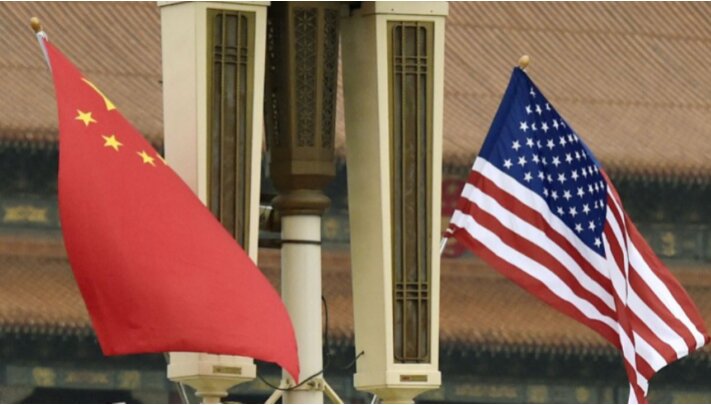
According to the International Desk of Webangah News Agency, the strategic competition between the United States and China has expanded beyond trade tariffs to encompass control over advanced technologies, artificial intelligence, semiconductors, and critical minerals. While oil and gas were geopolitical focal points in past decades, rare earth elements such as gallium, germanium, lithium, tantalum, tungsten, and silicon have become paramount for the digital economy, forming the backbone of AI systems, data centers, advanced chips, and computing infrastructure.
In late 2025, the U.S. government established Pax Silica, an initiative focused on creating a collaborative technology and industrial ecosystem among like-minded countries to lessen dependence on China throughout the AI value chain. Unlike previous U.S. efforts like the Minerals Security Partnership, which primarily concentrated on mineral extraction, Pax Silica encompasses the entire production cycle, from mining and chip fabrication to data centers, energy infrastructure upgrades, AI model development, and workforce training.
Kazakhstan’s accession to this initiative in June 2026 holds particular significance. As the first Central Asian member, it positions the country as a vital link between Eurasia’s vast mineral resources and Western technological supply chains from Washington’s perspective. This development directly impacts the geopolitical rivalry between the U.S. and China in Central Asia, a region that has seen substantial Chinese economic influence over the past two decades.
What is Pax Silica?
The name Pax Silica combines ‘Pax,’ signifying order or peace maintained by strength, with ‘Silica,’ referencing silicon and the semiconductor-based technology chain. This nomenclature is deliberate, echoing the historical ‘Pax Americana’ that denoted an American-led economic and security order, with Pax Silica aiming to establish a new, Washington-led technological order.
The core objective of Pax Silica is to foster ‘Trusted Supply Chains’ crucial for advancing the AI-driven economy. This chain extends from mineral extraction and semiconductor production to data centers, energy infrastructure, fiber optic cables, cloud computing, AI models, and technology exports.
Key pillars of this initiative, as outlined in released documents, include: diversifying sources of critical minerals; reducing reliance on China for mineral refining and processing; coordinating export controls on sensitive technologies among member states; promoting joint investments in semiconductor and AI industries; building data centers and energy infrastructure for the AI economy; and fostering scientific, educational, and research collaboration in emerging technologies.
Context for the Coalition’s Formation
The emergence of Pax Silica is intrinsically linked to the intensity of the U.S.-China competition. Over the past two decades, China has significantly invested to dominate nearly every segment of the strategic mineral extraction and processing chain. Although many minerals are extracted elsewhere, a substantial portion of their refining and processing occurs in China.
For instance, China holds a dominant share in processing rare earth elements like gallium and germanium, essential for advanced chips, telecommunications equipment, radar systems, and AI infrastructure. This dependency prompted the U.S. to elevate supply chain security to a national security issue following increased technological competition with China.
Moreover, China’s imposition of export restrictions on certain minerals in recent years, in response to U.S. trade policies, tariff wars, and actions concerning Taiwan, fueled concerns in Washington that Beijing could leverage its monopolistic position as a geopolitical tool. Consequently, the U.S. adopted a risk-reduction strategy, replacing broad dependency on China with Pax Silica as a product of this strategic shift.
Distinguishing Pax Silica from Previous Initiatives
The U.S. has previously pursued supply chain security through coalitions such as the Minerals Security Partnership, the Indo-Pacific Economic Framework (IPEF), and Group of Seven (G7) collaborations. However, Pax Silica presents several key distinctions:
- It is a comprehensive technology project, not solely focused on minerals.
- It involves a more significant role for the private sector, universities, and technology companies compared to traditional coalitions.
- It is designed flexibly to accommodate new members without the complex formalities of international organizations.
- The U.S. positions it as a replacement for reliance on China-influenced supply chains, rather than purely an economic project.
Members and Expansion of the Coalition
At its inception, core members included the U.S. and allies such as Japan, South Korea, Australia, the United Kingdom, Israel, the UAE, and Singapore, alongside several European nations. In 2026, the European Union, Germany, the Netherlands, Greece, Italy, Argentina, Chile, Panama, Costa Rica, and Kazakhstan have joined or initiated the process of joining this framework.
This expansion and ongoing membership drive indicate Washington’s intent to establish a global network of mineral producers, technology providers, and capital investors.
Significance of Kazakhstan’s Accession to Pax Silica
Kazakhstan is a major holder of strategic mineral reserves, possessing significant deposits of uranium, chromium, tungsten, molybdenum, copper, zinc, manganese, rare earth elements, and other materials vital for advanced industries.
Geographically, Kazakhstan serves as a bridge between Europe and East Asia, situated within crucial Eurasian transport corridors. This strategic location makes it a valuable partner for both China and the U.S. in future supply chains.
Kazakhstan’s official government statement emphasizes its ambition to transition beyond being merely a raw material exporter to engaging in mineral processing, high-value-added production, data center development, advanced industry growth, and participation in research and development.
Therefore, Astana’s accession to Pax Silica is more than an economic maneuver. It aligns with Kazakhstan’s multi-vector foreign policy, which involves distancing from Russia and increasing integration with European and American structures. The primary motivations include attracting foreign investment for mineral processing and semiconductor industries, facilitating technology transfer to move up the value chain in batteries, semiconductors, and AI equipment, diversifying foreign partners to balance relationships with the U.S., Europe, China, and Russia, and developing its digital economy by leveraging Pax Silica for data centers, specialized training, and innovation ecosystems.
The geopolitical implications of Kazakhstan’s membership in Pax Silica are substantial. It marks the U.S.’s first official foothold in Central Asia’s technological network and signifies the expansion of U.S.-China competition into the region. For Washington, Kazakhstan is not just a mineral producer but a potential hub for raw material processing and hosting AI-related infrastructure, thereby enhancing the capacity of Western supply chains to reduce reliance on China.
Potential Chinese Reactions
While Beijing’s formal response to Kazakhstan’s Pax Silica membership has been limited, several scenarios are plausible based on China’s known policies.
- China is likely to view Pax Silica as an effort to contain its technological advancement, given U.S. officials’ explicit aim to reduce dependence on China.
- Beijing is expected to intensify its economic ties with Kazakhstan, leveraging billions of dollars invested in infrastructure, railways, energy, and mines, through offers of capital, loans, and new projects.
- China may accelerate its domestic processing capacity development and investments in other countries to maintain its market advantage in minerals.
- Beijing might employ diplomatic channels to highlight that Central Asian nations should not become arenas for bloc-based competition between major powers.
Limitations of Pax Silica
Despite its ambitious goals, the success of Pax Silica is not guaranteed. Establishing new supply chains requires multi-hundred-billion-dollar investments, technology transfer, skilled workforce development, and considerable time. Many countries, including Kazakhstan, maintain deep economic ties with China and may be reluctant to choose sides. China’s unrivaled capabilities in mineral processing, industrial equipment, and mass production chains present formidable challenges for short-term replacement.
Furthermore, Central Asian nations like Kazakhstan have expressed dissatisfaction with the perceived lack of U.S. and European interest in advanced technology transfer over the past decade, focusing instead on raw material extraction. If Pax Silica fails to alter this trend, it may remain confined to Kazakhstan and fail to gain traction in other Central Asian and Caucasian countries.
In conclusion, Pax Silica represents one of the U.S.’s most significant geoeconomic initiatives in the AI era. It is not merely about minerals but a comprehensive effort to reconfigure the entire digital economy value chain. Its primary objective is to reduce allied nations’ dependence on China and forge a network of trusted partners in strategic technologies. China, in turn, is likely to interpret this as part of a broader containment strategy, seeking to maintain its influence through deepened economic cooperation and investment in Central Asia. Consequently, Pax Silica should be viewed not just as a technological agreement but as a critical arena for U.S.-China geopolitical competition in the coming decade, with outcomes that will significantly shape global technology and digital economy supply chains for years to come and influence the trajectory of China’s hegemonic rise.


