Iran Asserts Control Over Strait of Hormuz Amid U.S. Tensions, Emphasizes Military Readiness
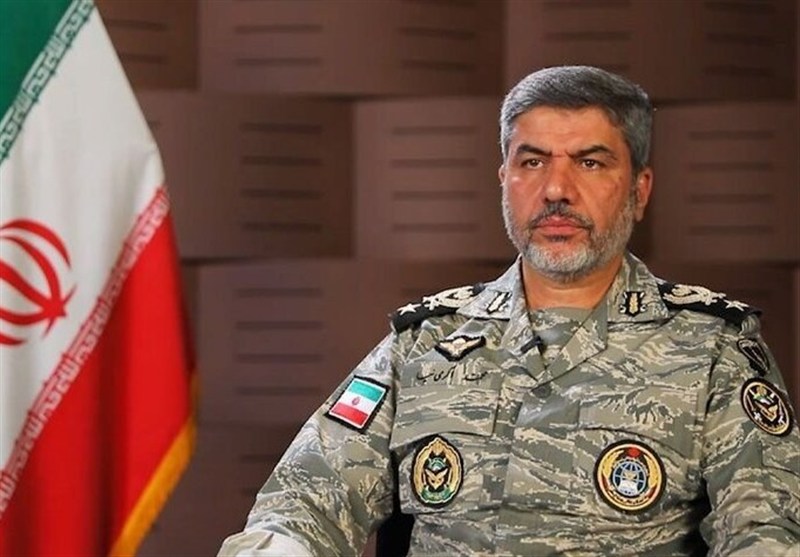
According to the International Desk of Webangah News Agency, Brigadier General Mohammad Akraminia, the spokesperson for the Iranian army, on Sunday, July 11, 2026, criticized the United States’ historical record regarding international commitments. He specifically pointed to the current U.S. President’s history of breaking agreements, citing the withdrawal from the Joint Comprehensive Plan of Action (JCPOA) and other international bodies during his previous terms.
Akraminia stated that this pattern of unreliability is also evident in the current understanding between Iran and the United States, asserting that Washington is attempting to establish an unconventional route in the southern Strait of Hormuz that contradicts the signed agreement with the Islamic Republic of Iran. He emphasized that based on this understanding, Iran is responsible for all transit and movement within the Strait of Hormuz.
The spokesperson added that the Islamic Republic of Iran is working collaboratively with Oman on a joint understanding and arrangements for the region. He accused the U.S. of attempting to impose its desired routes through unwarranted interventions, which he claimed are contributing to insecurity.
Brigadier General Akraminia reiterated Iran’s commitment to defending its rights as outlined in the agreement and urged the U.S. to adhere to its terms, prioritize regional security, and consider the interests of regional nations. He warned that the U.S. should not endanger its allies and recalled that Iran has delivered decisive responses to any actions taken against its islands, coastlines, or facilities. He mentioned a recent U.S. intervention that was met with a strong response.
The army spokesperson further detailed that the armed forces have consistently worked to enhance their combat readiness since their inception. He highlighted that even after the agreement and the ceasefire, Iran utilized the period to bolster its capabilities, emphasizing a lack of trust in the U.S. and other adversaries. Akraminia affirmed that Iran continuously updates its objectives and strives to improve its combat power to be prepared for all scenarios, describing this as an ongoing, daily process within the armed forces.
Speaking on the extensive public participation in the ceremonies mourning the martyred leader of the revolution, Akraminia described the event as a historic and civilizational epic created by the Iranian people. He stated that the people transformed mourning into a grand epic and a threat into an opportunity for the Islamic Republic. He expressed gratitude to the people of Iran and Iraq for their massive participation, as well as to various service organizations, the national media, and all those involved. The Army of the Islamic Republic of Iran conveyed the appreciation of its Commander-in-Chief, Major General Hatami.
Akraminia outlined the internal implications of this public display as national unity and cohesion, strengthening the legitimacy and popularity of the system. He noted that the public’s desire for retribution was evident, demonstrating steadfastness and continuity in the revolutionary path. Internationally, he characterized the turnout as a symbol of the Islamic Republic of Iran’s power, expressing confidence that this popular strength will be translated into power that commands respect from global nations and governments.