
Massive Funeral Procession Thwarts Division Project Between Iran and Iraq
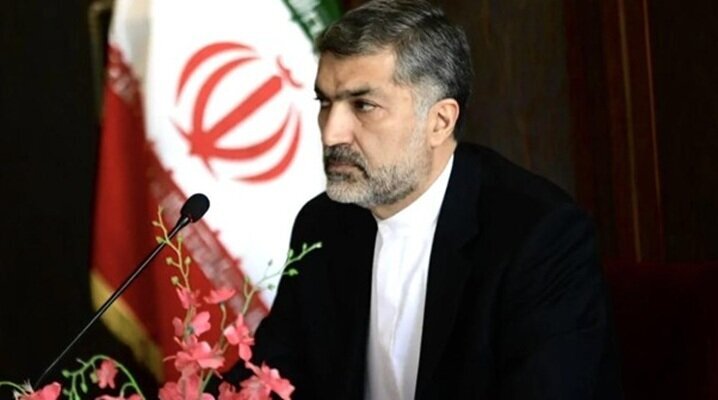
According to the International Desk of Webangah News Agency, Saeed Seidin, the Consul General of the Islamic Republic of Iran in Najaf Ashraf, stated in an exclusive interview with Mehr News Agency that the symbolic funeral procession for the martyred leader of the Islamic Revolution in Iraq demonstrated the deep solidarity of the two nations. He emphasized that the extensive participation of the Iraqi people in this ceremony served as a practical response to all efforts made over past decades to sow discord between the two peoples.
Seidin highlighted the wave of solidarity from the Iraqi people following the imposed war against the Islamic Republic of Iran and the martyrdom of the leader of the Islamic Revolution. He noted that from the early days of these developments, various Iraqi tribal, academic, cultural, social, and political delegations visited the Iranian consulate general in Najaf to express their solidarity with the Islamic Republic. Spontaneous gatherings and demonstrations in support of Iran were also held in Najaf Ashraf and other Iraqi provinces, reflecting the depth of relations between the two nations.
The Iranian Consul General in Najaf added that widespread popular and tribal requests for a symbolic funeral ceremony for the martyred leader of the Islamic Revolution in Iraq, along with an initiative by over 100 Iraqi parliament members to submit a formal request, were met with approval from Tehran after being conveyed to Iranian officials. He expressed gratitude to the Iraqi people, tribes, scholars, seminaries, political and cultural movements, and the Iraqi government for their cooperation in organizing the ceremony. He also commended the support of Ayatollah Sayyid Ali Sistani, the direct follow-up by the Iraqi Prime Minister, and the efforts of the country’s security, service, and executive institutions.
Seidin cited official figures indicating that over 10 million Iraqis participated in the ceremony, an unprecedented number for the funeral of a country’s leader held in another nation’s territory in contemporary history, underscoring the depth of historical, cultural, and political bonds between the two peoples.
Iraq: Iran’s Foremost Foreign Policy Priority
The Consul General of Iran in Najaf stressed the unique characteristics of Tehran-Baghdad relations, stating that they extend beyond diplomatic ties and are founded on historical, cultural, geographical, religious, and social commonalities, transforming the relationship into a strategic one. He added that Iran and Iraq possess extensive capacities and, with the development of cooperation, could become a significant center of power regionally and internationally. Seidin affirmed that Iraq constitutes the primary priority of the Islamic Republic of Iran’s foreign policy within the framework of the “good neighborliness” strategy due to the deep connections and shared commonalities between the two countries.
U.S. Presence is the Main Cause of Regional Instability
The Iranian Consul General in Najaf identified the military presence of the United States and the Zionist regime as the most significant factor in regional instability. He stated that U.S. military bases in the region have repeatedly been used for operations against the Islamic Republic of Iran in recent years, a trend that continues. He emphasized that regional countries possess the capability to establish security, stability, and development without the need for foreign intervention. Seidin pointed to Iraq’s role in de-escalating regional tensions, noting Baghdad’s effective efforts in bringing closer the viewpoints of Iran and Saudi Arabia, as well as endeavors to reduce tensions between Iran and the United States. He simultaneously attributed the continuation of regional crises to the expansionist policies of the United States, Washington’s repeated breach of commitments, and the “Greater Israel” project. He concluded that Iran, Iraq, and other regional countries are capable of establishing an independent security system through mutual cooperation to ensure regional stability and prosperity.
Principles of the Islamic Revolution Will Not Change
Regarding the future of the Islamic Revolution, the Consul General of Iran in Najaf stated that the Islamic Revolution continues to be guided by the same principles and foundations laid by the Grand Founder of the Islamic Revolution, Imam Khomeini. He asserted that the principles of independence, freedom, and rejection of East and West hegemony will remain the pillars of the Islamic Republic’s policy. He emphasized the continuity of this path, stating that the principles and foundations established by Imam Khomeini and carried forward by the martyred leader of the Islamic Revolution over the past decades will be pursued unchanged in the future. Seidin concluded by referencing the change in the leadership of the Islamic Republic, saying, “Our new leader is the same martyred leader, with the difference that he has become about forty years younger.” Therefore, the doctrine, path, and overarching policies of the Islamic Republic of Iran will continue to be based on the same principles and strategic constants.


