
Iran’s Evolving Warfare Tactics Challenge US Defenses and Deplete Missile Stocks
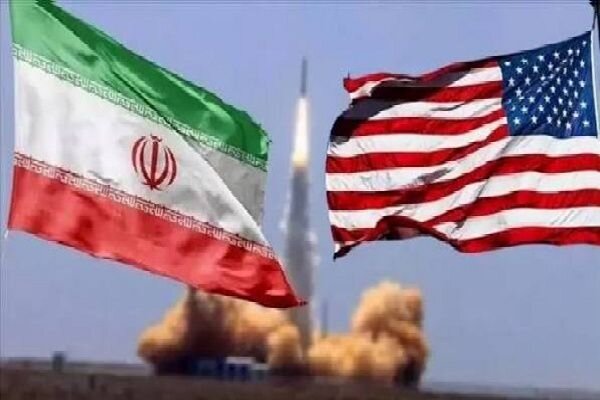
According to the International Desk of Webangah News Agency, a report by the American newspaper The New York Times has examined Iran’s evolving military tactics during recent conflicts. The report suggests that Iran’s recent attacks, which led to the deaths of three American soldiers in Jordan, demonstrate a swift advancement in Iran’s combat capabilities, occurring at a time when Pentagon interceptor missile reserves are diminishing. Iran has managed to wear down American air defenses through waves of missile and drone strikes.
The newspaper noted that over five intense and tense days last month, Iran launched waves of drones and missiles targeting U.S. forces at three bases in Jordan, aiming to penetrate formidable American air defenses. By employing advanced missiles capable of sudden course changes, Iran subjected the bases’ defense systems to heavy assaults, forcing American forces to expend their limited Patriot interceptor missile stocks. Ultimately, on the fifth day, Iranian projectiles managed to breach these defenses.
On July 17, a missile struck prefabricated living quarters at one of the bases, killing three American soldiers and injuring over 100 others. Pentagon officials later confirmed that dozens of other military personnel were wounded and several aircraft were damaged during the attacks in Jordan that week. Responding to questions about the deadly attack, U.S. Secretary of State Marco Rubio claimed, “We shot down almost all the missiles. One of them got through.”
The New York Times indicated that these attacks underscore two significant and deadly trends. Firstly, Iran has become a more skilled adversary throughout the conflict, learning to circumvent U.S. air defenses while expanding the battlefield across much of the Middle East and enlisting allies such as the Houthis (Ansar Allah) in Yemen and militias in Iraq. Secondly, Pentagon interceptor missile stockpiles have been rapidly declining, with these weapons gaining increasing value and importance with each passing day of intermittent engagements.
These trends highlight a point that has gradually become apparent in the months since the conflict began: even a global superpower with an extensive and powerful military presence can be contained by a weaker adversary willing to resort to asymmetrical warfare to gain any advantage. The report further stated that according to two individuals familiar with U.S. weapons stockpile levels, who spoke on condition of anonymity about sensitive military details, the Pentagon has expended over 1,500 Patriot missiles during this conflict and now possesses fewer than 1,700 interceptor missiles. The U.S. produced approximately 600 interceptor missiles throughout 2025. This rapid depletion of reserves is occurring as Iranian forces reportedly study another conflict.
According to The New York Times, Russia has utilized a combination of ballistic and cruise missiles in Ukraine to divert Ukrainian air defenses before deploying drones. Seth G. Jones, Director of the Defense and Security Program at the Center for Strategic and International Studies, commented, “When a spectrum of missiles and drones come in, the Iranians make it harder for air defense.” He added, “They have essentially used Russia’s tactics to make it harder to protect various points across the Persian Gulf region.” U.S. officials stated that American forces in the Middle East fired approximately 50 Patriot interceptor missiles in a single day during that deadly week last month, with each missile costing about $4 million.
The New York Times further reported that in the months following the initial bombing campaigns in early April, the Pentagon continued to face a formidable threat, which it attempted to downplay. U.S. Secretary of War Pete Hegseth stated on April 8 that Iran’s missile program had been “virtually destroyed,” with its launchers and missiles being “evacuated, severely degraded, and almost entirely non-operational.” A significant portion of Iran’s missiles and launchers were housed in vast underground facilities, which U.S. and Israeli forces heavily bombed during the first five weeks of the conflict. However, Iran managed to clear many of these sites and resumed missile launches, leading to a near halt in shipping in the Strait of Hormuz and renewed threats to U.S. forces in the region.
Vali Nasr, a professor at the Johns Hopkins School of Advanced International Studies, stated that Donald Trump and his national security advisors had assumed the conflict would be short and would not jeopardize the Pentagon’s Patriot missile reserves. However, according to Nasr and other Iran experts, Tehran had been anticipating such a moment since the conflict began over five months ago. Iranian leaders had observed during a 12-day war in June 2025 the speed at which Israeli and American forces expended their ballistic interceptor missile reserves to counter waves of Iranian drones and missiles.
The most lethal Iranian attacks against U.S. forces in Jordan targeted the Muwaffaq Salti Air Base in Azraq, a Jordanian military facility increasingly used by the U.S. Air Force as a primary hub for dozens of aircraft and several thousand military personnel. Many U.S. troops previously stationed in Kuwait, Bahrain, Qatar, and the United Arab Emirates were relocated before and during the conflict to bases like Muwaffaq Salti in Jordan, which were situated further from Iran and were assessed as safer from drone and ballistic missile attacks. A senior U.S. military official stated that in the days following the July 17 attack, U.S. military commanders reinforced air defenses in Jordan and other parts of the region. This official, speaking on condition of anonymity about operational matters, declined to provide further details.
U.S. military specialists who have studied drone and missile attacks in Ukraine have been collaborating with U.S. Central Command for months, sharing lessons learned from that campaign with military personnel. Two of the three soldiers killed in Jordan belonged to air defense units stationed in Germany, which were part of these efforts. This new reality also carries geopolitical implications. U.S. officials said that in late July, Trump inquired with Hegseth about the depletion of U.S. weapons stocks, a subject previously reported by The Washington Post. However, in its public statements, the Pentagon has continued to assert that it is not facing ammunition shortages. Sean Parnell, a senior Pentagon spokesperson, stated in a release, “Claims of U.S. ammunition shortages are inaccurate. When fake media irresponsibly amplifies these falsehoods, the real-world consequence is clear: our adversaries become emboldened to provoke or attack American forces.”
Two weeks prior, Trump halted bombing attacks against Iran, stating that leaders from Saudi Arabia, the United Arab Emirates, and Qatar had asked him to pursue diplomatic negotiations to end the war. According to a Saudi official speaking on condition of anonymity about confidential negotiations, Mohammed bin Salman, the de facto ruler of Saudi Arabia, told Trump in a phone call that extensive airstrikes would likely compel Iran to retaliate by targeting energy facilities and other infrastructure in Saudi Arabia and neighboring countries. The official added that given the depletion of U.S. interceptor missile stocks and Iran’s demonstrated ability to overcome these defenses, the risk of serious damage was entirely realistic. The official stated that Mohammed bin Salman urged Trump to de-escalate tensions.
The New York Times further reported that the attack on Jordan was not the first instance of Iran adapting its skills and tactics to new circumstances during this conflict. In April, Iran shot down an American F-15E fighter jet over southern Iran with a man-portable air-defense missile. Both the pilot and the weapons systems officer ejected from the aircraft. The pilot was quickly rescued, but the weapons systems officer remained missing for nearly two days, evading Iranian security forces until U.S. special operations forces rescued him in a daring operation. In this incident, a senior U.S. military official stated that Iran had learned from the war in Ukraine and had deployed a squadron of drones in an area where American fighter jets had penetrated. In interviews with Pentagon officials, aircraft crew members stated that the F-15E’s defensive countermeasures only provided a warning half a second before Iran struck the advanced $60 million fighter with a shoulder-fired missile. U.S. military officials concluded that the drones provided Iranian commanders with three critical pieces of information that helped them target the F-15E: the fighter’s GPS location, its speed, and its direction of travel.
According to The New York Times, shortly after that incident (the downing of the F-15), Trump announced a “pause” in hostilities. Two military officials stated that U.S. military commanders needed time to adapt to Iran’s new tactics. However, even during the lull in hostilities, Iran’s tactics continued to evolve. Last month, when the Houthi militants in Yemen entered the war, experts suggested this move signaled Iran’s intent to force the U.S. and its allies to defend themselves against aerial attacks from all directions. Yemen is located hundreds of miles south of Iran.
International inspectors also believe that Iran stores parts of its nuclear program in a heavily fortified underground complex in central Iran. This site, which the United States refers to as “Pickaxe Mountain,” is located more than 300 feet, or over 91 meters, below a mountain. Experts also say Iran has dispersed its forces and officials to hideouts scattered across the country. Vali Nasr, a professor at Johns Hopkins University, commented, “Where are the Iranian officials? It’s not like they’re sitting somewhere you can bomb them. You don’t find them.”


