
US Officials, Analysts Question Effectiveness of Trump’s ‘Choking’ Economic Sanctions on Iran
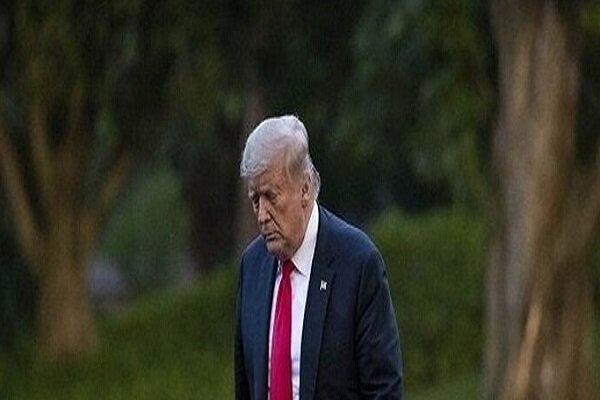
According to the International Desk of Webangah News Agency, a prominent American journalist, Laura Rosen, has stated that the imposition of further economic sanctions under various guises signifies a desire to demonstrate action, thereby avoiding a recurrence of military escalation due to a depletion of defensive missile capabilities.
Robert Malley, the U.S. Special Representative for Iran, emphasized that few beliefs are as deceptive and fallacious as the notion that “if economic pressure did not work, more economic pressure will definitely work.” He elaborated that Iran might attempt to weather this period, hoping for a complete reversal of Trump’s stance, or it could retaliate aggressively, seeking to inflict similar pain and costs on others.
Jack Reed, a Democratic U.S. Senator, noted that Iran wields influence in the global energy sector and will not remain silent under pressure. He warned that if Tehran faces severe pressure, it will launch attacks in the region.
The former U.S. Ambassador to the occupied territories asserted that Trump’s threats are likely largely bluster and hollow, with limited tools available that would not invite retaliatory measures against the United States. However, he cautioned that even if these threats were serious, Iran possesses both the readiness to endure costs and pressure, as well as the means to harm the U.S., its partners, and the global economy.
The former U.S. Ambassador further stated that whether Trump opts for military escalation or economic action, he seemingly fails to grasp that escalating tensions is not a one-way street, and Iran has the power and agency to respond.
French analyst Arnold Bernard expressed strong certainty that the scope of such sanctions likely excludes China, finding it improbable that the U.S. would declare an “economic D-Day” against China mere weeks before President Xi Jinping’s visit. He recalled that in May, the U.S. attempted to sanction Chinese refineries for purchasing Iranian oil. In response, China’s Ministry of Commerce issued a formal “prohibition order” stating that U.S. sanctions should not be recognized. Consequently, the U.S. effectively retreated and did not seriously implement the sanctions, as their true enforcement would have entailed sanctioning major Chinese financial institutions, potentially leading to repercussions for the entire global financial system.


