
Strait of Hormuz Echoes Suez Crisis: Iran’s Strategic Position Stronger Than Egypt’s in 1956
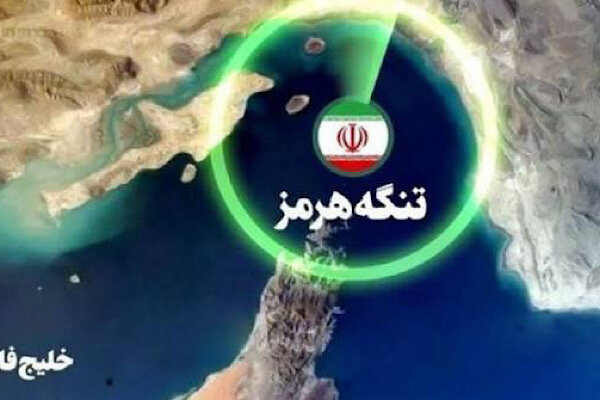
According to the International Desk of Webangah News Agency, The historical events surrounding the Suez Canal in 1956 offer a crucial lens through which to understand contemporary geopolitical dynamics, particularly as Iran navigates its own standoff in the Strait of Hormuz. The Suez crisis demonstrated how a decisive action by Gamal Abdel Nasser could end British hegemony in the region. Today, seven decades later, Iran confronts a comparable challenge in the Strait of Hormuz, albeit from a considerably more empowered position.
In 1956, Egyptian President Gamal Abdel Nasser’s nationalization of the Suez Canal Company was a pivotal moment, challenging the colonial powers of Britain and France and evolving into a significant political victory for Egypt. Now, nearly seventy years on, Iran finds itself in a similar, yet distinct, situation in the Strait of Hormuz. Instead of a European power, the world’s leading superpower, the United States, stands in opposition to a national resolve.
The Suez Canal, a 193-kilometer waterway connecting the Mediterranean Sea to the Red Sea, is not only the shortest maritime route between Europe and Asia but also possesses a history stretching back centuries. The concept of linking the Nile to the Red Sea can be traced back to an order by Darius the Great, the Achaemenid king, around 515 BCE. However, the modern canal was inaugurated in 1869 and rapidly became a strategic artery for the British Empire. Britain solidified its control by acquiring 44 percent of the Suez Canal Company’s shares in 1875 and militarily occupying Egypt in 1882, effectively gaining complete command of the waterway. Before the World Wars, the canal was vital for the empire’s access to India and its eastern colonies, far exceeding its importance as a trade route. Post-World War II, regional independence movements gradually weakened Britain’s presence in Egypt, forcing London to withdraw its forces in 1954.
On July 26, 1956, Nasser’s action, termed a “diplomatic coup” by some, nationalized the Suez Canal Company. This decision, a direct response to the U.S. withdrawal of funding for the Aswan Dam, sent shockwaves through Britain and France. Britain, holding 44 percent of the company’s shares and with one-third of its ships using the canal, refused to accept this change. Following failed negotiations, Israel, and subsequently Britain and France, invaded Egypt on October 29, 1956, with allied forces advancing to the canal. Despite a military defeat for Egypt, simultaneous pressure from the United States and the Soviet Union forced Britain and France to accept a ceasefire and complete withdrawal from Egypt. This event marked the definitive end of British hegemony in the region and ushered in a new national identity for Egypt, which, through a diplomatic triumph, established a new regional alignment. The canal reopened in April 1957, with Egypt gaining full control and revenue for the first time in its history.
Today, nearly seventy years later, the Strait of Hormuz has become the stage for a similar confrontation. However, a comparison of these two situations reveals fundamental differences that place Iran in a more powerful position than Egypt in 1956.
The first key difference lies in strategic independence. Egypt in 1956 was a dependent nation requiring Western assistance for major projects like the Aswan Dam. During the Suez crisis, it was the U.S. and the Soviet Union that compelled Britain’s withdrawal through diplomatic pressure. In contrast, contemporary Iran, relying on its indigenous capabilities and without external support, has withstood American pressure for months, underscoring its deep strategic autonomy.
The second distinction is military deterrence. Egypt was defeated on the battlefield within days in 1956, with its territory occupied. Current Iranian military actions, involving missile and drone strikes, have targeted U.S. bases across the region. Reputable reports indicate that since the outset of the conflict, U.S. military and diplomatic installations in bases in Kuwait, Bahrain, Saudi Arabia, Qatar, the UAE, Jordan, and Iraq have sustained damage. This demonstrates that Iran’s active deterrence has not only been proven in practice but has also imposed significant costs on the United States.
The third difference is the amplified strategic importance of Hormuz. The Strait of Hormuz is far more critical to the global economy than the Suez Canal. Approximately 20 to 21 million barrels of oil daily—about one-fifth of the world’s oil—and a substantial portion of liquefied natural gas pass through this strait. In comparison, the Suez Canal handles about 12 percent of global trade. This disparity significantly elevates Hormuz’s leverage and strategic significance.
Beyond military and economic factors, a crucial difference exists: unlike Egypt, Iran possesses an undeniable justification for asserting sovereignty over the Strait. The U.S. utilizes this same strait to equip its regional bases and has conducted military operations against Iran from these locations. Furthermore, regional countries, funded by oil revenues derived from this route, have financed the equipping of U.S. bases for actions against the Iranian populace. Consequently, Iran has declared that as long as threats against its national security emanate from this waterway, it will never permit it to be used as a tool for pressure and aggression as it has been in the past. This existential argument transforms the defense of national sovereignty into a vital necessity, transcending purely economic interests.
The question remains: can Iran, relying on its own strength and without foreign aid, reshape history and challenge American hegemony in the region? The answer hinges not only on its missile and drone capabilities but also on the resolve that fueled Egypt in 1956—a determination to alter the status quo, even at the risk of confronting a superpower. The profound lesson of the Suez Canal is that great powers eventually retreat when faced with national will and legal backing. Should Washington fail to learn from these historical precedents, the Strait of Hormuz may, in the not-too-distant future, become the endpoint of another superpower’s hegemony, a scenario where not a powerful military, but the logic of national sovereignty, dictates the fate of a vital waterway.


