
Trump Seeks to Reshape Global Geography Through Name Changes
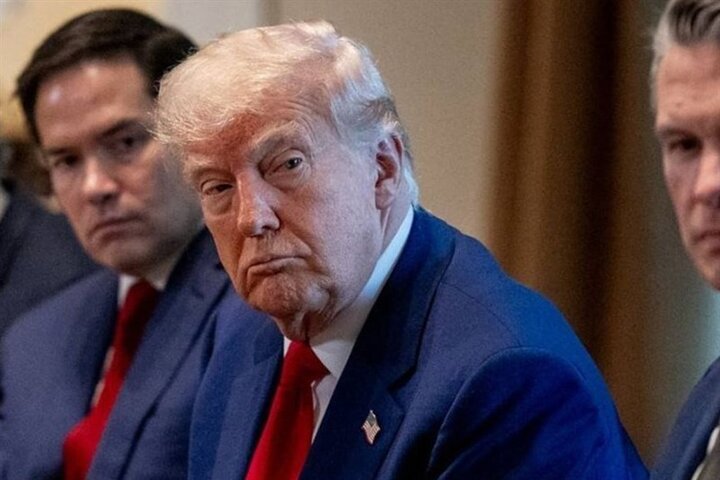
According to the International Desk of Webangah News Agency, In his second presidential term, Donald Trump has made the renaming of certain geographical points a part of American political rhetoric. This includes proposals ranging from changing the name of the ‘Gulf of Mexico’ to ‘America Gulf’ and suggesting ‘Lake America’ for ‘Lake Ontario,’ to the outlandish notion of naming the Strait of Hormuz ‘Trump Strait.’ These actions transcend simple word changes, intertwining with Trump’s perspective on power, influence, and the redefinition of America’s position in the world.
Throughout the history of international relations, names have consistently been part of the competition for identity, narrative, and power. However, when a US president endeavors to link his name or his country’s name to regions beyond Washington’s sovereign territory, the issue moves beyond a symbolic act.
This trend raises a deeper question than Trump’s personal traits, such as his desire for recognition or to leave a mark on history. It prompts an inquiry into whether these actions are merely political theater or part of a broader approach to redefining the concept of American influence and power globally.
Naming as an Instrument of Power
Geographical name changes in international politics are not merely a matter of shifting a few words on a map. Names carry historical, identity-related, and political narratives, and governments have often sought to use them to solidify their views on a region or a dispute.
Within this framework, Trump’s actions cannot be solely attributed to narcissism, his personal interest in being noticed, or making a historical mark. What lies behind these behaviors is a form of effort to transform political power into symbolic power—that is, using language and narrative to convey the impression that the United States not only has the capacity to influence global developments but can also dictate the framework for describing these developments.
The renaming of the Gulf of Mexico to America Gulf is an example of this approach. Even if implemented within the scope of official US government documents, this action does not, in itself, establish US sovereignty or ownership over a geographical expanse. However, its political message is clear: Trump is attempting to link a national name with a geographical space and symbolically reinforce the ‘America First’ narrative.
The same logic becomes more complex with the absurd idea of naming the Strait of Hormuz ‘Trump Strait.’ Unlike many previous examples, Hormuz is not a region of historical or identity-related dispute. Instead, it is an international strategic waterway upon which global energy security, the interests of regional countries, and the balance of power between Iran and the United States are contingent. Therefore, changing the name of such a point is more an attempt to project an assertion of influence over a geopolitical space than a mere change of title.
Nevertheless, the gap between name and the reality of power is precisely where the limitations of this approach become apparent. A country can alter the terminology used in its media or internal documents, but transforming a name into political reality requires components beyond symbolic power, encompassing international acceptance and the ability to effect real change in the balance of power.
From this perspective, Trump’s penchant for name changes should be viewed as part of a broader strategy where controlling narratives and symbols has become one of the tools for exercising power. This approach seeks to establish an image of power and superiority in the minds of the audience before altering on-the-ground realities.
Trump’s Struggle to Redefine America’s Sphere of Influence
Trump’s recent naming initiatives cannot be examined separately from his overall view of America’s place in the world—a view where the lines between influence, ownership, and the right of major powers to make decisions have become blurred. Within this framework, name changes are part of an effort to redefine America’s relationship with its surrounding environment and even regions beyond its direct sphere of sovereignty.
The ‘America First’ approach under the Trump administration has not been limited to trade, immigration, or security policies but has also extended into geopolitical territory. Pressure for greater control over Greenland, claims regarding the Panama Canal, his remarks about Canada, and efforts to link America’s name with various regions all fall within a common framework emphasizing an increased US share in the world’s strategic spaces.
The difference between this approach and traditional American policy of past decades is evident in its mode of expression and the tools employed. Previously, Washington solidified its position primarily through alliances, international institutions, military presence, and economic influence. Trump, however, conveys a significant part of this message through a more direct language of power—a language where appropriating symbols, changing words, and making grand claims are part of the political power play.
This perspective, of course, faces a fundamental contradiction. Powers can influence many global equations, but political influence does not necessarily equate to ownership or the ability to unilaterally alter geographical realities. Canada’s reaction to the issue of Lake Ontario, the opposition of some countries to renaming the Gulf of Mexico, and Iran’s high sensitivity regarding the Strait of Hormuz, given historical documentation, indicate that geography remains subject to the balance of power among various actors.
In reality, the core issue in Trump’s policy is not merely naming places but an attempt to create and convey the message that the United States remains a decisive power in the global order. However, the greater the distance between political claims and the ability to effect real change, the more symbolic actions will become tests of America’s power limitations.
Normalization of Encroachment Logic Under the Trump Administration
Trump’s recent actions in the geographical domain are not solely about naming or political rhetoric; these actions, on a broader level, are linked to a redefinition of the relationship between powers and the sovereignty of other countries.
When the US President speaks about changing borders, controlling other territories, or linking America’s name to regions outside its territory, the issue transcends a symbolic act and becomes a challenge to the principle of respecting the territorial integrity of nations.
Such a view blurs the distinction between power and right, implying that a country, solely due to possessing greater economic and military capacity, considers itself entitled to redefine others’ geographies or impose its will upon them. This logic undermines the principle of prohibiting border changes and the imposition of will through pressure and force, a principle emphasized in the international system after World War II.
The struggle to exert pressure on countries like Panama, Canada, and Denmark concerning Greenland, and claims regarding other strategic regions, paints a picture of a foreign policy where American interests take precedence over accepted international rules. This approach has even placed Washington’s allies in a difficult position, as countries that have been strategic partners of the United States for decades now face claims from a hegemonic and occupying actor.
Regarding the Strait of Hormuz, this issue is more sensitive, as an international waterway vital to global energy security becomes a subject of personal and political power display. The proposal for the name ‘Trump Strait,’ at a time when Iran holds the upper hand in this region, is not only a symbolic act against Tehran but also an indication of the struggle to transform an assertion of power into political reality through language and narrative—a subject Trump has, despite the ongoing conflict for nearly six months, yet to succeed in proving.
Ultimately, the main challenge this approach poses for the United States itself lies in the widening gap between its image of power and its global acceptance. Powers possess lasting influence when others, even with disagreements, legitimize their role. However, transforming power into a tool for name changes, pressuring sovereign states, and unilaterally redefining geography can only foster greater resistance rather than consolidate superiority.


