Israel Claims Control of Al-Taher Hill in Southern Lebanon Amidst War of Narratives
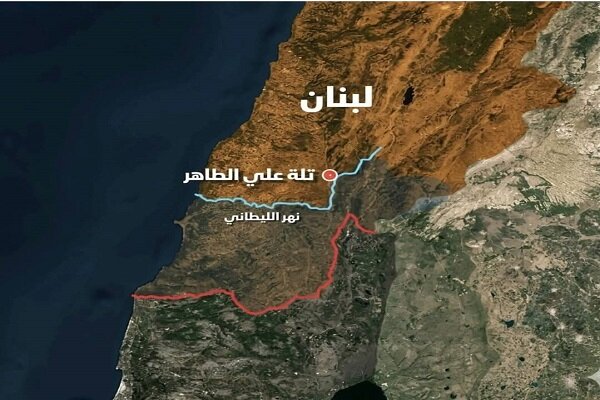
According to the International Desk of Webangah News Agency, the Israeli army’s announcement regarding operational control of a portion of Al-Taher Hill in southern Lebanon has opened avenues for assessing the implications of this development on the battlefield and the status of the Lebanese resistance. Several analytical and strategic points emerge from this situation.
Israeli Prime Minister Netanyahu’s extensive propaganda efforts surrounding the operational control of a section of the Al-Taher Hill tunnel are reportedly aimed at influencing the Israeli election landscape. The Israeli public remains unconvinced of the resistance’s weakening, and Netanyahu’s war cabinet is actively seeking new achievements and documented successes. This move is seen as an attempt to bolster domestic support by showcasing supposed battlefield victories.
The Israeli army’s months-long effort to capture a single hill, despite its tactical importance, utilizing extensive weaponry, forces, and intelligence organizations, highlights a significant challenge within the Israeli military system. This prolonged engagement undermines the core principle of a “lightning strike” and draws attention to the theory of former IDF Chief of Staff Yigal Yadin, who posited that the speed of capturing objectives is directly proportional to their importance and impact on outcomes.
The Israeli regime’s use of unconventional weapons, particularly phosphorus shells and cluster bombs, in its attempt to control parts of Al-Taher Hill, demonstrates a reliance on desperate measures to rapidly overcome a resilience crisis. This tactic suggests a strategic urgency and a departure from more conventional warfare approaches.
The consolidation of Israeli military positions in the Nabatieh region is expected to be exceedingly difficult, given three key factors: the diversity of offensive fronts against Israel, divergent approaches between Israeli military personnel and politicians, and the challenging winter conditions. These factors are likely to leave Israeli soldiers vulnerable to Hezbollah’s asymmetric responses.
The Lebanese government’s alignment with adversaries of the Lebanese resistance, coinciding with intense pressure and fierce assaults, has naturally challenged Hezbollah’s resilience. This situation complicates the resistance’s ability to adopt an offensive posture and implement its asymmetric power within occupied territories. Hezbollah is compelled to manage both external crises and internal challenges.
The sustained resistance of Hezbollah fighters for over five months against an unequal volume of enemy fire in the Nabatieh region and the Al-Taher hills marks a new record for the resilience of the resistance fighters. This resilience is attributed not only to the faith and steadfastness of the courageous Lebanese youth but also to the unwavering support and advisory role of the Quds Force of the Islamic Revolutionary Guard Corps and its prominent commanders.
Drawing parallels with Israel’s ongoing inability to contain or eliminate Hamas, and considering the occupation of 70 percent of Gaza by three Israeli divisions, including elite units like Sayeret Matkal and Sayeret Yahalom, the purported capture of this key tactical point in southern Lebanon, even if accurate, is unlikely to lead to the containment of the Lebanese resistance.
On a macro level, the ongoing war across the military geography of West Asia, characterized by Ansar Allah’s advancing offensives in Yemen, Hamas’s steadfastness in Palestine, and Hezbollah’s current tactical contraction in Lebanon, not only refutes the false notion of a “weakening resistance” but also further validates the concept of the resistance’s “resilient and elastic power.”
The “penetration of the resistance paradigm” into the debates of calculation forums and security policymakers in Islamic, Arab, and Lebanese countries presents a potential opportunity for the resistance. Amidst the growing inclination of major passive actors in the region towards normalization and de-escalation with Israel and the United States, the logic of resistance is poised for greater influence and visibility among security policymakers.
An immediate evolution in the operational and deterrence models of the resistance axis is increasingly necessary, considering the new military approaches of the United States and the Israeli regime in the region towards the resistance. The complete liberation of southern Lebanon and the Al-Taher hills is anticipated to become a pivotal point in a new security order.