Gaza Agriculture Devastated by Israeli Actions, Ministry Reports
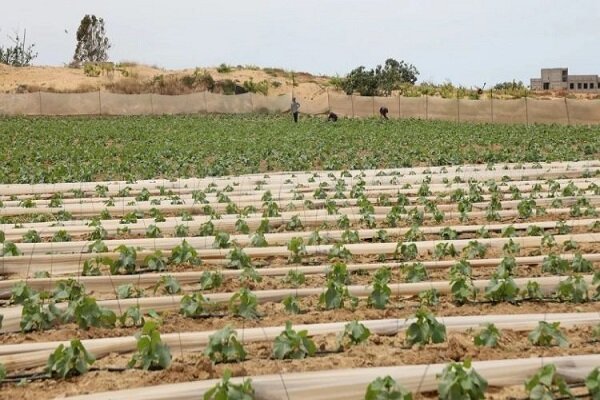
According to the International Desk of Webangah News Agency, the ongoing conflict in the Gaza Strip has led to the near-total devastation of its agricultural sector, with 87.6% of farmlands experiencing complete damage. Bahaa Al-Agha, Director of Policy and Planning at the Palestinian Ministry of Agriculture, stated that currently only 4% of Gaza’s agricultural land is accessible and safe for cultivation. The damages extend beyond farmlands to include soil, water wells, irrigation networks, and water transmission lines.
Livestock and fishery sectors have also incurred significant losses, estimated between 85% and 90%. Over 70% of agricultural lands are now situated behind the ‘yellow line,’ an area under the control of Israeli forces. The Israeli government has imposed severe restrictions on the import of agricultural inputs, including fertilizers, seeds, saplings, and pesticides.
Citing a recent report from the Food and Agriculture Organization of the United Nations (FAO), Al-Agha indicated that only approximately 3% of open-air agricultural land, totaling around 4,480 dunams, is currently safely accessible. Additionally, only 2,240 dunams of agricultural greenhouses, representing about 16% of Gaza’s total greenhouses, are accessible.
During the past agricultural season, only about 3,100 dunams were cultivated. The lack of pesticides also hampered efforts to combat agricultural pests. Al-Agha warned that the continuation of this situation could lead to a complete halt in agricultural production in the Gaza Strip.
Official statistics from the Palestinian Ministry of Agriculture and international organizations estimate the damages to Gaza’s agricultural sector at over $3.5 billion. This has resulted in the collapse of food security and has made the population almost entirely dependent on foreign aid.
In terms of crop production, approximately 158,909 dunams out of a total of 182,247 dunams of agricultural land have been damaged, accounting for 87.1% of all these lands. This extensive damage has led to a sharp decrease in domestic production and has diminished the agricultural sector’s capacity to supply the food needs of Gaza’s residents.
The agricultural irrigation system has also collapsed almost entirely. An estimated 8,700 agricultural wells are out of service, 3,828 agricultural water reservoirs have been damaged, and 1,371 kilometers of agricultural water transmission lines have been destroyed. These damages have caused widespread disruption to irrigation and production activities across a large portion of Gaza’s agricultural lands.
The livestock sector has suffered an estimated 90.3% in damages. More than 5,450 livestock farms and approximately 2,300 poultry farms have been damaged. Nearly 69,000 heads of livestock and 2.79 million birds have been lost, and around 28,400 beehives have also been damaged.
The fisheries sector has also faced extensive damage. According to statistics, 1,674 fishing vessels, 7 aquaculture farms, and about 450 multi-purpose ponds have been damaged. The sole fish breeding and cultivation center in the Gaza Strip has also been destroyed, leading to the near-complete cessation of fishing and aquaculture activities.