
Ansarallah Reshapes Yemen’s Power Dynamics with Strategic Control of Red Sea Chokepoints
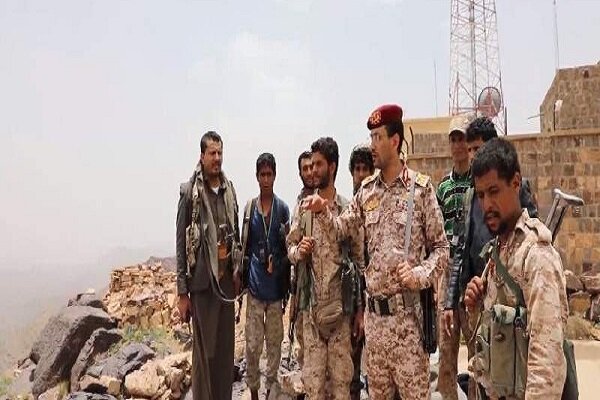
According to the International Desk of Webangah News Agency, recent developments in the Arabian Peninsula and the Red Sea indicate a historical turning point in the regional power balance. The Ansarallah movement in Yemen has transformed from an asymmetrical guerrilla actor confined to the northern mountains into an organized force with hybrid warfare capabilities and strategic influence over international trade bottlenecks.
The establishment of this new power equilibrium on land and sea is a result of accumulated experience, enhanced surveillance and launch systems, and the intelligent exploitation of internal divisions within the opposing coalition over the past two years. The recent events along Yemen’s west coast, including the control of the historic port of Mokha, the Dhubab region, and the capture of strategic islands like Perim (Myun) at the Bab el-Mandeb strait, represent more than just a territorial shift in the geography of Taiz and Hodeidah provinces. They signal a new order in energy geopolitics and maritime security, challenging the traditional calculations of regional and international backers of Yemen’s former government and forcing a reevaluation of Sanaa’s deterrence capabilities in Washington and Riyadh’s think tanks.
An analysis of Ansarallah’s actions over the past twenty-four months reveals the movement’s success in implementing an area denial deterrence strategy along one of the world’s most sensitive waterways. This was achieved through a chain of asymmetrical weapons, including reconnaissance and sniper attack drones, anti-ship cruise and ballistic missiles, and guided surface and subsurface vessels. Previously, Sanaa’s armed forces relied on attrition-based guerrilla warfare along land contact lines. However, the movement’s military doctrine has shifted to imposing economic costs on enemies by disrupting transit routes and targeting centralized command centers.
Ansarallah’s continuous strikes against the logistical structures of international fleets and multinational coalitions, such as Operation Prosperity Guardian, have demonstrated fundamental tactical challenges faced by advanced Western air defense systems against multi-layered drone and missile attacks. This has led to a significant reduction in Bab el-Mandeb commercial traffic, with maritime insurance costs and rerouting ships around Africa imposing a heavy burden on the global economy. The extensive recent operation across more than 5,400 square kilometers of the western coast marked the apex of this military doctrine’s evolution on the ground, exposing deep-seated weaknesses in the opposition camp. Ansarallah forces, employing multi-axis planning and simultaneous precise missile fire against support bases, coupled with drone attacks on command centers, completely shattered the defensive lines of forces stationed on the Al-Kadha, Mokha fronts, and Hanish and Perim islands within approximately 36 hours.
This rapid advance highlighted the lack of resilience in the Saudi and Emirati-backed military structure, forged over a decade. The withdrawal of key Emirati units, operational incoordination with CENTCOM, the existence of paper structures and nominal armies, and persistent delays in Riyadh’s political decision-making rendered the force incapable of withstanding a comprehensive assault. The sustained control of Sanaa’s new positions in the Perim strait and the airports and ports of Mokha indicates that the battlefield balance has reached a stage where Ansarallah forces maintain control of critical points on the west coast, even without extensive opposing air support or changes in foreign advisor deployment. The initiative in military operations now fully rests with Sanaa.
The implications of this development extend beyond Yemen’s borders, creating an unprecedented geopolitical link between the Strait of Hormuz in the Persian Gulf and the Bab el-Mandeb strait in the Red Sea. These two passages, vital arteries for a significant portion of global oil and gas transit and the link between Asia and Europe, are now influenced by the convergence of deterrence equations in West Asia. Riyadh’s efforts to bypass the risks of crossing the Strait of Hormuz by transferring crude oil via the East-West pipeline to Yanbu on the Red Sea have lost their guaranteed efficiency due to Ansarallah’s dominance over the Bab el-Mandeb strait and Perim Island. Sanaa, by deploying missile systems and coastal-to-sea armaments in dominant positions, has gained the ability to monitor and restrict the transit of any cargo associated with adversarial parties. This intertwining of energy transit corridors has transformed the ‘siege for siege’ equation from a political slogan into a tangible and weighty lever in international negotiations, placing Western powers in a strategic dilemma between costly military confrontation or acceptance of the new battlefield realities.
In conclusion, the redefinition of the balance of power in Yemen is a prominent indicator of the changing nature of modern warfare, shifting battlefield superiority from traditional hard power variables, such as expensive air fleets, to agile, precision, and affordable asymmetrical warfare tools. Over the past two years, the Ansarallah movement has not only consolidated its survival but also gained the initiative in setting the rules of engagement by dominating the vital Red Sea corridors and capturing the strategic coasts of Mokha and the islands overlooking Bab el-Mandeb. This shift in balance has led the foreign coalition’s strategy of decisive strike and swift victory into a protracted stalemate, imposing significant consequences on West Asia’s security arrangements. These consequences have rendered Western-Arab coalition-building costly and inefficient, undermining the effectiveness of traditional deterrence in protecting energy lines. Consequently, it has become clear that no stable security plan for international shipping lines in the Gulf of Aden and the Red Sea is possible without recognizing and acknowledging Sanaa’s geopolitical weight. These achievements place Ansarallah in a superior position for any peace negotiations and the determination of Yemen’s future political structure, a territory that has emerged not as a playground for intervening powers, but as a central node for regulating regional power balance and the international economy.


