
11 September Attacks: A Flawed Foundation for Counter-Terrorism Studies, Experts Argue
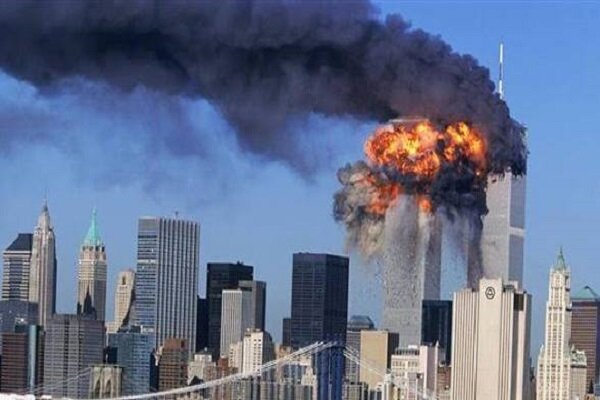
According to the International Desk of Webangah News Agency, the 11 September 2001 attacks remain one of the most debated and complex events in contemporary history, with enduring theoretical and practical implications for international politics. The 2004 report by the independent 9/11 Commission attributed the planning and execution of these attacks to 19 members of the Al-Qaeda group, led by Osama bin Laden.
However, a segment of analysts contends that following the Cold War and the collapse of the Soviet Union, the West experienced an identity crisis, having lost its primary ‘other’. In this vacuum, terrorism was constructed as the new ‘other’ for the West, leading to the accusation of terrorism or support for terrorism against the Eastern Bloc, independent nations, and opposing movements. Consequently, 9/11 became a tool for political labeling and securitization, forming the basis for terrorism studies through extensive media focus and propaganda.
More significantly, research within the field of terrorism often identifies 9/11 and the existence of ISIS as two pivotal moments. The rise of Islamophobia and anti-Muslim sentiment globally is also a clear consequence of this event. Some experts and critical narratives suggest that in Western and Christian societies, Islamophobia has, to some extent, replaced anti-Semitism, with terrorism being attributed to Islam. If the U.S. reports regarding Al-Qaeda’s role are accurate, then Al-Qaeda is a group whose seeds were sown during the Soviet-Afghan War through U.S. policies, later emerging from jihadist factions. This point was acknowledged by Hillary Clinton in 2010, who admitted the U.S. role in Al-Qaeda’s establishment. This ultimately led to a flawed and skewed foundation in the studies and fight against terrorism.
At the outset of a discussion, Dr. Mahmoud Mohtadi, a strategic affairs expert and former diplomat, elaborated on the concept of terrorism and the historical introduction of the term ‘terror’ into political discourse. He stated that the term ‘terror’ entered political literature in the late 18th century during the French Revolution. At that time, the overthrow of the monarchy led to severe chaos and insecurity, where anyone could accuse another of collaborating with the former regime, leaving ordinary citizens feeling unsafe.
He added, “Today, terrorism refers to the use of fear, threats, and violent, bloody programs to forcibly impose a situation that cannot be logically or persuasively explained. Since its inception, terrorism has been politically and strategically exploited, with the 11 September events serving as one example.”
The strategic affairs expert further detailed various perspectives on the 11 September incident. He highlighted the first dissenting narrative from the official U.S. account: the book by Mr. Thierry Meyssan, a renowned French researcher, critic, and author. Meyssan questioned many aspects of the incident, asserting that 9/11 was engineered to justify America’s entry into war and to garner support and convince American public opinion. Meyssan considers the event a type of coup. Recently, on the anniversary of 9/11, the author shared interesting points in an interview that researchers and those interested in the subject should hear.
Dr. Mohtadi emphasized the flawed foundation in terrorism studies and counter-terrorism efforts, and its use as a securitization tool, stating, “Today, terrorism is primarily employed as a populist-security media operation: first, a country is portrayed in public opinion as the ‘absolute evil’ to justify any war or action against it.”
Referencing the invasions of Iraq and Afghanistan as consequences of 9/11, he noted, “Some narratives suggest the primary objective was to encircle and ultimately occupy the Islamic Republic of Iran from the east, west, and south. However, the heavy costs of occupying Afghanistan and Iraq depleted America’s financial and military capacity to act against Iran. According to reports, George W. Bush handed over an bankrupt U.S. economy to Obama. Obama’s memoirs indicate the disaster was so severe that Obama’s economic team decided and concluded that the U.S. government should declare bankruptcy.”
He pointed to the efforts of researchers and scholars on the 11 September incident, stating, “In the analysis of some international reviewers and researchers, the 11 September incident and the Iraq issue were a type of coup that compelled George W. Bush into subsequent decisions. Accusations specifically target American Zionists and the existence of a deep Zionist state in America, particularly after World War II. Saddam’s punishment for firing missiles at Israel during the George H.W. Bush era, and the occupation of Iraq as a heavy penalty, are interpreted within this framework. Nevertheless, the geopolitical outcomes of many of these plans did not necessarily align with the designers’ expectations.”
From the Patriot Act to Guantanamo Bay and Political Purges
Dr. Amir Abolfath, an international affairs expert, described 11 September as a turning point in counter-terrorism trends at both domestic and international levels. He stated, “The 11 September incident, the largest foreign terrorist attack on the United States in two centuries, made terrorism a top priority for the U.S. government and sent a significant shock through American society. Domestically, actions such as the passage of the Patriot Act (which altered the intelligence and security structure), changes in judicial laws, and the establishment of the Guantanamo Bay prison were undertaken. Internationally, the U.S. invaded Afghanistan under the pretext of a war on terror, but these actions led to the spread of insecurity and terrorism. Statistics showed that terrorist threats increased after the Bush administration’s counter-terrorism operations.”
He emphasized that the 11 September incident was a pivotal moment in the construction of terrorism and terrorists, stating, “This incident quantitatively and qualitatively changed the perception of terrorism, increased global attention, and transformed it into an immediate international danger. Cooperation among countries to combat terrorism increased, but it also became a pretext for U.S. actions in West Asia, including dealing with Iran, Iraq, and rivals. Consequently, while attention to combating terrorism was reinforced, an aberration occurred leading to U.S. political purges. In many cases, human rights were disregarded (such as torture and civilian killings), which had negative impacts on the global human rights situation.”
The 11 September Attacks Paved the Way for Conventions, Procedures, and International Pressure Tools
Mohammad Mirabdoli, a political affairs expert, noted that 11 September provided the groundwork for the establishment of conventions and procedures as tools of international pressure. He stated, “Before the 11 September events, the fight against terrorism was primarily pursued through specialized treaties, police cooperation, and domestic laws. However, after the 11 September attacks, the United Nations Security Council redefined terrorism as a threat to international peace and security.”
He added, “Through Resolution 1373 (adopted on 28 September 2001) under Chapter VII of the UN Charter, the Security Council established the Counter-Terrorism Committee (CTC) and imposed binding requirements, such as criminalizing terrorist financing, freezing assets, preventing the harboring of terrorists, and enhancing border controls, on all member states. This approach, unlike previous treaties, was not solely based on state consent.”
The political affairs expert also referred to international monetary and financial systems as tools of pressure, stating, “Prior to the 11 September events, conventions existed regarding the suppression of terrorist financing, but after UN Resolution 1373, a global commitment approach emerged. The UN itself notes that the global obligation to combat terrorist financing accelerated significantly after this resolution. Consequently, governments were pressured to criminalize the financing of terrorism. In essence, this approach transformed the global financial system into a component of the anti-terrorism apparatus, and in this context, pressure on countries was no longer purely political or military but could also be applied through banks, money transfers, and access to the international financial system.”
He stressed the formation of certain international practices after the 11 September incident, stating, “After this incident, no government wished to be recognized as a supporter of or indifferent to terrorism. Following the U.S. invasion of Iraq, countries increasingly sought to avoid the label of ‘state sponsor of terrorism,’ thus creating an international norm.”
Mirabdoli concluded by noting that, in general, following the 11 September events, some international conventions and protocols emerged globally and regionally to combat terrorism, including: the International Convention for the Suppression of Acts of Nuclear Terrorism (2005), the Protocol of 2005 to the International Convention for the Suppression of Unlawful Acts Against the Safety of Maritime Navigation, the Convention on the Prevention of Terrorism adopted in Warsaw (2005), the ASEAN Convention (2007), and the UN Global Strategy document (2006).
Conclusion
Contrary to the official narrative that attributed the planning and execution of the 11 September attacks to 19 members of the Al-Qaeda group led by Osama bin Laden, the unofficial and critical narrative specifically points to American Zionists and the existence of a deep Zionist state in America, particularly after World War II.
This incident altered the perception of terrorism quantitatively and qualitatively, increasing global attention and creating undesirable consequences for counter-terrorism studies and efforts. The 11 September attacks, due to the political intentions behind them or the political exploitation thereof, are not a sound basis for establishing domestic and international studies and counter-terrorism measures. Even after 25 years since this event, the shadow of the consequences of politically confronting this dangerous phenomenon still looms over the field of studies and combat, becoming a significant obstacle to understanding this phenomenon and containing its threats. To return to the correct path, political perspectives and ethnic and religious biases must give way to scientific and indigenous approaches.


