
Europe and Russia on Collision Course Amidst Shifting Alliances and Escalating Tensions
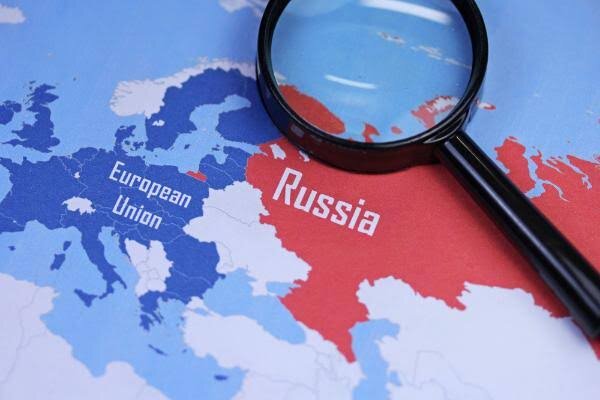
According to the International Desk of Webangah News Agency, Europe is navigating a pivotal moment in its relationship with Russia, marked by increasingly assertive policies from the European Union and a re-evaluation of strategic alliances. In this evolving landscape, Iran is urged to maintain national interests through strategic cooperation and by avoiding emotional entanglement in major power dynamics.
In recent months, Europe has significantly altered its approach toward Russia, culminating in the EU’s adoption of its twenty-first sanctions package against Moscow on July 23, 2026. This package introduced 218 new restrictive measures, intensified limitations on Russia’s energy and financial sectors, targeted the “shadow fleet,” and established a legal framework to prohibit Russian military personnel involved in the Ukraine conflict from entering the EU. The EU also extended the suspension of the automatic adjustment mechanism for its oil price cap until July 2027. Concurrently, European nations are bolstering their defense capabilities and increasing military investments.
This shift is attributed to several structural factors. The decline of Hungarian Prime Minister Viktor Orbán’s “political shield” has been a significant catalyst. For years, Orbán’s repeated vetoes allowed EU capitals hesitant about sanctions against Russia to conceal their opposition behind Budapest’s stance. With the rise of Péter Magyar and Orbán’s diminished influence, this cover has vanished, forcing countries like Greece, Austria, and Bulgaria to openly declare their reservations. This development has exposed internal EU divisions while simultaneously increasing pressure for stricter sanctions.
A second key factor is Europe’s revised strategic assessment of Russia’s military capabilities. Assessments from NATO and the EU warn that Russia may possess sufficient military strength within a few years to pose a significant threat to the Baltic states and Poland, and to rebuild its current losses. Andrius Kubilius, EU Defense Commissioner, has cautioned that Russia might initiate a conflict with European nations within four years to test Europe’s defensive capabilities, necessitating enhanced European defense readiness. He has called for addressing gaps in drone defense and incorporating lessons from the Ukraine war to counter escalating Russian threats, emphasizing that abandoning Ukraine would be a “historic mistake” that would diminish Europe’s deterrence and weaken Ukraine’s position.
In response to these stringent approaches, European nations are focused on intensifying military responses to Moscow, as evidenced by recent drone attacks on Russian oil refineries and alleged civilian casualties, aiming to preempt what they perceive as an escalating Russian threat.
European Military Readiness: Realities Versus Claims
Europe entered a new phase of rearmament in 2026. The SAFE program, with a budget ceiling of €150 billion and defense investment plans from 19 member states, is a crucial financial instrument in this endeavor. The EU is also advancing the European Defence Industry Programme (EDIP), backed by a €1.5 billion budget, and has designed the AGILE program for rapid defense innovation with €115 million in funding. Nationally, Germany, Norway, and the Baltic states are pursuing plans to increase their defense spending. Norway has added 115 billion kroner to its long-term defense plan until 2036, and Estonia has raised its defense spending for 2026 to 5.4 percent of its GDP.
However, a September 2026 report by the IISS indicates that Europe continues to face significant gaps in personnel, artillery, air defense, ammunition, and combat readiness. This assessment suggests that increased budgets and armament programs do not automatically translate into immediate deployable combat power; a substantial portion of Europe’s required capacity relies on time, industrial production, and logistical support, which currently grants Russia an advantage.
The Complex Role of the United States
The United States’ role in this equation is complex and multi-layered. The U.S. National Defense Strategy, released in January 2026, explicitly prioritizes the security of the American homeland and the Western Hemisphere, alongside redefining America’s role in foreign defense commitments. This implies that European allies must assume primary responsibility for the continent’s defense, with U.S. support becoming more limited.
At the 2026 NATO Defense Ministers meeting, U.S. Secretary of War Pete Hegseth spoke about increasing European countries’ responsibilities and the changing U.S. role in the alliance. Following his address, analysts have discussed the concept of “NATO 3.0,” related to shifting a greater defense burden to Europe.
This U.S. strategy is not merely about “delegating responsibility” but also serves distinct economic and geopolitical logic. Analysts point out that after cutting off cheap Russian energy supplies to Europe, the U.S. has replaced them with its own liquefied natural gas in the European market. Simultaneously, amid escalating insecurity in Europe, European manufacturing investments have been drawn towards the U.S. These actions have effectively weakened Europe relative to the U.S. and perpetuated the continent’s dependence on the White House.
The strengthening of dollar dominance over the euro is among the significant consequences of increased tensions between Europe and Russia and Europe’s growing reliance on the U.S. Increased European military expenditures and a shift in the strategic balance between the EU and Russia may, in the long term, lead to a weakening of the euro and a strengthening of dollar hegemony. The escalation of geopolitical tensions in Europe increases demand for the dollar as a “safe haven,” putting pressure on the euro. This outcome aligns with former President Trump’s objectives, though the primary motivation is the strategic weakening of Russia and maintaining control over the European order.
Future Scenarios: From Agreement to World War III
Analysts have outlined five primary scenarios for the future of Europe-Russia relations:
- Political Agreement: Despite ongoing conflict, a window for negotiation remains open. Putin has occasionally spoken of the possibility of an agreement to end the war and denied a desire for conflict with Europe. However, deep disagreements over Ukrainian territories, security guarantees, and Ukraine’s future make a final agreement difficult. This scenario is considered unlikely in the short term.
- Protracted War of Attrition: In this scenario, neither side achieves a decisive victory. Russia maintains its capacity for large-scale attacks, while Ukraine, with Western support, resists Russian advances. Europe continues to rebuild its military capabilities during this period. This scenario currently appears the most probable, as Russia lacks the ability for a swift victory, and the West is unwilling to accept Ukraine’s defeat.
- Escalation of Hybrid Warfare in Europe: This scenario is arguably already underway. European countries have accused Russia of attempting attacks with explosive drones, sabotage, arson, and cyberattacks. The continuation of such activities without crossing the threshold of formal warfare allows for the expansion of tensions.
- Direct NATO-Russia Military Conflict Following a Major Incident: The most dangerous scenario involves a major accidental military incident, such as the downing of a Russian aircraft or missile within NATO territory, or the targeting of a significant European facility causing human casualties, and vice versa in Russian territory. Analysts also seriously consider the possibility of false flag operations within NATO territory, attributed to Russia to escalate tensions against the Kremlin. In such circumstances, direct exchanges of fire between Russian and NATO forces are probable.
- World War III: This scenario entails a broad conflict between NATO and Russia, potentially involving limited use of tactical nuclear weapons, and the involvement of other powers. The risk of rapid escalation would be particularly high, and the U.S. and Europe might find themselves embroiled in a third world war with Russia. While the probability of this scenario is not high in the short term, it cannot be entirely dismissed.
Which Scenario is More Probable?
The convergence of existing evidence suggests that Scenario Two (Protracted War of Attrition), combined with elements of Scenario Three (Hybrid Warfare), represents the most likely path forward. Reasons for this assessment include: First, despite increased defense budgets, Europe will not possess sufficient combat capability for direct confrontation with Russia until 2030. Second, Russia, despite its verbal threats, is aware of the political and economic costs of a full-scale war with NATO. Third, the United States currently shows no clear inclination for direct involvement in a war, preferring to increase its combat readiness and rebuild its depleted arsenal from conflicts, including engagement with Iran.
Nevertheless, Scenario Four—accidental conflict—poses the most dangerous possibility, as it does not require intentional decision-making and can originate from a minor incident.
Opportunities and Threats for Iran
Iran finds itself as both a player and a target in this complex equation. On one hand, Europe, as part of its pressure campaign against Russia, is increasingly targeting Iran as a “strategic supporter of Moscow.” The EU has sanctioned the Islamic Revolutionary Guard Corps, and three European countries (the UK, France, and Germany) have activated the “snapback” mechanism.
On the other hand, Iran does not seek to escalate tensions with Europe. Abbas Araghchi, Iran’s Foreign Minister, correctly pointed out that “Europe was mistaken in its calculation to assume that supporting the war against Iran would help it in confronting Russia.”
Iran’s optimal strategy in this situation should be based on several pillars:
- Strengthening Multilateralism: Iran, China, and Russia jointly wrote to the UN Secretary-General, declaring the activation of the EU’s snapback mechanism “illegal and void” and demanding its rejection. Iran should bolster this trilateral cooperation to form a united front against Western pressure.
- Avoiding Strategic Blackmail: Europe might request Iran to cease military support for Russia in exchange for concessions on sanctions. Iran must proceed cautiously to avoid sacrificing its strategic interests in cooperation with Russia or becoming a tool of Western pressure against Moscow.
- Preparing for Worse Scenarios: If the Europe-Russia conflict expands, Iran could be inadvertently drawn in. In Scenario Four, Russia might request Iran to join the conflict as an ally. Iran must maintain its diplomatic capacity to de-escalate tensions and carefully consider both domestic and international conditions during such a situation.
Connection to U.S. and Israeli Threats
The heightened tensions between Europe and Russia are strategically synchronized with increased threats from the U.S. and Israel against Iran. Last February, the U.S. and Israel launched extensive and brutal attacks against Iran, resulting in the martyrdom of Ayatollah Khamenei, the Supreme Leader, and several senior military commanders. Former President Trump has brazenly declared his objective to destroy all of Iran.
The U.S. and Israel are exploiting the conflict between Europe and Russia to advance their objectives in West Asia. Indeed, the weakening of the Russia-Iran axis is one of the West’s long-term strategic goals, which Europe and the U.S. are pursuing through a division of labor. From their perspective, Russia, preoccupied in Ukraine, lacks the capacity for extensive military support to Iran, creating an opportunity to place Iran in greater strategic isolation. Therefore, Iran, Russia, and China must design a comprehensive strategy for broad and long-term cooperation to counter Western moves against them.
Is a Major War on the Horizon?
Providing a definitive answer to this question is challenging, but evidence suggests that the likelihood of a major war—defined as direct and extensive conflict between major powers—is low in the short term but increasing. A combination of factors, including the collapse of the post-Cold War security architecture, the gradual shift of global power centers from West to East, particularly towards China, the near-complete absence of effective communication channels between Russia and the West, Europe’s rapid rearmament, and increased hybrid warfare activities by the U.S., Europe, and Russia, have created a dangerous environment.
In conditions of prolonged mistrust, continuous military buildup, minimal communication, and a damaged security architecture, scenarios where a small spark ignites a conflagration and intense intercontinental battle will not be absent.
However, three significant deterrent factors remain: First, extensive global economic interdependence makes the cost of full-scale war unbearable for all actors. Second, nuclear deterrence remains effective, albeit with constant erosion. Third, the U.S.’s clear reluctance to engage directly in war makes Europe more cautious.
Conclusion
Europe is currently caught between “aggressive realism” and the “need for deterrence.” Its increasing strictness towards Russia stems not from growing power, but from an understanding of its vulnerability to Russian threats. Europe’s military readiness still lags far behind the requirements for a potential conflict, and this gap heightens the risk of miscalculation. The U.S., with its “delegation of responsibility” strategy, has placed Europe in a position where it must simultaneously contend with the Russian threat and the economic costs of rearmament.
The most probable scenario is the continuation of the current situation as a protracted war of attrition, coupled with intensified hybrid warfare in Europe. However, in such an environment, the risk of an accidental incident leading to widespread military conflict is steadily increasing. Iran must safeguard its national interests with vigilance, strengthening its strategic alliances with China and Russia, and avoiding entrapment in emotional blackmail within the games of major powers.


