
Yemen’s Houthi Forces Consolidate Control Over Bab el-Mandeb, Reshaping Global Trade and Security
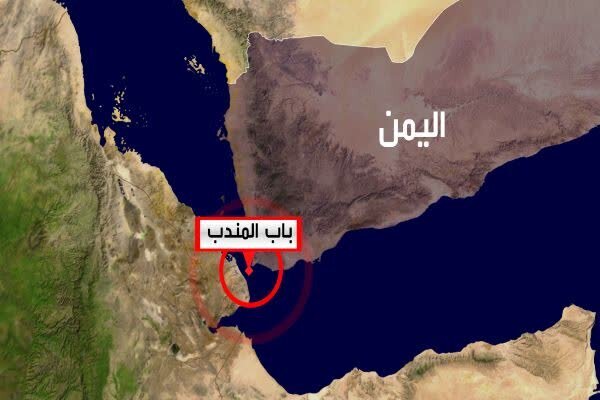
According to the International Desk of Webangah News Agency, recent field developments along Yemen‘s western coast over the past few weeks, where the armed forces of the National Salvation Government have established military dominance over an area exceeding 5,400 square kilometers in the Taiz and Hodeidah provinces, signal a fundamental qualitative leap in the conflict’s nature. The situation has transitioned from a local asymmetrical war to a decisive variable in regional power balances.
The execution of the strategic “By Allah, We are Stronger in Might and Stronger in Ill-Recalled Punishment” operation and the capture of a series of strategic points, such as the Al Mukha port and airport, the coastal district of Zuab, the strategically vital islands of Mayyun (Perim) and Hanish, and notably, the commanding “Khabub” heights, have created a new defensive geography at the southern entrance of the Red Sea. This topographical dominance, particularly the positioning on the Khabub heights which provide surveillance and direct fire control over land-based supply routes and the “Bab al-Iskandar” maritime channels, coupled with the rapid construction of engineering fortifications and multi-layered defense lines north of Al-Aradi, has effectively removed any possibility for the coalition to regain ground positions.
Consequently, Sanaa, by taking control of key coastal infrastructure valued at hundreds of millions of dollars and fully controlling the strait’s entrance, has not only reversed the field balance in Yemen in its favor but has also directly established its sovereignty over the means to monitor and deny physical access to one of the world’s most sensitive maritime passages.
Shock to the Global Economy
From an energy geo-economic perspective, this territorial transformation has redefined the vulnerability structure of global hydrocarbon flows and challenged the traditional theory of transit line security. The surge in Brent crude oil prices to around $110 per barrel is a clear manifestation of the “geographical risk compression” phenomenon in the Middle East’s energy transit architecture. This means the Bab el-Mandeb bottleneck now operates not as an isolated obstacle but in organic connection with the Strait of Hormuz and land-based transfer infrastructures.
The ineffectiveness or vulnerability of alternative routes, such as Saudi Arabia’s East-West crude oil pipeline with a daily capacity of 4 million barrels, which terminates at Red Sea ports to remain secure from Persian Gulf crises, has demonstrated that bypassing one waterway without guaranteeing stability in the destination waterway is a mere illusion. The simultaneous positioning of three key bottlenecks—the Strait of Hormuz, the trans-peninsular pipelines, and the Bab el-Mandeb Strait—within the firing range and leverage of Sanaa has exposed the energy market to a sustained and inflexible “geopolitical risk premium,” whose inflationary effects directly target the industrial economies of Asia and Europe.
Yemeni Dagger at the Throat of Global Value Chains
In parallel with oil market fluctuations, the international commercial shipping network and global supply chains have also experienced an unprecedented structural shock, with consequences extending beyond purely military calculations. A 50% reduction in daily vessel traffic through the Bab el-Mandeb passage, equivalent to a drop in traffic from 30 to 15 ships, and a steep increase in “war risk insurance” costs by international maritime syndicates, have forced maritime logistics giants to choose between accepting grave risks or undertaking costly rerouting towards the Cape of Good Hope.
The imposition of an additional 10 to 14 days of voyage and thousands of extra miles for the container fleet has disrupted the concept of timely supply chain management in East Asia-West Europe exchanges. This has fueled a wave of delays in cargo clearance, accumulated fuel costs, and a reduction in active international commercial shipping capacity.
Furthermore, the recapture of important infrastructure assets in Al Mukha, including port projects, a 60-megawatt power plant, and airport facilities, has strengthened the economic base of the government in Sanaa and severed the opposing side’s exclusive supply routes for managing the southern and western coasts.
Schism in the Security Council
On the diplomatic and international relations front, emergency sessions of the United Nations Security Council have revealed a deep structural schism among power blocs in containing this crisis and exposed the erosion of Western deterrence. While the United States, the United Kingdom, and European partners, citing resolutions such as 2216 and 2722 and relying on operations like “Aspides,” insist on suppressing maritime threat tools and countering Iran’s regional influence, the cautious stance of Eastern powers like China and Russia—which emphasize the necessity of understanding the conflict’s roots, respecting Yemen’s territorial integrity, and avoiding hasty military actions—has paralyzed the international consensus mechanism.
Concurrently, the regional coalition’s inability to secure military participation from powers like Egypt, which, due to historical experiences and geopolitical priorities, refuses to enter the western coast quagmire, and the reluctance of countries like Pakistan and Turkey to engage in direct conflict, coupled with continuous air and human losses, indicate a deep stalemate in hard power options against Sanaa. This reality is compounded by humanitarian organizations’ warnings of escalating tensions and a worsening refugee crisis.
Concluding Remark
In final analysis, this month’s developments represent a turning point in the geopolitics of Southwest Asia. Sanaa has successfully elevated its geostrategic position from a local militia actor to an “indispensable balancing player” in the global security geometry. The integrated control over the Bab el-Mandeb Strait, Mayyun Island, and the commanding Khabub heights imposes the unavoidable reality on Western and regional capitals that the era of decoupling Red Sea maritime security from Yemen’s sovereign and political equations has ended. Geography has once again proven its intrinsic superiority over external control tools. Any future security architecture, economic arrangements, or stability mechanisms in this vital artery will be impossible without considering the strategic interests and acknowledging the geopolitical weight of Sanaa. At this stage, a process has been initiated that is dismantling the unipolar order dominating maritime bottlenecks and establishing a new phase of multi-layered deterrence across international waters.


