
Dostoevsky’s ‘The Gambler’ Offers Insight into Trump’s Iran Stance
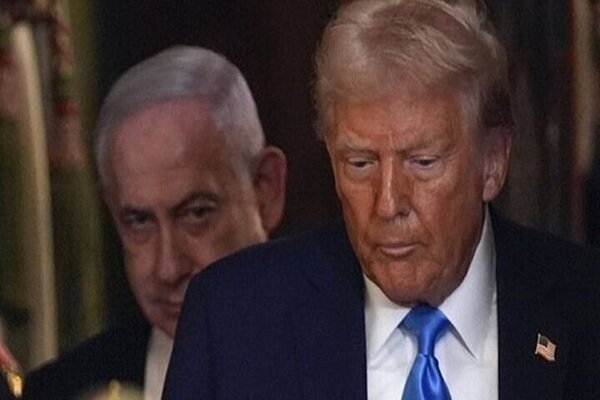
According to the International Desk of Webangah News Agency, a recent editorial in the Tehran Times, authored by managing editor Mohammad Sarifi, delves into the complexities surrounding President Donald Trump‘s approach to international relations, particularly concerning Iran. The piece posits that understanding Trump’s decision-making process might be illuminated by examining the themes in Fyodor Dostoevsky’s renowned novel, “The Gambler.” The full text of the article is presented below.
Globally, a diverse array of individuals, from politicians and analysts to journalists, traders, and market participants, are actively attempting to decipher and comprehend the character of the current U.S. President. The President of the United States wields extensive authority, while the mechanisms within the American system designed to oversee and constrain these powers often exist more as theoretical possibilities on paper than as practical realities.
A significant question confronting observers in the U.S. and across the world today is whether Trump will reignite conflict with Iran and initiate an attack. It is crucial to note that the conflict, which began on February 28, 2026, has never truly concluded. This ongoing engagement has experienced fluctuations in intensity, sometimes escalating and at other times subsiding, but it has not reached a definitive end.
Returning to the central question, one of the most logical avenues for finding an answer may lie in examining Trump’s own pronouncements. However, his positions shift daily, and new claims emerge, revealing a profound level of inconsistency. This has reached a point where, during a recent campaign rally in Oklahoma, he asserted that Iran is even producing narcotics at its nuclear facilities. The degree of perceived naivete attributed to his audience by Trump is, at times, astonishing.
When conventional and rational approaches fail to unravel a complex puzzle, individuals often resort to their own innovative and unique methods. In this context, the author seeks assistance from Dostoevsky, highlighting the enduring value of great writers who can offer insights even after their passing.
One of Dostoevsky’s most celebrated and captivating works is the novel “The Gambler,” which was completed in a remarkable 26 days. The very genesis of this novel stemmed from the author’s financial pressures resulting from his gambling losses. Regardless of a gambler’s origin or the tools of their trade, gamblers throughout history have adhered to a single principle: never abandon the gaming table. Winners continue to play for greater gains, and losers play to recoup their losses, with both groups placing faith in their luck.
Alexei Ivanovich, the protagonist of the novel, adheres to this unwritten pact, much like any other gambler. When he achieves a significant win, he continues to play to accumulate more profit. Upon his first loss, he recounts: “With a feeling mixed with nausea and anxiety—as if I wanted to break out of the crowd and go home—I bet another fifty thalers (a currency unit in the story’s geography); this time on red.”
An attack on Venezuela, for Trump, represented a sweet victory, albeit one achieved through controversial means. However, for an individual addicted to gambling, a sweet victory is never sufficient; instead, it intensifies the gambling instinct. Influenced by the encouragement of the then-head of Mossad, the U.S. President harbored the delusion that the time had arrived to capture that “great whale.” Defeating Iran, a nation that had stood against the United States since 1979 and outlasted the presidencies of all his predecessors, could have cemented his place in history. He had engaged in a similar gamble less than a year prior and had failed, yet he believed this instance would prove different.
The war, initially projected to last only a few days, or at most four to six weeks, has now devolved into a seven-month quagmire for the United States. In some gas stations, the price of diesel fuel is displayed as $9.99 solely because the pumps are incapable of showing a higher figure. Trump’s gamble in February has transformed into America’s most reviled war in decades, pushing his voter base to the brink of collapse.
A rational individual in such circumstances would reassess their calculations and abandon such folly. However, it is crucial to remember that we are dealing with a weary and desperate gambler—one who promises spectators $5,000 each in return for more fervent applause; one who, to guarantee victory, does not shy away from attacking schools and slaughtering children, and considers the sinking of an unarmed vessel a form of entertainment. The fundamental problem is not losing at gambling; the core issue is his illusory hope in luck. Some sources report that Trump has expressed in closed-door meetings that the reason for the war’s lack of decisive outcome was the insufficient intensity of the attacks.
At the conclusion of Dostoevsky’s novel, Alexei, having lost everything, recalls a memory where, in a previous game, he had only one thaler remaining. With that single coin, he won 170 thalers. He reflects, “This is a fact; a person’s last thaler can sometimes have such meaning! And if I hadn’t had the courage then, if I hadn’t dared to make a decision, what would have happened?… Tomorrow, tomorrow everything will end!”


