France Imposes Curfews Amid Widespread Protests and Arrests
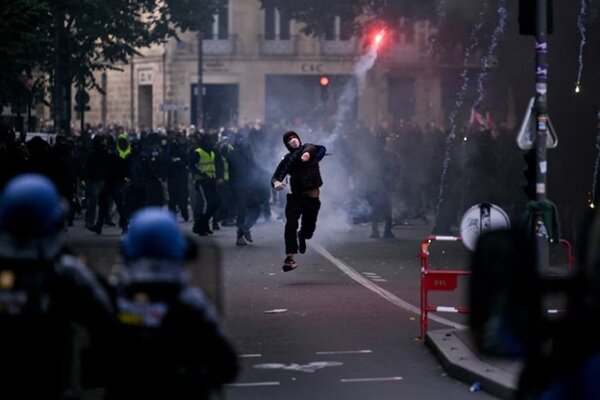
According to the International Desk of Webangah News Agency, France has imposed strict measures, including nighttime curfews, in parts of Paris and several other cities following a tense weekend marked by widespread clashes during student and livelihood protests. The decision comes as authorities grapple with escalating unrest and calls for change.
French Prime Minister Sebastien Lecornu has urged local officials to enact limited curfews to safeguard citizens, public property, and businesses. These restrictions are particularly focused on areas within Paris such as Republic Square and the streets surrounding the Le Halles market. In Lyon, gatherings in certain streets have been prohibited, while Marseille has imposed limitations on assemblies and demonstrations. Additionally, cities like Nice, Lille, Douai, Wattignies, and Denain have announced curfews for individuals under the legal age.
These measures were enacted after more than 2,000 people were arrested during the weekend’s unrest, which also resulted in at least two fatalities. Reports have also emerged of severe injuries, including the loss of limbs for two individuals. During the confrontations, police deployed tear gas and engaged with masked groups who were involved in setting fire to buildings, vandalizing shops, and entering government facilities. In Limoges, the upper section of the city’s 143-year-old historic town hall collapsed after being engulfed in flames.
French President Emmanuel Macron reacted to the incidents on Sunday evening, October 18, 2026 (October 26 in the Iranian calendar), emphasizing that those responsible for destruction and looting must be held accountable. He also announced a series of meetings throughout the week to discuss practical proposals and address the demands of the protestors. Interior Minister Gérald Darmanin acknowledged that authorities had underestimated the scale of the unrest and offered his resignation, which President Macron did not accept.
The protests initially began in September with a strike by students and teachers at a high school in the Paris suburbs, who were demanding increased staffing and resources for schools. Although their initial demands were met and the strike concluded, the protests subsequently spread to other regions of France. Students continued to voice concerns over issues such as a lack of educational staff and overcrowding in schools. Public anger intensified following police actions against protestors, particularly the release of a video showing an officer using a banned neck-restraint technique on a young woman.
In the ensuing weeks, the scope of the protests broadened beyond educational concerns to encompass dissatisfaction with the rising cost of living, unemployment, economic disparities, and the government’s performance. Saturday’s protests, October 17, 2026 (October 25 in the Iranian calendar), saw over half a million people take to the streets across France. While most gatherings were peaceful, clashes and property destruction escalated in some cities as night fell.
In Paris, masked groups looted shops, and fires were set. In Lyon, the city’s tourist office was set ablaze, and hundreds of businesses were damaged in the Île-de-France region. Concurrently, protests addressing issues related to education, housing, and the cost of living continued in other European countries. In Belgium, students demonstrated against the state of their educational system, while in Lisbon, Portugal, tens of thousands marched to protest the rising cost of living and the housing crisis.
Milan, Italy, experienced two nights of unrest, with protestors attacking shops and supermarkets. Police responded with tear gas and water cannons, leading to 32 arrests. Italian authorities announced new security measures, including the deployment of 500 military personnel in the city. In Tirana, the capital of Albania, student protests against government corruption, ongoing for months, turned violent over the weekend.
Alain Berset, Secretary-General of the Council of Europe, noted the widespread protests from Paris to Milan, Brussels, and Tirana, emphasizing that the concerns of peaceful protestors regarding inequality, education, housing, and feeling unheard must be addressed. CNN reported that the continuation of these protests and the government’s crisis management approach could significantly influence the political landscape in France ahead of the upcoming presidential elections.