Democrats Take Early Lead Ahead of US Congressional Midterm Elections
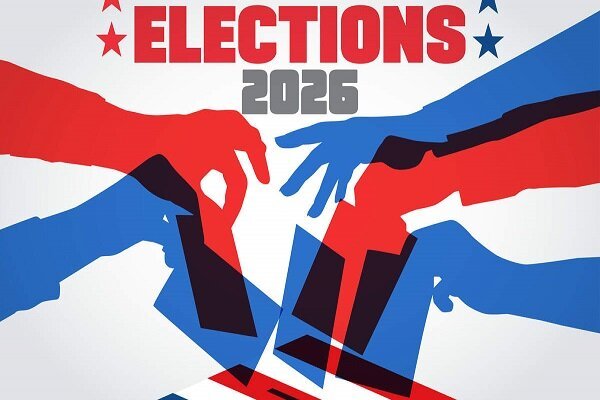
According to the International Desk of Webangah News Agency, political candidates are actively competing to secure all 435 seats in the House of Representatives alongside 35 out of the 100 total seats in the Senate.
Latest statistical evaluations and polling averages demonstrate that while Democratic hopefuls maintain an early advantage across both legislative chambers, the final outcome remains heavily dependent on fiercely contested battleground districts.
With voters preparing to head to the polls on Tuesday, aggregated data from RealClearPolitics projects that Democrats are positioned to capture 47 Senate seats compared to 45 seats for Republican contenders. The political landscape across eight states remains exceptionally tight, with forecasts leaning toward Republicans in seven of those contested races and toward Democrats in just one.
Should the Republican Party manage to secure at least five of these critical battleground areas, their total count in the upper chamber would climb to 50 seats. Under existing institutional frameworks and constitutional rules, a 50-50 tie in the Senate would empower Vice President JD Vance to cast the decisive tie-breaking vote in his capacity as President of the Senate.
Meanwhile, securing control of the House of Representatives requires a minimum threshold of 218 seats. Current projections from RealClearPolitics suggest that Democrats are on track to win 227 seats, while Republicans are projected to claim 182 seats. Although the margins in 26 remaining highly competitive districts continue to narrow, Democratic candidates remain the primary favorites to retain or capture the House majority.
Current congressional distribution shows Republicans holding 53 seats in the Senate against 45 for Democrats, alongside two independents who frequently caucus with the Democratic side. In the House, the current balance stands at 218 seats for Republicans, 214 for Democrats, one independent, and two vacant seats.