
Cuba Ready to Fight if Attacked by U.S., Ambassador Tells Tehran Times
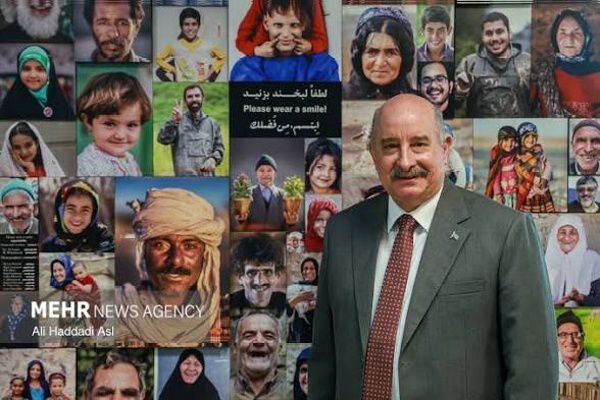
According to the International Desk of Webangah News Agency, Cuba is prepared to engage in combat if forced to defend itself against the United States, a sentiment echoed by its Ambassador to the Islamic Republic of Iran, Jorge Fernando Lefebre Nicolás, in an interview with Tehran Times. The discussion was largely shaped by the long-standing U.S. sanctions against Cuba and the perceived imminent threat of aggression towards the Latin American island nation. The Ambassador asserted that if Cubans are attacked by the United States, they will respond as they have since the 1960s: by resisting.
The Ambassador expressed gratitude to Tehran Times for the opportunity to discuss pressing contemporary issues affecting both Cuba and Iran, noting that both nations face threats from the United States. He highlighted that since the Cuban Revolution in 1959, the U.S. has aimed to alter Cuba’s political system and subjugate its population, imposing a blockade that began in 1962. This means Cubans have endured U.S. sanctions for over six decades, with conditions worsening under the current administration. Former President Trump reportedly imposed over 200 sanctions during his first term, significantly complicating life for Cubans, and has continued this trajectory with an additional 20 to 30 sanctions within the first year of his second term.
Two specific sanctions have been particularly severe. The first concerns Venezuela, a close partner and oil supplier to Cuba. Following what the Ambassador described as the U.S. effectively kidnapping Venezuela’s president, the U.S. intervened in Venezuela and subsequently imposed sanctions threatening any nation that sells oil to Cuba. This policy has created a dire situation, with Cuba receiving minimal oil shipments, impacting essential services like hospitals, agriculture, and transportation. The Ambassador characterized the humanitarian crisis as dire.
Furthermore, the Trump administration implemented sanctions against any country or company trading with Cuba, threatening repercussions for those engaging in commerce. This has made it evident, according to the Ambassador, that the blockade is not solely a U.S.-Cuba issue but one that now involves the entire world. He suggested the Trump administration is seeking a significant victory through unlawful actions, citing the intervention in Venezuela and the subsequent escalation of conflict against Iran as examples. The Ambassador voiced concern that if the U.S. fails to subdue Iran, it might consider military action against Cuba.
The Ambassador described the war in Iran as a complete political and strategic failure for the United States, suggesting the current administration might seek to divert global attention from this outcome by focusing on Cuba. He noted that the perceived ease of U.S. intervention in Venezuela might embolden them to repeat such tactics. However, he affirmed that Cuba will fight if attacked, stating that the nation is living on the edge due to economic sanctions and military pressure. The Ambassador pointed out the U.S. government’s creation of pretexts for military action, underestimating Cuba’s resilience despite years of hardship. He asserted that an attack would be met with fierce resistance from the Cuban people and military, drawing parallels to the public support for the government and military observed in Iran. The Ambassador stressed that Cubans stand united against the U.S., declaring they will never surrender as long as a single Cuban remains alive.
Regarding the role of international organizations, the Ambassador expressed doubt about their effectiveness in protecting independent nations like Iran and Cuba from unilateral U.S. actions. He stated that the United Nations, established to maintain peace, is witnessing the disregard of international law by a superpower dictating its own rules. He questioned how the UN allows a country to threaten the rest of the world without consequence. He cited the situation in Gaza as a clear genocide, where the international community’s response has been weak, and also pointed to Israeli military actions in Lebanon. The Ambassador also highlighted a perceived double standard by the UN and the International Atomic Energy Agency, noting their differing reactions to attacks on nuclear facilities in Iran versus those in the United Arab Emirates.
The Ambassador conveyed a message to Latin American and West Asian countries, urging them to learn from current events and recognize that any nation could become a target of the United States. He emphasized the need for countries to prepare and defend their sovereignty collectively, while advocating for relations based on mutual respect for sovereignty and independence. He acknowledged Russia and China as strong supporters of Cuba but reiterated that the primary responsibility for defense lies with Cuba itself. He also noted significant global solidarity for Cuba, with people worldwide demonstrating and signing petitions in support of the island nation.
On the diplomatic and strategic ties between Iran and Cuba, the Ambassador noted a relationship spanning 47 years since the 1979 Islamic Revolution, characterized by close diplomatic and economic links and mutual support on the international stage. He suggested that Cuba could learn from Iran’s experience in developing its economy and industrial base to circumvent sanctions. He specifically highlighted successful collaborations in biotechnology, including joint work on vaccines for Hepatitis, COVID-19, and ongoing development of vaccines for Lassa and Pneumococcal diseases, underscoring the potential for stronger economic relations for the benefit of both populations.


