
Global Oil Market Faces New Shock as Strategic Reserves Deplete
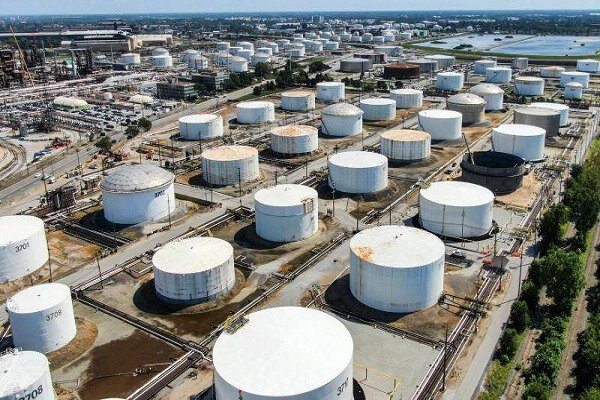
According to the International Desk of Webangah News Agency, strategic oil reserves are nearing depletion, positioning the global market for a potential new shock. With navigational disruptions in the Strait of Hormuz entering their 100th day following military actions by the United States and the Israeli regime against Iran, global markets have lost approximately one billion barrels of oil. Despite the implementation of alternative routes through Saudi Arabia and the United Arab Emirates, J.P. Morgan estimates that the market continues to lose around 14 million barrels daily.
Al Jazeera reports that this discrepancy indicates the world has heavily drawn upon its strategic, commercial, and floating reserves in recent months. The International Energy Agency (IEA) announced on March 11 that member countries unanimously agreed to release 400 million barrels from their emergency stockpiles, marking the largest coordinated draw in the agency’s history. This action was intended to mitigate the supply disruptions caused by the conflict in the Middle East.
A Brookings analysis indicates that 301 million barrels of this release consist of crude oil, equivalent to injecting approximately 2.5 million barrels per day over four months. This draw was a primary factor in preventing the closure of the Strait of Hormuz from triggering an immediate price shock. Prior to the conflict, roughly 15 million barrels of crude oil transited the strait daily, representing about one-third of global crude oil trade. The release of strategic reserves provided an energy equivalent of approximately 2.5 million barrels per day. Additionally, floating reserves from Russia and Iran that were at sea before the crisis were also consumed, but these volumes are expected to be exhausted by the end of April and May.
Energy expert Lauri Hetayen stated that the utilization of strategic reserves has been crucial in covering the market’s deficit since the Strait of Hormuz closure. He explained that member countries of the Organization for Economic Co-operation and Development (OECD) and the IEA moved swiftly to deploy these reserves to stabilize the market, anticipating a potentially short conflict and a rapid return to pre-war navigational conditions.
Hetayen told Al Jazeera that the decision involved a release of approximately 400 million barrels, with nearly 300 million barrels already drawn, equating to roughly 2.5 million barrels per day. He believes that the consumption of strategic reserves, combined with the use of 100 to 150 million barrels from floating storage, has prevented severe oil price volatility.
According to the expert, the relative price stability was not due to a single factor but a combination of strategic government reserve consumption (400 million barrels), commercial reserve usage (200-250 million barrels), and floating storage (100-150 million barrels). Reductions in China’s imports in May by about 6 million barrels per day, alongside increased oil production from the United States, Brazil, Venezuela, and some African nations, also played a role.
Oil and energy analyst Amer Al-Shubaki believes the market is approaching a “crisis inflection point” after 100 days. He noted that strategic reserves, used to curb prices and prevent oil from reaching $150 per barrel, are running out. Speaking to Al Jazeera, he clarified that the world has lost over one billion barrels of oil supply since the crisis began. Alternative routes, such as Saudi Arabia’s East-West pipeline and the UAE’s Abu Dhabi-Fujairah pipeline, can only compensate for a portion of the daily volume that previously passed through the strait. The analyst estimates the market is still missing approximately 10% of global supply.
Toril Bosoni, head of oil industry and markets at the IEA, warned that global strategic reserves could reach critical levels before the summer demand peak. Even if the Strait of Hormuz were reopened and an immediate agreement reached, recovery from this crisis would likely take between six to eight months at best.
Strategic reserves are not merely a figure that can be depleted entirely. Goldman Sachs research suggests that storage tanks with floating roofs must maintain at least 20% capacity to operate efficiently, and pipelines require oil to flow through them to maintain operations. Furthermore, refineries operating below 65% capacity cannot function long-term without incurring losses or damage.
Brookings projects that by mid-July, most temporary factors will likely cease, leaving the market with a deficit that requires absorbing approximately 7.1 million barrels per day. This scenario could lead to price increases approaching $150 per barrel. While countries theoretically have not ruled out continued draws from strategic reserves, this option is not without limitations. Beyond technical considerations related to pumping speeds and infrastructure utilization, governments face the dilemma of maintaining minimum reserves for energy security, significantly reducing the practical usability of these reserves compared to paper figures.
This situation explains the discrepancy in some estimates. Hetayen explained variations in assessments from global banks and analysts regarding the severity of the reserve situation. Some studies suggest withdrawals could continue until year-end, while others warn that the summer demand peak could push the market to critical levels.
Al-Shubaki, however, forecasts a sharp increase in prices within the next three weeks if the number of vessels transiting the strait does not improve. He believes this crisis could escalate from an energy crisis into a global financial crisis. Al-Shubaki also warns that the crisis may extend to strategic commodities associated with the Persian Gulf, such as sulfur, urea, petrochemicals, helium, and aluminum, potentially increasing costs for agriculture, industry, electronic chips, and medical equipment. Therefore, the risk extends beyond gasoline and diesel prices to food supply chains, manufacturing, and technology.


