Cairo Summit Signals Emerging Regional Security Order Amidst Shifting Alliances
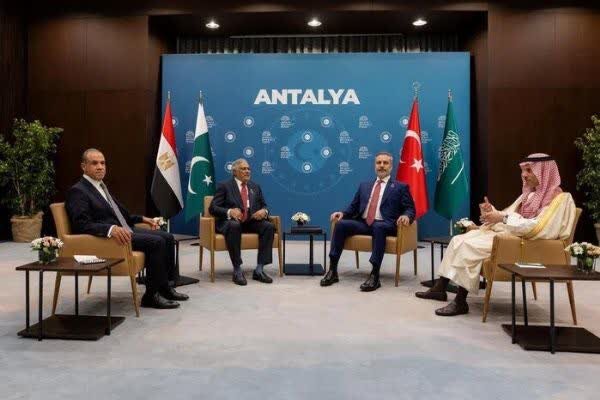
According to the International Desk of Webangah News Agency, speculation is intensifying regarding the true nature of a regional mechanism involving Egypt, Saudi Arabia, Turkey, and Pakistan, as their fourth summit approaches in Cairo. Despite cautious official language emphasizing ‘coordination,’ ‘consultation,’ and ‘regional cooperation,’ many observers believe the rapid transformations in the Middle East, especially following the Gaza conflict, repeated Israeli incursions into Lebanon, Syria, and Iran, coupled with declining confidence in American security assurances, have paved the way for a new regional alignment.
The upcoming Cairo meeting marks the fourth round of joint consultations between these four regional nations, with previous sessions held in Riyadh, Islamabad, and Antalya, Turkey. While ostensibly aimed at de-escalation and crisis management, the agenda has progressively broadened beyond purely diplomatic discussions. It now encompasses more strategic issues such as regional security arrangements, energy security, maritime route protection, and the future political order of the Middle East.
Countering Israeli Aggressive Policies
A significant number of regional analysts posit that the primary catalyst for the rapprochement among these four countries is the aggressive policies of the Israeli regime in the region. The Gaza war, commencing in October 2023, along with extensive Israeli attacks on Lebanon, recurring incursions into Syrian territory, and ultimately, the conflict against Iran, has heightened regional nations’ concerns about the long-term ramifications of Tel Aviv’s actions. Analysts view this not as a fleeting conflict or crisis, but as a concern rooted in a project Israeli officials have frequently discussed: a plan to redesign the regional order through military power and impose new equations on regional states.
Benjamin Netanyahu’s repeated statements in recent years about ‘changing the map of the Middle East’ have been interpreted in many regional capitals as indications of Israel’s desire to expand its influence and intervene in the security structures of regional countries. Consequently, many observers contend that the increasing cooperation between Egypt, Saudi Arabia, Turkey, and Pakistan should be understood as an effort by regional states to establish a counterbalance to this trend. In this context, some Israeli officials and media outlets have expressed alarm over the formation of what they term a ‘new Sunni axis,’ with Benjamin Netanyahu explicitly mentioning the potential for a new regional axis that could pose a challenge to Israel in the future. Prior to this, other Israeli political and security figures had also warned of closer ties between Turkey, Egypt, Saudi Arabia, and Pakistan.
Israel’s Concern Over Security and Defense Cooperation of Four Nations
Tel Aviv’s apprehension extends beyond the political dimensions of this cooperation. The Israeli security establishment is particularly concerned about the potential expansion of security and defense collaborations among these nations. In recent years, relations between Cairo and Ankara have entered a new phase after a prolonged period of tension. Frequent high-level meetings, enhanced economic cooperation, and the resumption of some military and security partnerships indicate a move past past disagreements. Simultaneously, defense cooperation between Saudi Arabia and Pakistan has also reached a new level. The signing of security and military agreements between Riyadh and Islamabad, especially given Pakistan’s status as one of the few nuclear powers in the Islamic world, has drawn significant analytical attention.
Strategically, the importance of these collaborations is amplified when considered alongside the declining trust of regional countries in the United States. Over the past few years, many regional governments have concluded that Washington no longer possesses the same willingness or capability to guarantee the security of its allies. Developments in Afghanistan, the U.S.’s inability to contain regional crises, and the frequent fluctuations in its foreign policy have led many regional actors to seek more independent security mechanisms. The recent conflict involving Iran also played a crucial role in accelerating this trend. Many regional countries observed how a large-scale conflict could rapidly impact regional energy security, maritime trade, and overall economic stability. Therefore, discussions about establishing new regional security arrangements and region-centric mechanisms have become more critical than ever.
From the perspective of the Islamic Republic of Iran, regional security should be provided by the countries within the region, and the intervention of extra-regional powers not only fails to promote stability but is itself a primary cause of many crises. Tehran has repeatedly emphasized the necessity of forming indigenous security mechanisms and fostering cooperation among Islamic and regional nations over the years. In this context, any rapprochement among important regional powers can be viewed as a step towards reducing reliance on foreign actors and moving towards more independent security arrangements. Although Iran is not a member of this quadrilateral mechanism, many of its stated objectives, such as opposing war, preventing the spread of instability, and emphasizing regional solutions, overlap with Tehran’s declared positions.
However, the path to transforming this cooperation into a cohesive and sustainable alliance will not be easy. Divergent views on certain regional issues, geopolitical rivalries, and differing foreign policy priorities among member states remain significant obstacles. Furthermore, the United States and the Israeli regime are closely monitoring developments related to this cooperation. Reports from Western and Israeli media indicate Tel Aviv’s heightened sensitivity to any security convergence among key regional countries. From Israel’s perspective, the formation of any mechanism capable of altering the regional balance of power would signify a curtailment of its operational freedom in the future.
Conclusion
Despite these challenges, the reality is that the developments in the Middle East over the past two years have overturned many traditional equations. The Gaza war, the failure of normalization projects, increasing opposition from global Islamic public opinion towards Israeli policies, and a decline in confidence in America’s role have created a new environment where regional countries are increasingly gravitating towards intra-regional cooperation. The Cairo summit can be assessed within this framework; a meeting that, while not yet labeled an ‘alliance’ or ‘union,’ could represent one of the most significant indicators of a new regional order taking shape. This is an order in which regional countries strive to determine their security and future independently of external powers.
Ultimately, the most important message of this trend is that many regional players are no longer willing to let the fate of the Middle East be determined solely by Tel Aviv, Washington, or other extra-regional powers. The idea of ‘regional security by regional countries’ appears to be transforming into a strategic imperative more than ever before – an imperative for which the Cairo summit could be another step towards its realization.