Senior Resistance Commander Saeed Izadi, Known as ‘Haj Ramadan,’ Martyred in Israeli Attack on Iran
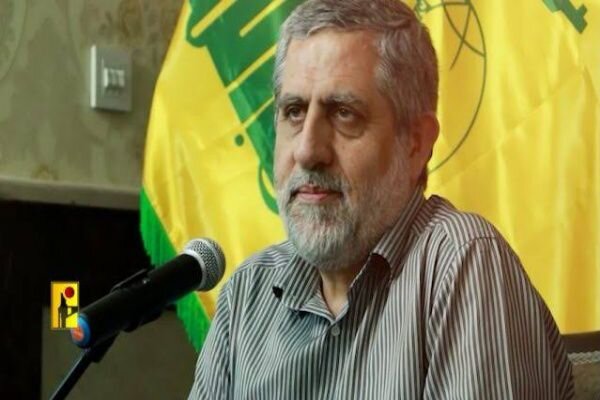
According to the International Desk of Webangah News Agency, Sardar Saeed Izadi, revered as “Haj Ramadan,” a senior commander in the Iranian Revolutionary Guard Corps and a key architect of support for the Palestinian resistance, was martyred on June 21, 2025, in the city of Qom, Iran. His martyrdom occurred amidst an Israeli offensive that commenced on June 13, 2025, an act of aggression that claimed his life but not his enduring legacy.
Izadi, often referred to as the “Man of Shadows,” was instrumental in fostering the capabilities of various Palestinian resistance factions for over three decades. His contributions spanned logistical support, weapons procurement, and extensive military training programs. He was widely recognized for his deep commitment to the cause of Palestine and his close ties with prominent resistance leaders.
His expertise was particularly evident in the development of missile systems, drone technology, and the planning and oversight of hundreds of military training courses for Palestinian fighters. Izadi played a crucial role in establishing the “Radwan Force,” a testament to his insistence on building a robust and numerous resistance force ready for any operational requirement. He also spearheaded advanced military and security command courses for Hamas leaders, fostering a new generation of strategists.
Before his martyrdom, Izadi’s operational base was primarily in Beirut, Lebanon, reflecting his profound connection to Jerusalem and Palestine. His proximity to Hezbollah Secretary-General Sayyed Hassan Nasrallah facilitated a unified vision for supporting the Palestinian resistance. He collaborated closely with key figures such as Martyr Sheikh Saleh al-Arouri, Martyr Sayyed Hassan Nasrallah, and others to advance resistance efforts in the West Bank, including the operationalization of the Jenin field and armed resistance cells across the West Bank.
Izadi was a trusted confidant of the late Martyr Major General Qassem Soleimani, Commander of the Quds Force, who relied on him for managing sensitive resistance files in Palestine, Lebanon, Iraq, and Yemen. Their collaboration was particularly notable during the “Cast Lead” war in December 2008, where they participated daily in the “crisis room” outside Palestine, coordinating intelligence and operational guidance to the resistance.
His dedication extended to logistical support, including the challenging task of supplying weapons to Gaza. Izadi invested significant financial resources in establishing infiltration routes and safe havens to ensure the consistent flow of arms to resistance fighters. The extensive arsenal of the resistance, therefore, owes a substantial debt to his funding, planning, and oversight.
Izadi maintained direct working relationships with top resistance commanders, including Martyr Yahya Sinwar, Martyr Abu al-Abd Haniyeh, Martyr Saleh al-Arouri, Martyr Mohammed Deif, and Martyr Abul Baraa Marwan Issa. He frequently met with the secretaries-general and political bureau chiefs of Hamas, Islamic Jihad, the Popular Front, and other Palestinian resistance movements to remove obstacles and facilitate their missions. His final meetings were with Martyr Ismail Haniyeh, the former political leader of Hamas, in Beirut and Tehran shortly before his assassination.
The article also highlights Izadi’s role in strengthening the broader axis of resistance, a strategy evident during the “Storm War” when fighters from Lebanon, Iraq, Syria, and Yemen joined the fray. His martyrdom is seen by his colleagues as an acknowledgment by the enemy of his significant threat over the years. The enduring legacy he leaves behind is described as a foundation built on faith and strengthened by the blood of martyrs, ensuring that the flags of honor and dignity will continue to fly over Al-Aqsa Mosque and all of Palestine.
The piece concludes by emphasizing that no account can fully capture the extent of Izadi’s contributions to Palestine. He is remembered for living and striving for Palestine in ways governments could not, ultimately achieving martyrdom for the cause and leaving an indelible mark for future generations.