
US Faces ‘Suez Moment’ as 40-Day Conflict Sparks Debate on Hegemonic Decline
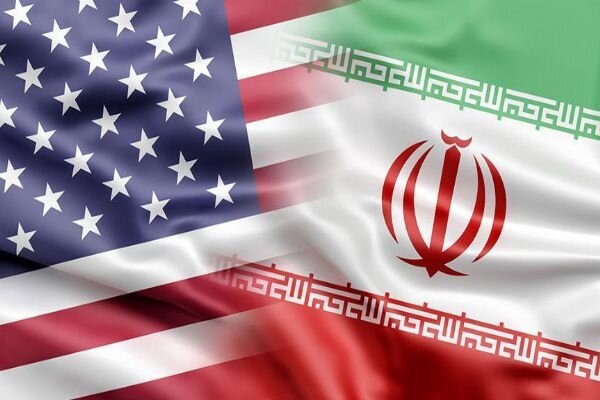
According to the International Desk of Webangah News Agency, the phrase “America’s Suez Moment” has become a prominent topic in Western media and analytical circles in recent days. A number of analysts believe that the results of the 40-day Iran-US war, regardless of its military outcome, could have a similar impact on Washington’s global position as the Suez Crisis of 1956 had on the British Empire.
To understand this comparison, one must revisit the Suez Crisis. In 1956, after Gamal Abdel Nasser nationalized the Suez Canal, Britain and France, with the participation of Israel, attacked Egypt. Their objective was to regain control of the canal and preserve the influence of European colonial powers. However, contrary to London and Paris’s expectations, the United States did not support the operation.
Project Syndicate, in an analysis by Harold James, a professor of history and international affairs at Princeton University, writes that the Suez Crisis marked a moment when the world realized Britain was no longer capable of managing the international order independently of Washington. American financial pressure and threats against the Sterling pound ultimately forced London to retreat, and since then, the term “Suez Moment” has symbolized the beginning of a global power’s decline.
Today, some Western analysts believe Washington finds itself facing a similar experience. The Spectator magazine, in a report titled “NATO’s Suez Moment,” argues that the conflict with Iran has exposed the gap between America’s actual capabilities and the image of power it projects. According to the report’s authors, just as the Suez Crisis revealed Britain’s limitations, confronting Iran could expose the constraints on American hegemony.
Significant economic indicators are also present. Nicolas J. Nash, a geopolitical and financial analyst, believes the ratio of America’s public debt to its gross domestic product has reached levels reminiscent of declining powers. He warns that, for the first time in decades, the interest payments on the U.S. government’s debt exceed its defense budget, a situation that casts doubt on Washington’s ability to maintain its global role.
This issue is significant because many empires have experienced financial erosion before military defeat. Britain, too, faced extensive economic challenges before the Suez Crisis, which reduced its capacity to resist American pressure.
Luke Gromen, a well-known financial markets strategist, contends that the principal battle between Iran and the United States is not necessarily fought on the military field. His analyses emphasize that America’s true power is underpinned by the credibility of the dollar and its debt market. From Gromen’s perspective, if Washington fails to guarantee the security of vital energy routes, global confidence in the dollar will gradually erode, delivering a far greater blow than any military defeat.
In this context, Ray Dalio, founder of Bridgewater Associates and one of the world’s most renowned investors, has also warned that tensions in the Strait of Hormuz could evolve into a “Suez Moment for the Dollar.” Dalio believes the status of global currencies relies primarily on international confidence, and any doubt about America’s ability to protect the world’s energy arteries could accelerate the trend of countries distancing themselves from the dollar.
On the military front, some analysts speak of America’s increasing limitations. Middle East Eye, in a report by Sean Matthews, notes that Washington was compelled to redeploy some of its advanced defense systems and forces from East Asia to the Middle East to counter threats arising from the conflict with Iran. According to this analyst, such a move indicates that America can no longer project power simultaneously in multiple regions of the world as it did in previous decades.
This assessment bears a striking resemblance to Britain’s situation after the Suez Crisis, when London was gradually forced to reduce its extensive military presence east of Suez and in other parts of the world.
Another indicator is the behavior of America’s allies. Throughout history, the decline of great powers has typically been accompanied by an increase in their allies’ autonomy. Reports published in Western media indicate that some European and Asian countries, during the recent crisis, opted to engage in direct discussions with Iran regarding energy security and shipping rather than awaiting Washington’s initiative. From the perspective of some analysts, this trend signifies a decline in allies’ confidence in America’s ability to manage international crises.
Furthermore, CBS News has reported that at certain junctures during the crisis, the U.S. administration was compelled to adopt more flexible approaches regarding Iranian oil exports to control domestic energy prices. Although views differ on the scope of these policies, the very fact suggests that Middle East developments can still directly impact the U.S. domestic economy.
Ultimately, The Guardian, in one of its opinion pieces, argues that the main issue is not solely the outcome of a war or a crisis, but rather the gradual erosion of America’s “invincible superpower” narrative. The newspaper writes that great powers enter a phase of decline when they can no longer convince others of their ability to shape the global order.
Based on this, it cannot yet be definitively stated that the 40-day Iran-U.S. conflict has been Washington’s “Suez Moment.” However, this confrontation has undoubtedly ignited a serious debate in Western intellectual circles regarding the limitations of American power, the future of the dollar, and the durability of its hegemony—a discussion that may continue for years, with its effects on the international order gradually becoming apparent.


