
Israeli Ministry Documents Reveal Widespread Damage to Haifa Refinery from Iranian Missile Strikes
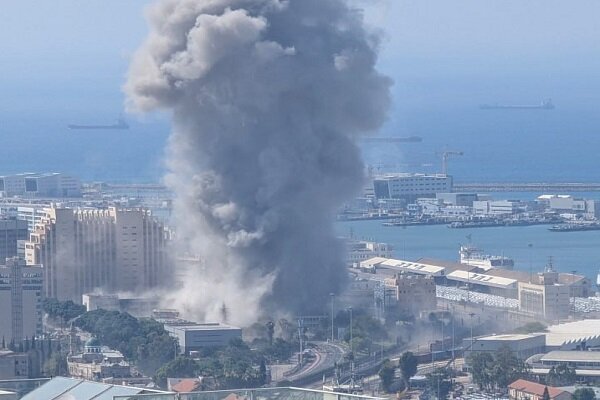
According to the International Desk of Webangah News Agency, the recent forty-day conflict extended beyond conventional battlefields, with a significant portion dedicated to narrative control, public opinion management, and information warfare. While adversaries sought to showcase their military capabilities, news management and selective information dissemination became paramount tools. Israel, in particular, attempted to project an image of complete control and minimal damage from Iran’s missile strikes. However, the gradual release of official documents and reports is now illuminating new dimensions of the conflict’s realities.
The most recent disclosures come from documents published by Israel’s Ministry of Interior, indicating that the damage inflicted upon the Haifa oil refinery complex by Iranian missile attacks was far more substantial than initially stated by the regime’s authorities. These documents suggest that the impact on the complex’s vital infrastructure was not merely a temporary setback but will have ongoing consequences for fuel supply and facility reconstruction until 2028.
Haifa: Israel’s Energy Heart
The Haifa oil refinery complex is considered one of the most critical strategic assets for Israel. This facility plays a pivotal role in crude oil refining, petroleum product manufacturing, and supplying a significant portion of the fuel required for industries, transportation, and even some of Israel’s military needs. Consequently, any disruption to its operations constitutes not just an economic loss but carries considerable security and strategic implications.
Therefore, from the initial hours following Iran’s missile attacks, Israel’s propaganda apparatus worked to downplay the severity of the damage, aiming to convey that refinery operations were continuing with minimal disruption. At the time, Israel’s Energy Minister, Eli Cohen, asserted that the damage would not affect fuel supply and that energy infrastructure remained operational without issue. These statements were quickly amplified by Israeli media, becoming part of Tel Aviv’s official narrative regarding the conflict’s outcomes.
What Official Documents Reveal
However, the documents now released by official Israeli bodies present a starkly different picture. According to these disclosures, significant portions of the Haifa refinery‘s critical infrastructure have been severely damaged, with reconstruction projected to take several years. The documents also indicate that the disruption to the complex’s operations has impacted the fuel supply chain, and a full return to pre-attack conditions will be a time-consuming and costly process. This reality casts serious doubt on the initial claims by Israeli officials regarding the limited extent of the damage.
The release of such documents from official sources holds particular weight. Unlike media reports or external analyses, this information originates from within Israel’s administrative structure, lending it greater credibility in assessing the scope of the damage. This internal perspective challenges the external narrative previously presented.
The War of Narratives
One of the most crucial dimensions of the recent conflict was the battle over narrative. Over the past decades, Israel has strived to cultivate an image of invincibility for its defense systems, intelligence capabilities, and deterrent power among both domestic and international public opinion. Within this framework, reports of extensive damage represent not only a security issue but also a threat to the regime’s strategic credibility.
Consequently, strict media censorship, limitations on image dissemination, prevention of filming at missile impact sites, and punitive measures against media outlets publishing detailed accounts became consistent policies for Tel Aviv throughout the conflict. For Israel, public opinion management is as vital as battlefield management. The regime understands that its image of invincibility is a cornerstone of its deterrence strategy, and any damage to this image could lead to significant political, security, and economic ramifications.
The Gap Between Official Narrative and Reality
What has become evident is the considerable disparity between the initial narrative presented by Israeli officials and the information gradually emerging. This gap suggests that the official account provided in the war’s initial days did not fully align with the existing reality, at least concerning the extent of damage to certain critical infrastructure. In numerous contemporary conflicts, the gradual release of documents post-engagement has led to revised perceptions of the war’s actual outcomes. The recent conflict is no exception; as time progresses since the end of hostilities, more information is surfacing about the scale of damage, infrastructure vulnerabilities, and the true costs of the war.
Strategic Implications
The significance of the Haifa refinery incident extends beyond its physical damage. It demonstrated that Israel’s vital infrastructure, contrary to years of assurances of complete security, is vulnerable to missile attacks. Furthermore, the continued release of official documents and information regarding war damages could alter analysts’ assessments of the conflict’s true results. Many observers contend that judging the strategic implications of wars cannot be solely based on the military developments of the initial days; a clearer picture of the costs and gains of each side typically emerges over time.
Ending the Exclusive Narrative
The Haifa refinery case highlights that in the era of communication networks and rapid information flow, complete narrative control is increasingly challenging. Even if short-term restrictions on news dissemination are possible, official documents, reports, and information released from within administrative structures ultimately offer a different perspective on reality. The documents pertaining to the Haifa refinery’s damage can be analyzed within this context—they originate not from foreign media but from within Israel’s official apparatus, raising serious questions about the initial claims of limited damage. Should this trend of information release continue, further details regarding the damage to Israel’s critical infrastructure during the forty-day war are likely to emerge in the coming months, providing a more accurate understanding of the actual outcomes of this military and media confrontation and underscoring that the battle for narrative persists even after the cessation of armed conflict.


