
Israel Initiates Nominal Withdrawal From Select Lebanese Areas Amidst Framework Agreement
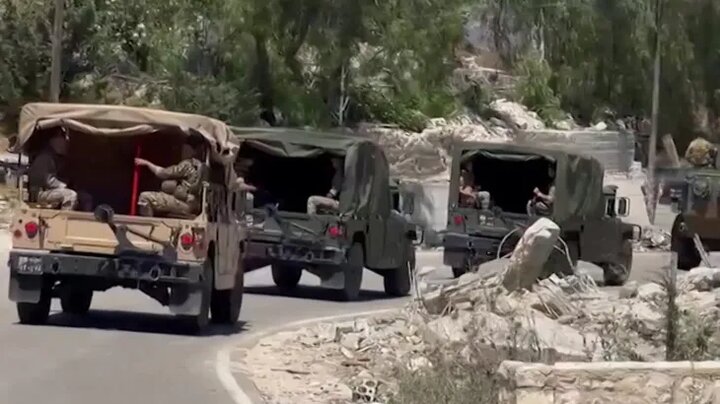
According to the International Desk of Webangah News Agency, following incursions and attacks by the Israeli army on various Lebanese regions, contrary to the framework agreement process, the announcement of the implementation of ‘experimental zones’ in southern Lebanon has become another test in the execution of the framework agreement between Lebanon and the Israeli regime. These developments occurred after the U.S. Department of State announced the commencement of experimental zone operations in the towns of ‘Fron,’ ‘Sarif,’ and ‘Zotour Gharbi’ as part of the framework agreement’s implementation. Under this agreement, security responsibility for these areas will be entrusted to the Lebanese army and overseen by the Lebanese Special Military Coordination Group.
Concurrently with this announcement, an Al Jazeera correspondent reported that the Lebanese army entered the town of ‘Zotour Gharbi’ in the Nabatieh region, north of the Litani River, on Tuesday. Army engineering teams have begun clearing streets and neutralizing explosives and war remnants, marking the first practical implementation of the new arrangements on the ground. Citizens have also been urged to refrain from traveling to this town until the security situation is fully stabilized.
The Israeli army, however, has consolidated its presence in the area designated as the ‘Yellow Line,’ encompassing approximately 60 towns and villages, most of whose residents have been displaced.
Al Jazeera further notes that these three areas do not signify territories vacated after a permanent occupation. Israeli forces had not fundamentally entered the towns of Fron and Sarif, and in Zotour Gharbi, they conducted limited operations before withdrawing.
For this reason, Brigadier General Elias Hanna, a military and strategic expert, believes that Tel Aviv has not actually granted any concessions to the Lebanese side, as the area of these three towns constitutes less than approximately 2 percent of the total 600 square kilometers occupied by the Israeli army. He posits that Tel Aviv is attempting to portray this action as a significant step, despite its limited field impact.
Hanna added that the selection of the towns of Zotour Gharbi, Fron, and Sarif was not accidental, as they are all adjacent to the ‘security zone’ established by the Israeli army. This ensures the continuation of the ‘security depth’ that the Israeli army seeks to establish within Lebanese territory and maintains artillery control over the surrounding environment of these towns.
He pointed out that this experiment targets both the Lebanese army and government simultaneously to assess their ability to disarm Hezbollah and establish full control, even though the execution of this mission faces complex field and political challenges that go beyond mere troop deployment.
Hanna explained that the mechanism for measuring the success of the ‘experimental zones’ remains a point of contention. During the Rome meetings, it was proposed that the assessment task be delegated to the Italian side, but Tel Aviv insists that the United States or U.S. Central Command (CENTCOM) assume this responsibility to allow Tel Aviv direct influence over the process outcomes.
Hanna emphasized that the agreement lacks a specific timeline for subsequent phases, leaving room for the perpetuation of the current situation. Furthermore, if Tel Aviv claims that the conditions for success have not been met, it could prolong its presence in the areas under its control.
He stated that the challenges are not confined to the military aspect alone but also include the return of residents, the provision of essential services, the protection of civilians, and the prevention of any security incidents that could reignite tensions.
These developments coincide with the ongoing violation of Lebanon’s airspace and land borders by the Israeli regime. Southern Lebanon has witnessed Israeli missile attacks, extensive drone flights, and nominal airstrikes in recent hours.


