
US Control Over Venezuelan Oil Revenues Fuels Global Governance Debate
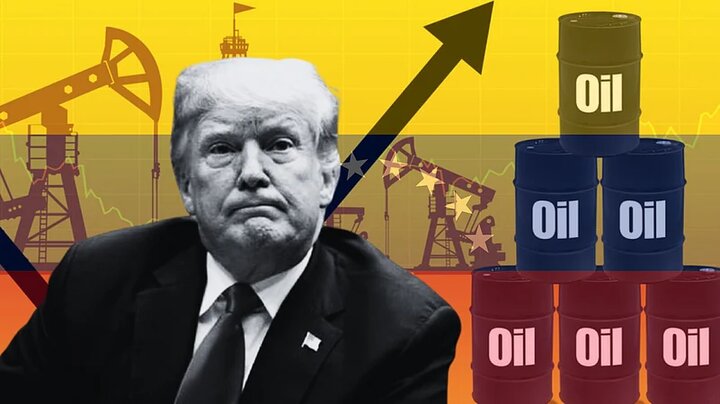
According to the International Desk of Webangah News Agency, the United States’ actions in Venezuela since January 3, 2026, extending beyond political and military intervention to encompass control over the nation’s oil exports and national wealth management, have prompted international scrutiny. The administration of President Donald Trump has reported billions of dollars in revenue from Venezuelan oil sales, yet the mechanisms for handling and disbursing these funds remain largely opaque, even to U.S. regulatory bodies.
Analysts suggest that Washington’s stated goal of organizing Venezuela’s economy has evolved into a model of intervention where an external power, after altering a country’s political landscape, assumes control over its strategic revenue streams, thereby hollowing out the concept of national sovereignty.
Venezuela’s political shifts in 2026 marked the beginning of U.S. dominance over its primary source of wealth. Reports indicate that following actions against the Caracas government, Washington took control of Venezuelan oil export routes, establishing a system where revenues bypass the nation’s treasury and flow through financial channels managed and overseen by the U.S. Critics have described this as the plundering of natural resources from an independent nation after foreign intervention.
The U.S. government subsequently issued special permits enabling major oil trading companies to participate in Venezuelan oil exports, effectively managing a substantial portion of the country’s oil sales. President Trump announced that over $13 billion had been generated from these sales since U.S. control was established over Venezuela’s oil assets, publicly disclosing the financial scope of this arrangement for the first time.
Concurrently, Venezuelan oil production saw an increase, rising from approximately 820,000 barrels per day in January 2026 to about 1.23 million barrels per day by June 2026. While this growth enhanced export capacity, the revenues generated were managed through the U.S.-designed financial framework, rather than directly benefiting the Venezuelan government.
This situation highlights that increased oil production and exports have coincided with a transfer of control over oil revenues from Caracas to Washington. The crucial issue is no longer merely the volume of oil produced or its export value, but rather who controls the wealth derived from Venezuela’s natural resources and who decides how it is utilized.
Despite U.S. government claims that controlling Venezuelan oil sales was intended to stabilize the nation’s energy sector, a significant lack of transparency regarding the location and expenditure of these export revenues has drawn considerable attention. Washington has not provided a comprehensive report detailing the exact revenues, the accounts holding these funds, or their allocation, a situation that has drawn criticism from research institutions and members of Congress within the United States.
According to published documents, the Trump administration established a special financial mechanism for managing Venezuelan oil assets through Executive Order 14373. Under this order, oil sale revenues were initially routed through offshore accounts before being transferred to accounts under the U.S. Department of the Treasury’s purview. At times, some funds were managed through an account in Qatar, but public details on transactions, account balances, or how these funds are spent have not been released.
These ambiguities extend beyond financial accounts. Reports to the U.S. Congress suggest that some officials lacked precise knowledge of the remaining balances in these accounts. Furthermore, Washington has not disclosed the agreements made with oil companies, banks, and trading intermediaries, entities that play a primary role in selling Venezuelan oil. The continued involvement of companies like Trafigura and Vitol, which have past associations with financial corruption cases, has amplified these concerns.
The core issue transcends the mere management of Venezuelan oil revenues; the absence of any transparent oversight mechanism for billions of dollars of Venezuela’s national wealth raises fundamental questions about whether a sovereign nation’s resources can be managed without public accountability and outside the purview of its legal institutions. This opacity has transformed the Venezuelan oil situation from an economic matter into one of the most contentious debates surrounding the ownership and control of natural resources in the international system.
The Venezuelan oil case cannot be analyzed solely as a political dispute between Washington and Caracas. What is occurring in Venezuela has become a test of one of international law’s most fundamental principles: the permanent sovereignty of nations over their natural resources. This principle, established in UN resolutions since the 1960s, asserts a nation’s right to decide on its natural resources and utilize their benefits for national development. However, the current situation in Venezuela suggests that practical control over a country’s resources can be relinquished by its government even without a formal transfer of ownership.
In this context, oil is not merely an economic commodity but has become a tool for geopolitical power. By controlling export routes, financial networks, trade permits, and revenue collection mechanisms, the United States has effectively gained influence over Venezuela’s entire oil industry value chain. Consequently, increased oil production does not necessarily translate into enhanced economic strength for the Venezuelan government, as the resulting revenues are managed through frameworks outside the control of Venezuelan national institutions before they can contribute to the country’s economic reconstruction.
Many analysts believe a new form of control over natural resources is emerging, relying more on the management of revenue flows and financial instruments than on territorial occupation. The implications of this trend are not confined to Venezuela’s borders. If this model becomes repeatable, any country with strategic resources could face the risk of losing practical control over its national wealth during political crises or under external pressure. In such a scenario, legal ownership of resources would remain with the source country, but the authority to sell, receive revenues, and decide on their expenditure would fall into the hands of foreign actors.
This development could pose a serious challenge to economic independence, shifting national dependency from military and political levels to vital resources and national income. From this perspective, the claim of generating $13 billion from Venezuelan oil sales is not merely an economic figure but a symbol of a nation’s wealth exploitation authority being transferred to a foreign power. When a nation can manage another country’s strategic resource exports, control its revenues, and decide on their allocation following intervention, the issue extends beyond Venezuelan oil. It fundamentally challenges the principle of state sovereignty over national resources and the boundaries of intervention within the international system, with consequences that will affect the future of many resource-rich nations.


