Iran Dictates Terms for Strait of Hormuz Reopening Amid US Military Setbacks
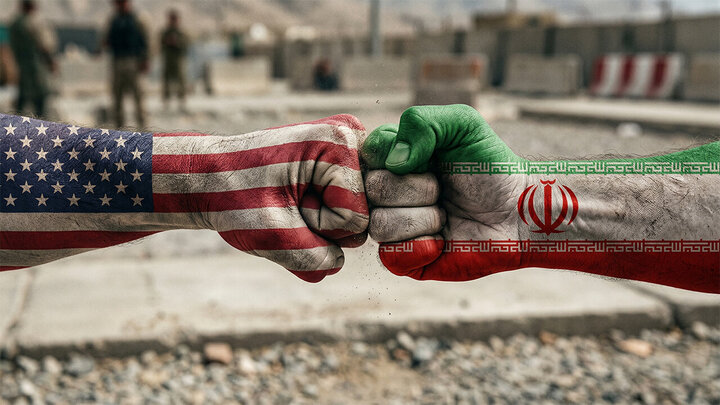
According to the International Desk of Webangah News Agency, the military engagement initiated by the United States and the Zionist regime against Iran has failed to achieve its stated objectives. Instead, Western officials and American media admit that the aggressors have been subjected to a strategic deadlock and faced battlefield and political defeats. This conflict, which began with extensive attacks and the killing of civilians, including innocent students, rapidly escalated with significant human, security, and economic dimensions, eliciting diverse reactions across international media outlets.
Global media have endeavored to shape the narrative of this conflict according to their specific perspectives. An examination of these reactions can provide a clearer picture of the war’s true situation and its outlook.
British Media
The Observer newspaper, in an editorial titled “Trump’s War on Iran Has Been an Epic Failure,” delivered a scathing critique of the US President’s track record. The publication emphasized that the Iranian government is now more determined than ever, and the Strait of Hormuz remains blocked. It asserted that the United States has depleted its air defense reserves, “arming Tehran with a strategic weapon more powerful than anything it could mount on a missile: control of the Strait of Hormuz.”
The analysis noted that Trump’s repeated claims of being close to a deal, made 38 times, and his cancellation of major attacks seven times, underscore the complete failure of his “aerial bombardment” strategy, which resulted in the deaths of thousands of innocent people without achieving Trump’s declared goals. The Observer stressed that contrary to Trump’s expectation of dictating terms, Iran is now the one setting conditions, and Washington’s best-case scenario is merely a return to the situation prior to the conflict on February 27.
In conclusion, The Observer drew a parallel between this catastrophe and the successful diplomacy of Barack Obama, which led to the 2015 nuclear deal without any loss of life. It concluded that Trump disdained and tore up that agreement, and is now unable to even approach its terms. The publication sarcastically commented on the successive failures of the Trump administration, suggesting that delegating diplomacy to smaller Persian Gulf powers is not a viable path forward and calling for a return to genuine diplomacy.
CNBC reported that the Islamic Republic of Iran has set extensive conditions for the reopening of the Strait of Hormuz. According to the report, Mohammad Bagher Zolghadr, Secretary of Iran’s Supreme National Security Council, stated that reopening this waterway necessitates Washington lifting the naval blockade and sanctions, withdrawing US military forces from the region, paying war reparations, and releasing Iran’s blocked assets. The council also demanded an end to US attacks on Iran’s regional allies and a cessation of threats against Tehran.
The report added that concurrently with this stance, the Abu Dhabi National Oil Company announced that one of its vessels was targeted by a missile attack in the Strait of Hormuz, but sustained no casualties. Abbas Araghchi, Iran’s Deputy Foreign Minister, also spoke of nearing an agreement with Oman to manage the Strait of Hormuz and set transit routes. However, J.D. Vance, the US Vice President, stated in a threatening tone, “We don’t trust. We verify.”
CNBC further referenced a proposed plan published in Iranian media, which would prohibit American and Israeli ships from transiting the Strait of Hormuz. Mohammad Bagher Ghalibaf, Speaker of the Parliament and Iran’s chief negotiator, described Trump’s repeated promises of nearing a deal as “performative diplomacy.” Additionally, the spokesperson for the Islamic Revolutionary Guard Corps emphasized that the reopening of the Strait of Hormuz “is subject to the specific mechanisms and conditions of the Islamic Republic of Iran and has no relation to the Iran-Oman negotiations.” Shipping traffic through the Strait of Hormuz has decreased by 33% compared to the previous day, with most vessels using Iranian routes. Brent crude oil prices rose by 1% to $83.55 per barrel.
The Independent newspaper revealed that the Pentagon, through an urgent memo, has pressured arms manufacturers to significantly accelerate production, as the conflict with Iran has severely depleted US weapons stockpiles. According to the report, Steve Feinberg, the US Deputy Secretary of Defense, gave companies only three weeks to submit their plans for “faster and more aggressive delivery schedules or increased production for critical capabilities,” explicitly stating that multi-year development cycles are unacceptable.
The report added that Trump last week summoned his Secretary of War, Pete Hegseth, to Camp David to reprimand him over ammunition shortages, angrily stating he thought the issue “had already been resolved.” While the White House denied this account, Trump threatened to imprison those who leaked the story, calling them traitors. The Independent, citing CBS News and CNN, emphasized that the US has used nearly all of its long-range precision-guided missiles, lost approximately half of its Patriot interceptors, and nearly four-fifths of its THAAD missiles.
The article described the strategic paradox of the war: Tehran, despite its much smaller military force, targets US bases using inexpensive, disposable drones, while Washington is forced to use costly interceptors to shoot them down. According to an analysis by the Center for Strategic and International Studies (CSIS), out of 2,330 Patriot systems and 452 THAAD systems before the war, only 759 to 827 Patriot and 234 to 278 THAAD systems remained as of July 27. A Pentagon spokesperson, while emphasizing that direct collaboration with industry leaders to accelerate production is not new, cited the 2027 defense budget as the solution to this crisis.
Arab Media
Kuwaiti journalist Saleh Al-Mutairi wrote in an article for Al Jazeera that regional developments have transcended a conventional military confrontation, with energy security and its transit routes now forming a part of the equation of confrontation with Iran. He believes that attacks on energy facilities and threats related to the Strait of Hormuz are not merely momentary military actions but carry a clear political and strategic message: Iran aims to demonstrate that if its interests are disregarded, it can impact the global energy market and international economy.
The author stressed that Iran’s strategy is not limited to closing the Strait of Hormuz; its network of allies and aligned forces in the region provides Iran with multiple options to exert pressure on global energy and trade routes. However, he believes that Tehran is simultaneously trying to avoid crossing a point that could lead to an all-out, uncontrollable war, employing economic pressure as leverage for negotiation and increasing the costs of confrontation.
From Al-Mutairi’s perspective, Iran seeks to solidify the message for major powers that no future arrangements concerning regional security, energy, and shipping are possible without Tehran’s presence and participation. Therefore, the issue of Hormuz is not merely a military matter but has become a significant card in potential future negotiations.
Al-Ahed, in a report on the costs of US military aggression against Iran, stated that the war has placed increasing pressure on US missile and ammunition stockpiles. The Pentagon, to compensate for these shortages, has called on defense industry companies to rapidly increase production capacity and reduce delivery times for armaments – a move indicating that Washington faces a serious challenge in maintaining simultaneous military readiness in the Middle East, Europe, and Asia.
According to a Washington Post report, Steve Feinberg, the US Deputy Secretary of War, gave arms manufacturing companies 21 days to submit plans for significantly reducing the production and delivery times for missiles and ammunition. He emphasized that multi-year production cycles are incompatible with current US military needs.
Among the Pentagon’s priorities is increasing the production of next-generation interceptor missiles. This action comes as numerous US media reports indicate a worrying depletion of the country’s weapons stockpiles following the conflict with Iran.
One consequence of this trend has become apparent on the Korean Peninsula. According to a New York Times report, the transfer of some reconnaissance equipment and air defense systems from the region to the Middle East has left US forces stationed in South Korea more vulnerable in the event of a conflict with North Korea.
Chinese and Russian Media
According to a report by China’s CGTN network, Abbas Araghchi, Iran’s Foreign Minister, announced that there are currently no direct negotiations underway between Iran and the United States. He noted that while mediators continue to work to create conditions for resuming talks, Tehran and Washington are still exchanging messages through intermediaries. However, from Iran’s perspective, the necessary conditions for resuming negotiations will not be met until the US compensates for what Tehran considers “violations of previous understandings.”
Araghchi also addressed the situation in the Strait of Hormuz, stating that consultations between Iran and Oman regarding changes to shipping routes in this waterway have entered their final stages. He added that technical measures are being taken by experts to replace the current route with a new one.
However, the Iranian Foreign Minister stressed that any potential agreement on changing shipping routes does not signify the reopening of the Strait of Hormuz, and several other conditions must be met before full reopening.
The convergence of these positions indicates that the diplomatic path between Tehran and Washington remains in an indirect and preliminary phase, and the situation in the Strait of Hormuz continues to be influenced by political considerations and Iran’s conditions. Oman is playing an important intermediary role in this process.
According to an analytical report published on the Arabic RT network website, the US government is pursuing a long-term strategy to increase economic, military, and political pressure on Iran. The report, referencing an article in Fox News, claims that the Donald Trump administration is attempting to exert continuous pressure on Tehran’s power structure by targeting Iran’s revenue sources and military capabilities.
On the economic front, it points to intensified sanctions against oil intermediaries, shipping companies, and Iran’s so-called “shadow fleet.”
The author also alleges that economic pressure is accompanied by US military actions in the region, aimed at reducing the financial resources and operational capacity of the Islamic Republic and the IRGC.
This analysis assesses the continuation of US pressure alongside diplomatic efforts by intermediary countries, including Pakistan and Qatar, to achieve a ceasefire agreement.
However, the author expresses doubt about the success of negotiations, identifying Iran’s stance on the Strait of Hormuz as one of the main obstacles to achieving a stable agreement.
Another section of the article focuses on Iran’s internal situation. The author, citing economic problems, recent protests, and shifts in the power structure, claims that Washington is counting on increased economic and political pressure to fuel domestic discontent.