Israel Accused of Scorched Earth Tactics in Southern Lebanon
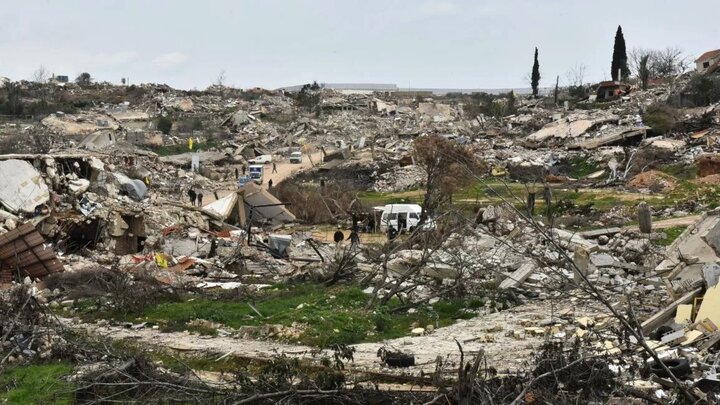
According to the International Desk of Webangah News Agency, the Financial Times, in a report citing data from the Mehr News Agency, has detailed Israel’s alleged efforts to systematically destroy southern Lebanon. Satellite imagery indicates that towns like Bint Jbeil and other border areas appear as gray ruins.
A field investigation conducted by the Financial Times in collaboration with Lighthouse Reports exposes the extensive and planned devastation by the Israeli regime in southern Lebanon, encompassing tens of thousands of homes, schools, agricultural lands, and forests.
Analysis of satellite imagery, open-source intelligence, and documentary evidence suggests that the majority of the damage occurred after Israeli occupation forces took control of depopulated villages in mid-April.
Israel’s policy in southern Lebanon has rendered vast areas uninhabitable and destroyed essential civilian infrastructure, including water and energy networks, as well as medical care facilities. Human rights organizations and legal experts interpret this Israeli policy as an attempt to prevent residents from returning to the region.
Kristyan Bakerly, Deputy Director of Amnesty International, stated that this constitutes a broad, prolonged, and organized attack on the people of southern Lebanon. He added that if everything is razed to the ground, it will create effectively barren, uninhabitable lands, making the return of people to southern Lebanon extremely difficult.
The newspaper further notes that southern Lebanon has historically borne the brunt of Israeli bombing and occupation, even before the emergence of Hezbollah. Weeks after the commencement of the latest conflict, Israeli Minister of Defense Yoav Gallant announced the implementation of the Rafah and Beit Hanoun model, involving extensive city destruction by the Israeli army in southern Lebanon, stating that all houses in Lebanese villages near the border would be annihilated.
Gallant admitted that this threat has been carried out, leading to the destruction of all buildings in 24 Lebanese villages, some centuries old. He boasted about the demolition of approximately 20,000 homes, a destruction occurring while Tel Aviv claims to be dismantling Hezbollah’s infrastructure in the south.
Most of the destruction documented by the Financial Times and Lighthouse occurred after the initial ceasefire between Tel Aviv and Beirut on April 17. Although the ceasefire did not hold, and some clashes continued even after the final ceasefire in June, Israeli forces, which controlled the area, persisted with bombing using electromagnetic bombs, remotely controlled explosions, bulldozers, and the use of white phosphorus.
The newspaper adds that the Israeli occupation in southern Lebanon is deeply entrenched, with the controlled area demarcated by the so-called ‘Yellow Line,’ which covers about 6% of Lebanese territory and extends approximately 10 kilometers inland from the unofficial border.
During a visit by a Financial Times correspondent in late April, entire villages were observed with little remaining structure. Historic markets, squares, and winding alleys had been reduced to seas of concrete. The sounds of explosions, apparently from building demolitions, continued throughout the day.
According to a report by Lebanon’s public research institution, the National Council for Scientific Research, 62 villages and farms are located within the Yellow Line, and approximately 270,000 people are prevented from returning to them.