
Syrian Militias Mobilize on Iraqi Border Amid Allegations of US-Israeli Plot
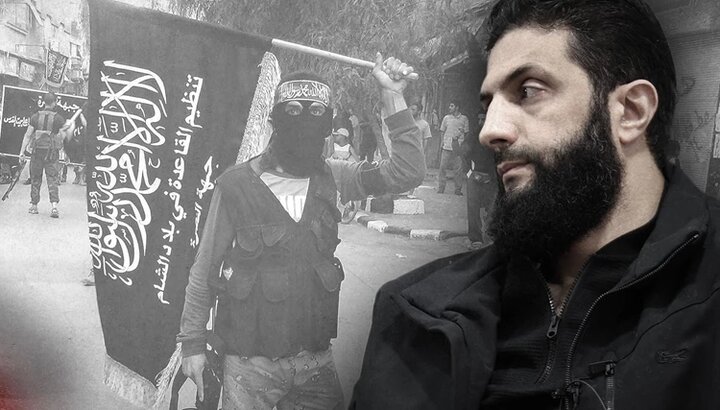
According to the International Desk of Webangah News Agency, information circulating in regional circles suggests that the administration controlled by Abu Muhammad al-Julani, also known as Ahmad al-Sharq, is mobilizing international mercenary forces along the borders of Iraq. This raises immediate questions about al-Julani’s motivations, given his limited capacity to exert significant military pressure on Iraq.
Al-Mayadeen reports that Syria’s internal security and economic situation is highly unstable. The Syrian army struggles to maintain control over its territory, and any large-scale troop or supply movements present significant logistical challenges, requiring centralized command, consistent supply lines, and secure support routes – none of which Syria currently possesses. Furthermore, corruption within the Syrian government has reached critical levels, with mid-ranking commanders reportedly operating extortion rackets on roadways.
These realities suggest that al-Julani’s border activities are not isolated but are backed by a regional and international coalition with clear objectives. Financial and political support is allegedly provided by Persian Gulf states, while Turkey offers regional cover, logistical assistance, and mercenary recruitment. The United States and Israel are reportedly providing the strategic planning and calculations, aiming to use these conflicts to weaken Iraq and neutralize its role as a strong and unified regional player.
These Syrian movements are occurring at a particularly sensitive juncture for Iraq, which is grappling with critical security developments related to its economy, weapons control, and the fight against corruption. Concurrently, Iraq is responding to a recent aggression, a response that will define its future path in addressing these complex issues and preventing itself from becoming a point of vulnerability to external pressures.
Meanwhile, the United States is engaged in strategic troop repositioning and withdrawing its Patriot missile system from Erbil ahead of its forces’ mission completion in September. This maneuver could signal a potential pretext for the US to remain in Iraq, using any perceived threat, whether real or exaggerated, as justification. The perceived threat from a weakened Syria might serve this purpose.
The recent aggression against Iraq, involving Saudi Arabia and the United States, may be part of a broader regional equation aimed at weakening Iraq. A strong Iraq represents a powerful Iranian ally in the region. Conversely, a weakened and internally divided Iraq provides an opportunity for Saudi Arabia and Persian Gulf states to increase their regional influence without a significant rival. Therefore, supporting Syrian movements is seen as part of a comprehensive strategy against Iran, with Iraq considered a crucial security gateway.
The interests of Israel are also evident in this scenario, seeking to transform Iraq into a weak and fragmented nation that poses no threat to Tel Aviv’s security. In such a situation, Iraq would become reliant on foreign support, particularly from the United States, placing its security and economy under American and Israeli influence and allowing them to impose policies that serve their interests. If political or security divisions within Iraq persist, a vacuum will emerge that foreign powers will exploit.
In this context, consolidating Iraq’s internal affairs is paramount. Attention must be directed towards establishing a political structure that unifies national vision around security matters. Improving economic solutions to revive the stagnant domestic market and strengthening defense capabilities to ensure the effectiveness of security forces are also crucial. This internal consolidation will serve as a robust shield against any external threat.
The Iraqi government must send a clear message to the world that Iraq will not be turned into a battleground for foreign powers, including Syria, Turkey, Persian Gulf states, the United States, or Israel. Iraq will remain the homeland of Iraqis. If Iraqis maintain their unity and common goals, they will possess sufficient strength to defend themselves against any external threat.
The powers seeking to weaken Iraq will not be contained. They are monitoring the reactions of resistance groups to the aggression from Saudi Arabia. Therefore, Iraqi Prime Minister and Commander-in-Chief of the Armed Forces, Ali Faleh al-Zaydi, must recognize that a major regional game has commenced, with Syria, Turkey, and certain Persian Gulf states merely serving as instruments in this game. Iraq must play its role with intelligence, strength, and decisiveness, lest it become a victim in a game where it has no control over even a single move.


