
Fareed Zakaria: Iran War Erodes U.S. Credibility, Pushes Allies Toward Independence
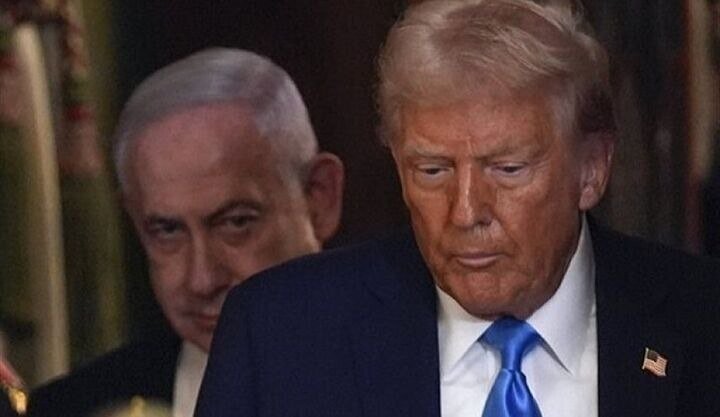
According to the International Desk of Webangah News Agency, Fareed Zakaria, a prominent American analyst, has characterized the conflict with Iran as a stark illustration of a superpower “wasting its credibility.” In an op-ed for The Washington Post, Zakaria asserts that the policies enacted under President Donald Trump have significantly driven U.S. allies to contemplate the establishment of security frameworks independent of Washington.
Zakaria points to the recent joint defense agreement forged in Mecca between Saudi Arabia, Turkey, and Pakistan as evidence of this shift. He notes the significance of this pact, uniting nations that have historically been serious rivals. According to his analysis, a key factor fostering closer ties among these countries is a declining trust in President Trump and his pronouncements.
The American author emphasizes how the Iran conflict serves as a case study in the dissipation of a superpower’s global standing. He references repeated claims by Trump regarding imminent negotiations with Tehran, stating that by mid-June, there had been at least 38 announcements suggesting an agreement was close. However, a recent Iranian source told Reuters that talks had “made no progress whatsoever.”
Zakaria also challenges Trump’s assertions of “complete control” by the United States over the Strait of Hormuz. He contrasts this claim with recent ship-tracking data, which indicated only 14 vessels transiting the strait in a single day, a stark drop from over 130 daily passages prior to the escalation.
The Washington Post piece suggests that the core issue extends beyond Trump’s rhetorical style, delving into the very foundation of American power: its credibility. Zakaria posits that over the past eight decades, the United States has cultivated more than just military might, advanced technology, and economic influence; it has built a crucial asset in the form of allied confidence in the stability and reliability of Washington’s commitments.
However, he argues that Trump’s unpredictable demeanor has led allies to pursue greater autonomy and explore alternative options, rather than increasing their deference. This trend is exemplified by various actions worldwide, including Denmark’s selection of European air defense systems over American Patriots, Canada’s reconsideration of F-35 purchases, and increased European investment in domestic defense industries. Zakaria also highlights South Korea’s growing role in supplying armaments to Europe and Persian Gulf nations.
Zakaria observes that Saudi Arabia, Turkey, and Pakistan are currently constructing their own independent security architecture. While he stresses that these individual actions do not signify a complete rupture from Washington, their collective effect points to a profound erosion of trust in the United States and its President’s statements.
The analyst even cites the behavior of Israeli Prime Minister Benjamin Netanyahu, who swiftly rejected Trump’s 15-point proposal regarding Gaza. Netanyahu’s reaction stems from prior experiences with initiatives announced with significant fanfare, only to be subsequently abandoned.
Ultimately, the Washington Post author contends that the decline of great powers is not typically marked by a single, dramatic collapse but rather by a gradual process where other nations progressively cease to organize their world around that dominant power. Zakaria acknowledges that the U.S. retains formidable military capabilities, advanced technologies, extensive capital markets, robust alliances, and the dollar. However, he emphasizes that credibility is also a valuable asset, built over generations, which can be easily spent and destroyed.
He concludes by referencing the Cuban Missile Crisis, recalling how Dean Acheson, representing John F. Kennedy, traveled to Paris to present evidence of Soviet missiles. At the time, French President Charles de Gaulle reportedly did not even request to see the reconnaissance photos, stating he had no need for proof, as the U.S. President’s word was sufficient. Zakaria asserts that such a scenario is virtually unimaginable in today’s geopolitical climate.


