
From Kabul’s Chaos to Hormuz Tensions: US Hegemony Faces Historical Erosion
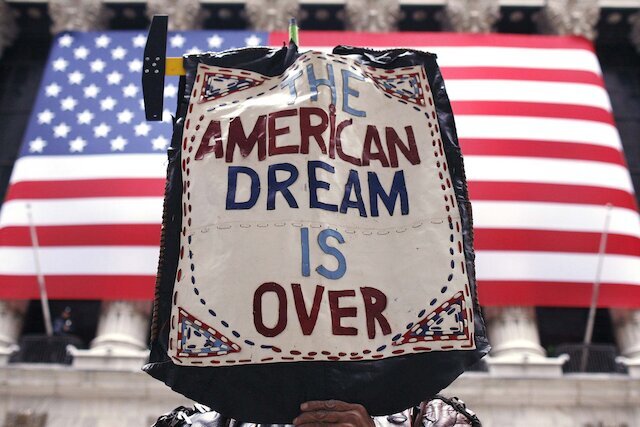
According to the International Desk of Webangah News Agency, a series of international developments in recent years has shaped a different perception of America’s role and capacity in managing global crises. The chaotic withdrawal of U.S. forces from Afghanistan in August 2021, marked by poignant scenes at Kabul Airport, stands as a significant symbol of this shifting understanding. This event underscored the distinction between a nation’s military strength and its ability to foster enduring political results.
Following this, prolonged conflicts, the substantial costs of foreign interventions, and growing doubts about the efficacy of direct U.S. military presence have led many global and regional actors to recalibrate their strategic calculations. Against this backdrop, recent developments in the region and the United States’ confrontation with Iran have reignited questions about whether Washington’s traditional power instruments can still realize its strategic objectives.
An examination of the path from Kabul to the Strait of Hormuz reveals how the disconnect between the capacity for pressure and the achievement of political goals has become a paramount challenge to America’s global standing.
From Power Projection to Chaotic Exit: Afghanistan as a Symbol of U.S. Power Limitations
Images from Kabul Airport, emerging approximately five years ago, became one of the most enduring snapshots of U.S. foreign policy in the past two decades. These scenes depicted thousands of individuals striving to flee Afghanistan as U.S. military aircraft evacuated the last personnel and citizens. These moments starkly contrasted with the image Washington had long projected of its ability to manage global events, becoming emblematic of the disparity between America’s stated aims and the actual outcomes of its military interventions.
Following the September 11, 2001 attacks, the United States entered Afghanistan with the stated goal of overthrowing the Taliban and the broader objective of combating terrorism and establishing a new political structure. This military presence, which spanned nearly two decades, became the longest foreign war in American history. Ultimately, the agreement reached between Donald Trump’s administration and the Taliban in 2020, and the subsequent decision by Joe Biden’s administration to proceed with troop withdrawal, charted the course for the end of this involvement.
The swift collapse of Kabul in August 2021, just weeks after the commencement of the U.S. withdrawal, demonstrated that Washington’s extended project to create a stable political order in Afghanistan had encountered severe obstacles. The Afghan issue transcended the conclusion of a military operation, raising broader questions about America’s capability to translate military superiority into political gains. Washington invested billions of dollars, trained Afghan security forces, and attempted to build a new political structure. However, the rapid disintegration of the Afghan army following the withdrawal of foreign forces indicated that achieving lasting political and social stability is not solely attainable through military presence and foreign aid.
From this perspective, Afghanistan emerged as a critical case study illustrating the limitations of U.S. power on the international stage. This experience highlighted that even the prolonged presence of a major power cannot unilaterally dictate the political trajectory of a country according to its initial objectives. A significant gap exists between achieving military victory on the ground and attaining strategic goals.
From Afghanistan to the Middle East: Gradual Erosion of Interventionist Power
The Afghan experience unfolded while the United States was already grappling with the repercussions of its protracted military interventions in the Middle East. The Iraq War, initiated in 2003 with the aim of overthrowing Saddam Hussein’s regime, although quickly leading to the end of his rule, subsequently resulted in political instability, the emergence of armed groups, and substantial human and financial costs.
This experience, alongside the war in Afghanistan, gradually fostered an understanding of America’s limited capacity to transform initial military victories into sustainable political achievements. In the years following these conflicts, Washington progressively distanced itself from extensive ground troop deployments, opting to maintain influence through instruments such as sanctions, coalition building, limited military operations, and political pressure.
This shift in approach indicated that the costs of prolonged wars had diminished America’s appetite for engaging in new large-scale conflicts, and the use of direct military force was no longer the primary foreign policy option it once was. This trend also influenced the calculations of other global and regional actors. U.S. rivals recognized a gap between Washington’s ability to deliver a military blow and its capacity to manage the political fallout of a crisis. Consequently, some nations sought to increase the costs of confrontation with the U.S. and expand their own maneuverability by enhancing their defensive capabilities, forming new alliances, and employing asymmetrical tools.
As a result, the cumulative experiences of the past two decades led to a recalibration of the global perception of American power. The critical issue was no longer Washington’s capacity to initiate a military operation, but rather the uncertainty surrounding its success in translating these actions into lasting political outcomes. This factor became a significant element in how powers assessed their approach to the United States.
The Strait of Hormuz: A New Test for U.S. Power Limitations
Continuing the trend initiated in Afghanistan, the recent confrontation between the United States and Iran has become another test case for assessing Washington’s ability to translate military power into political results. The U.S. initiated military actions with the aim of damaging Iran’s strategic capabilities, including its nuclear program, missile technology, and regional influence. However, time has shown that the occupants of the White House made a strategic miscalculation, and achieving maximal objectives proved far more difficult than delivering initial strikes.
One of Washington’s primary stated goals was to limit Iran’s nuclear capabilities. Yet, this action did not lead to the elimination of Iran’s indigenous capacity, and the nuclear issue remains a central point of contention. In the realm of missile technology, although some infrastructure was targeted by aggressive attacks, Iran’s missile capabilities, a key element of its deterrence, continue to be a factor in regional calculations, causing apprehension for the U.S. and its allies.
Another U.S. objective was to weaken Iran’s network of regional allies. However, ground developments have demonstrated that this issue is not easily resolved, and the political and security structures established in the region remain integral to the dynamics of the Middle East. In this context, Washington faced a challenge it had previously encountered in Afghanistan: the difference between delivering a military blow and effecting lasting change in the political landscape.
Meanwhile, the Strait of Hormuz has emerged as one of the most complex challenges confronting the United States. This region, vital for global energy security, has shown that even comprehensive military actions cannot guarantee complete control over a complex geopolitical environment. Increased tensions around this waterway have introduced a new variable into U.S. calculations, illustrating that any military action in the region can have consequences extending beyond its initial objectives.
In conclusion, a common pattern is observable from Kabul to the Strait of Hormuz. While the United States continues to pursue pressure tactics and military operations, the gap between hard power and the achievement of desired political goals has become more evident than ever before. This very gap has become a significant factor in altering global perceptions of America’s role and a clear indicator of the erosion of its former standing in managing international developments.


