Yemen Expands Maritime Blockade Against Saudi Arabia, Targeting Key Oil Facilities
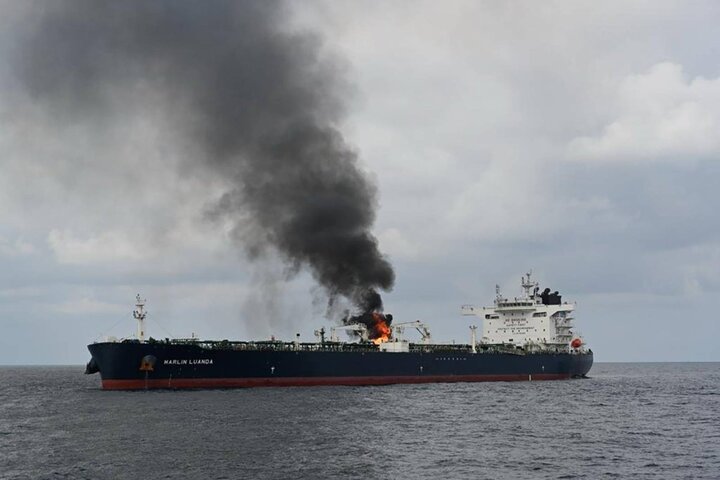
According to the International Desk of Webangah News Agency, Al-Akhbar newspaper in Lebanon, citing informed sources, reported that Yemeni forces have added dozens of new vital targets in Jizan and Najran to their military objectives. The Tuesday attack, involving several drones and conducted in response to airspace violations in Yemen’s Saada and Hajjah provinces, is part of a series of operations that began two weeks ago, targeting Saudi Aramco oil facilities from Jizan to Najran.
Yemeni sources indicated that Sanaa has placed Saudi Aramco, along with all its facilities, oil storage tanks, crude oil transfer lines, and export terminals, on its target list. They warned that “Saudi Arabia’s stubbornness and refusal to meet Yemen’s legitimate demands will result in it paying the price in the heart of its oil sector.”
These sources emphasized that Sanaa forces are continuing their efforts to isolate Saudi ports in the Red Sea. They asserted that until Riyadh lifts its maritime and aerial blockade on Yemen, Saudi vessels will be prevented from passing through the Red Sea and the Bab el-Mandeb Strait.
Meanwhile, Yemeni maritime sources in Hodeidah reported an increase in international traffic through Bab el-Mandeb to approximately 30 ships daily. They confirmed that the navy and coastal defense forces in Hodeidah have not allowed any Saudi oil or non-oil ships to pass through the strait in recent weeks, and that surveillance and tracking operations of Saudi ships and oil tankers in the Red Sea are ongoing.
In a separate development, a Yemeni source speaking to Al-Akhbar stated that the number of ships operating under non-Saudi flags in Bab el-Mandeb has recently increased. The source added that many international insurance companies are compelling ships to fly flags that reduce security risks in the southern Red Sea and the Bab el-Mandeb Strait.
The source cautioned that “all alternatives that the Kingdom of Saudi Arabia is employing to alleviate the pressure of Yemen’s maritime ban, whether by circumventing the Cape of Good Hope or heading north towards the Mediterranean Sea, will not be secure if the armed forces decide to transition to the second phase of the ‘blockade for blockade’ equation.”
The source explained that the blockade on Yemen has hindered 85 percent of the kingdom’s oil exports to Asia via the southern Red Sea and the Bab el-Mandeb Strait, which is the shortest route between Asia and Europe. These sources revealed that Sanaa has expanded the scope of its maritime blockade against Saudi Arabia from the southern Red Sea to its northern reaches, and that this blockade has extended beyond the Red Sea into the Arabian Sea.
Earlier, Sanaa forces announced they had conducted ten operations against Saudi oil tankers. While Riyadh is intentionally concealing the direct and indirect economic losses resulting from reduced traffic at its ports, a series of reports published by Reuters in recent days have exposed the significant confusion Saudi Aramco is facing with its Asian customers. These reports indicated that in August, the company was compelled to absorb increased shipping and insurance costs, amounting to approximately $10 million per oil cargo, in addition to offering discounts of $2 per barrel of Arabian Light crude oil to Asian buyers. Nevertheless, Aramco’s customers in Asia and Europe have begun seeking alternative sources for their oil needs, amidst growing doubts about the company’s ability to secure vessels, manage oil transportation, and ensure timely delivery of cargoes.