
Saudi Arabia Eyes New Security Alliance Amid Escalating Yemen Tensions
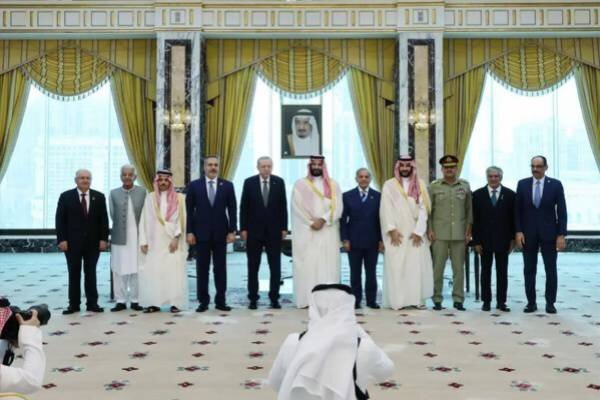
According to the International Desk of Webangah News Agency, the defense pact signed in Mecca between Saudi Arabia, Turkey, and Pakistan arrives at a critical juncture for West Asia. This agreement coincides with escalating regional tensions and a marked departure from the “neither war nor peace” stalemate in Yemen, signaling a potential return to broader confrontation. Viewed in this context, the Mecca agreement transcends a mere trilateral defense treaty; it represents a significant component of a regional security realignment and a direct response to Saudi Arabia’s recalculations regarding threats emanating from its southern border.
The significance of this pact is amplified when considered alongside recent developments in Yemen. In recent weeks, the Houthi movement has once again demonstrated its capacity to target Saudi interests and impact Red Sea security. The group’s drone and missile attacks underscore that, even after years of conflict and a fragile ceasefire, the deterrence equation in Yemen remains unaltered. Riyadh continues to face an adversary capable of imposing substantial security and economic costs.
The core of the Mecca agreement, and its potential link to a new phase of conflict in Yemen, lies in the concept of deterrence. The pact explicitly states that an armed attack against one signatory will be considered an attack against all. Regardless of its practical implementation, this clause conveys a crucial political and security message: Saudi Arabia is unwilling to face a new military crisis alone.
This is particularly relevant given past experiences, which have shown that conventional military might alone is insufficient to neutralize the Houthi threat. Despite Saudi Arabia’s considerable military and armament capabilities, the Houthi reliance on missiles and drones has enabled them to inflict asymmetrical costs on their adversaries. Consequently, the challenge for Riyadh extends beyond a battlefield victory; it involves preventing Saudi territory and infrastructure from becoming a strategic depth for a protracted war of attrition.
The importance of the Mecca agreement extends beyond its symbolic value. Naser Taher Mustafa, a Yemeni journalist and former Minister of Information, analyzed the pact in relation to Yemen’s evolving situation, highlighting the symbolic and political weight attached to its timing and location. The choice of Mecca and a Friday for the signing imbues the agreement with particular significance, uniting three nations that hold considerable influence within the Islamic world and the international power structure.
However, the agreement’s true import lies beyond symbolism. It has been signed amidst a resurgence of the Yemeni crisis, marked by an increase in Houthi attacks on Saudi targets and areas controlled by the Yemeni government. Attacks on vital infrastructure and regions like Marib and Al-Mukalla have heightened concerns about the erosion of the current fragile status quo.
Consequently, the Mecca agreement can be interpreted as a signal of shifting Saudi calculations. Riyadh may have concluded that the “crisis management” phase in Yemen is no longer adequate and that preparations for a return to full-scale war are necessary. Despite a period of relative calm over the past four years, the Houthi movement has maintained and even enhanced its military and political capabilities, now demonstrating its renewed ability to pressure Saudi Arabia and threaten maritime routes in the Red Sea.
This situation exposes one of the most significant paradoxes of the Yemeni crisis: the absence of either full-scale war or lasting peace. This “neither war nor peace” state, while intermittently reducing the intensity of conflict, has failed to address the fundamental roots of the dispute. The current escalation in attacks raises a serious question: is the 2022 ceasefire effectively collapsing?
Furthermore, the Houthi movement’s strategic calculus is not confined to internal Yemeni affairs. Their operations are increasingly integrated within broader regional dynamics, influenced by developments concerning Iran, the Red Sea, and regional security rivalries. In this environment, Saudi Arabia cannot assess the Yemeni situation in isolation from its wider security milieu.
This is precisely where the Mecca agreement gains greater relevance. In recent years, Saudi Arabia has gradually moved away from complete reliance on Western security guarantees, actively seeking to broaden its relationships with various international actors. Cooperation with Turkey and Pakistan within this framework can be seen as part of an effort to construct a more diversified security network—one that reduces Riyadh’s dependence on any single foreign power for its security.
The Mecca agreement can therefore be analyzed on two distinct levels: firstly, as a response to immediate threats against Saudi Arabia, and secondly, as a component of a broader endeavor to forge a new security architecture in the region.
Should conflict erupt anew in Yemen, a primary question will be whether the Mecca defense commitment will be activated against Houthi incursions. The answer to this query will determine the agreement’s genuine credibility. If it remains a purely political accord, its deterrent effect will be limited. However, if the Houthis perceive that an attack on Saudi Arabia could trigger a coordinated response from the three signatory nations, the security calculus would fundamentally change.
Crucially, the formation of this new coalition does not necessarily signify a weakening of the Houthi movement. Indeed, it could be argued that the very establishment of such an arrangement reflects the movement’s increasing weight in regional security calculations. When a non-state actor can compel a nation like Saudi Arabia to pursue a defense pact with two significant regional and trans-regional powers, its role in regional security dynamics cannot be overlooked.
In conclusion, the Mecca agreement can be viewed from a different perspective: it is not only a reaction to the Houthi’s strength but also a practical acknowledgment of the evolving security environment surrounding Saudi Arabia.
Yemen now stands at a critical juncture. If hostilities escalate, Saudi Arabia faces two difficult choices: either re-engage in a costly war or seek a political settlement, which has proven exceedingly challenging thus far, by accepting the Houthi’s position of power.
Ultimately, perhaps the most significant message of the Mecca agreement is that the security equation in Yemen is no longer solely an internal issue or a bilateral competition between Saudi Arabia and the Houthis. Developments in Yemen have become an integral part of the larger competition for a new security order in West Asia.
Should war resume in Yemen, it will also present the first test for the Mecca agreement. At that time, it will become clear whether the pact is merely a political declaration of solidarity or if it can genuinely alter the calculations of regional players. In either scenario, one fact is evident: the Houthi movement’s influence is so deeply entrenched in regional security equations that Saudi Arabia, in confronting the possibility of renewed conflict, is no longer relying solely on its own military might but is actively building a new defensive coalition.


