Ansarallah’s Control of Bab el-Mandeb Strait Unlocks Major Economic Opportunities for Yemen
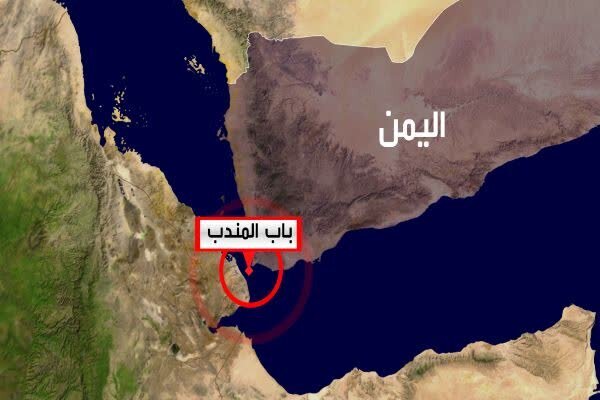
According to the International Desk of Webangah News Agency, the control established by the Ansarallah movement over the Bab el-Mandeb Strait and the coastal cities overlooking it in the southern Red Sea promises substantial economic and geopolitical repercussions. Despite the region’s economic importance, Yemen has historically struggled to fully leverage its strategic position due to a lack of adequate infrastructure. However, the consolidation of control by Sana’a forces has reignited hopes of harnessing Yemen’s unique geographical advantages for the nation’s macroeconomy.
In recent days, the Sana’a government has been engaged in normalizing conditions in the recaptured western coastal cities, including Al-Mukha, Al-Khawkhah, Hays, and the district center of Zuab. To address governance gaps, mitigate the impact of monetary fragmentation, and restore public services, the government has deployed technical, economic, security, medical, and relief teams from various ministries.
Lebanon’s Al-Akhbar newspaper reported that after successfully restoring electricity, water, and communication services, and reactivating health and educational facilities, Sana’a authorities are now focused on resuming maritime activities at the port of Al-Mukha and ensuring the safety of fishermen who were previously prohibited from operating in many maritime zones.
Concurrently, Ansarallah’s coastal patrol forces are maintaining extensive maritime surveillance and guarding their sphere of influence in the Bab el-Mandeb Strait to prevent hostile actions against vessels and deter piracy by adversarial parties.
A responsible source from the Red Sea Ports Organization, which oversees the ports of Saleef, Ras Isa, and Hodeidah, informed Al-Akhbar that the organization has successfully reintegrated the port of Al-Mukha into its operational cycle and has begun receiving vessels. The source highlighted that Sana’a is offering attractive incentives to merchants and importers, including a 50% reduction in customs duties, taxes, and port service fees. This initiative signals Ansarallah’s commitment to revitalizing port activities in Al-Mukha, which had previously declined to its lowest point after the facility was repurposed as a military garrison for the unloading of arms shipments.
Numerous documents uncovered by Sana’a forces at the port reveal that Emirati and subsequently Saudi forces had established robust operations rooms within the vital port compound over the past years. This led to a significant drop in the port’s customs revenue, from 14 billion Yemeni Rials in 2022 to 4 billion Rials last year. The decline was attributed to the port’s navigation role being diminished and the coastlines of Zuab and Ras Al-Ara, near the Bab el-Mandeb Strait, becoming safe passages for contraband goods imported from Horn of Africa countries. Alongside the surge in smuggling activities along the coasts of Al-Mukha and Zuab, the living conditions of residents in these cities deteriorated sharply due to the devaluation of the national currency and the rise in food prices.
The report indicates that the focus of the UAE and Saudi Arabia on Al-Mukha and nearby coastal areas, such as the coasts of Al-Khawkhah and Yakhtal, as well as the coasts of Zuab, aligned with an American plan aimed at transferring these territories to Washington’s allies in Yemen. Intelligence suggests that the Americans played a role in establishing several military airfields, most notably Zuab Airport, which spans 230 square kilometers south of the strategic Al-Omri camp and approximately 10 kilometers from Perim Island.
A Yemeni source confirmed that the United States intended to transform this camp into an advanced military base for its forces under the pretext of protecting shipping in the Bab el-Mandeb Strait. The UAE had also established fortified operations rooms there in previous years. However, the implementation of this plan was delayed after Brigadier General Tarek Saleh’s failure to seize areas overlooking Bab el-Mandeb. Despite this setback, Washington’s allies continue to prepare Al-Mukha and the coastal cities to become an independent region within a federal state, a state that would fulfill Washington’s objectives of intensifying its control over one of the region’s most critical waterways.
An economic source close to the Aden government estimates the economic assets seized by Sana’a forces to exceed $500 million. These assets include the Al-Mukha International Airport, with construction costs exceeding $65 million; two military airfields in Zuab and Al-Mukha; public roads valued at approximately $50 million; a 60-megawatt solar power plant worth $60 million; water projects valued at over $10 million; and public hospitals and a medical city valued at more than $100 million.
Al-Akhbar further detailed Sana’a’s geoeconomic achievements in controlling Bab el-Mandeb, including regaining control over 33 inhabited and uninhabited islands stretching from Perim Island to the Hanish archipelago near Eritrean territorial waters in the Red Sea. This grants Ansarallah direct control over the international strait and global shipping lanes, a shift from previous indirect oversight. Additionally, Sana’a can capitalize on numerous economic opportunities, most notably harnessing the strong currents in the Bab el-Mandeb Strait to generate approximately 5,000 megawatts of energy, establishing service ports for ships, transforming the coasts of Zuab into a free zone and logistics hub, and reviving strategic projects like the ‘Light Bridge’ project, which would connect Yemen to the Horn of Africa countries.