
Iranian Army Spokesperson Highlights Strategic Operations and Regional Security
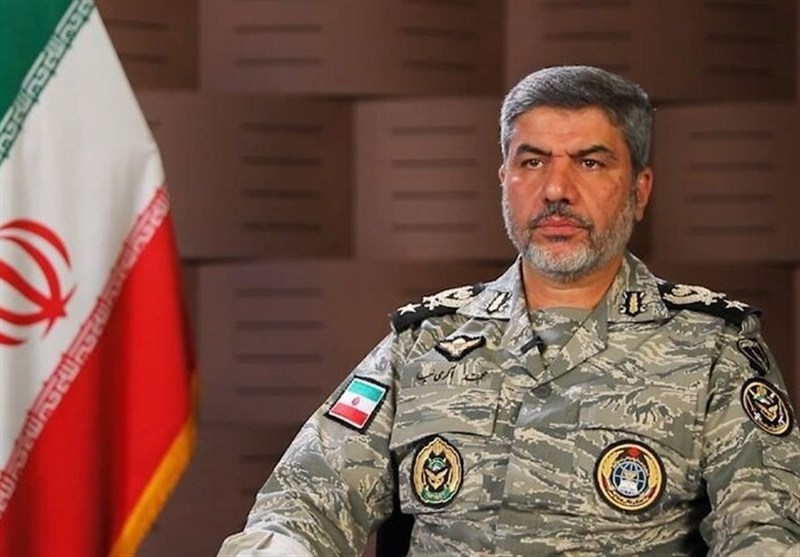
According to the International Desk of Webangah News Agency, Amir Mohammad Akrami-nia, spokesperson for the Army of the Islamic Republic of Iran, marked the 46th anniversary of the Sacred Defense by honoring martyrs and veterans. He noted that the “Soldier’s Day” was observed with various ceremonies within army units. Akrami-nia also announced the closing ceremony of the Iranian Soldier Festival at Imam Ali Officer University, Army Ground Forces, attended by the Commander-in-Chief of the Army, Major General Hatami, to commemorate soldiers’ sacrifices during the Sacred Defense.
The Iranian Army trained and deployed over 2.5 million soldiers during the Sacred Defense, with approximately 40,000 of them making the ultimate sacrifice for the revolution and the nation. Akrami-nia elaborated on the Army’s performance during the war, starting with the Ground Forces, which were instrumental in halting the enemy’s advance in the first year. He described Saddam Hussein’s formidable war machine, comprising 12 equipped divisions, 29 independent brigades, commando battalions, and substantial armor, which was ultimately contained, allowing Iran to plan and execute its own operations in the second year of the war.
The Ground Forces conducted over 70 offensive and more than 230 defensive operations throughout the war, repelling numerous enemy counterattacks. The Air Defense Force, then part of the Air Force, successfully downed over 680 enemy aircraft and prevented 25,000 enemy air sorties by creating an unsafe airspace for their planes. In the initial hours of the war on September 22, 1980, the Iraqi Air Force attacked Iranian bases and airports. Within two and a half hours, at 4:30 PM, the Iranian Air Force responded with the “Revenge” operation from Bushehr Airbase. Twenty-four hours later, the renowned “Kaman 99” operation, involving 140 fighter jets and approximately 50 support aircraft, inflicted a significant blow to the enemy’s combat structure. The Air Force also provided crucial air support for joint operations with the Islamic Revolutionary Guard Corps and other army operations.
Akrami-nia highlighted the 1982 H3 operation as a particularly significant achievement of the Air Force. Faced with the enemy positioning aircraft near the Jordanian border to evade Iranian strikes, a complex operation was devised, involving four refueling instances—two domestically and two internationally. This operation successfully targeted numerous enemy aircraft on the ground within their hangars. The H3 operation is now studied in military academies worldwide due to its intricate planning and execution.
The Navy also played a heroic role during the Sacred Defense. The resistance of naval commandos during the initial 34 days and their decisive role in Khuzestan were critical. Within 67 days of the war’s commencement, the Navy effectively neutralized the Iraqi Navy, an action finalized on December 28, 1980. The Army Aviation (HAA) targeted over a thousand enemy armored vehicles and tanks, in addition to assisting in casualty evacuation and providing medical aid. Collectively, the Army of the Islamic Republic of Iran played a highly effective role with all its forces.
Discussing the origins of the imposed war, Akrami-nia attributed it to Saddam Hussein’s miscalculation regarding Iran’s political and defense infrastructure, compounded by the withdrawal of 45,000 American advisors and the Iranian Army’s engagement with separatist groups. Saddam believed this situation would pave the way for his ambitions of Arab leadership, leading to a widespread invasion. Akrami-nia drew a parallel between Saddam’s miscalculation and the current U.S. President’s perceived misjudgment, suggesting a belief that strikes against Hamas and Hezbollah, the fall of the Assad regime, and internal Iranian developments created a favorable environment for aggression.
He reiterated that Iran responded swiftly to the initial aggression within two and a half hours, with its air force retaliating. Mobilization efforts led to the containment of the enemy’s war machine and the successful execution of victorious operations. Similarly, following the March 1st aggression, Iran responded within two hours, and by March 3rd, its air force conducted operations against enemy bases in Kuwait, Qatar, and against counter-revolutionary and separatist elements in Iraqi Kurdistan, with missiles and drones delivering a decisive response.
Akrami-nia stated that Saddam’s primary objectives were to overthrow the Islamic Republic of Iran and partition the country, evidenced by his pre-war maps with Arabic names for Iranian cities. In the current conflict, he noted that President Trump’s declared aims included dismantling Iran’s missile and nuclear capabilities and destroying the resistance front, with underlying objectives of establishing a greater Israel and dividing regional nations. He asserted that none of these objectives were achieved by either Saddam or Trump, highlighting a commonality in these aggressions.
The spokesperson emphasized the morale boost derived from public support, citing over 200 nights of public presence in streets demonstrating solidarity with the Supreme Leader. This unwavering national backing strengthens the resolve and sense of responsibility within the armed forces. Akrami-nia acknowledged the precarious situation of the U.S. in the region, noting that increased efforts to alter the status quo indicate an unfavorable position. He asserted that Iran is more prepared than ever, both psychologically and in terms of equipment, to counter any aggression. Any hostile action, he warned, would lead to widespread conflict, greater suffering for regional countries, and intensified Iranian animosity towards the U.S. and its current president.
Reflecting on the history of Iran-U.S. relations, Akrami-nia cited events such as the 1953 coup, support for the Shah, backing Saddam, the downing of a passenger plane, and recent conflicts, all contributing to a deeply negative perception of the U.S. among Iranians. He predicted that any U.S. aggression would be met with even greater public support for the armed forces, who would then retaliate more decisively and comprehensively. Akrami-nia concluded that the expulsion of the U.S. from the region would foster security, enabling the establishment of a regional security order based on the participation of regional countries. He stressed that the U.S. is not benevolent towards Muslim nations, prioritizing its own security and that of the Zionist regime, and lacks the capacity to truly defend the security of regional states.


