
Palestine Returns to Global Center Stage Three Years After Operation Al-Aqsa Storm
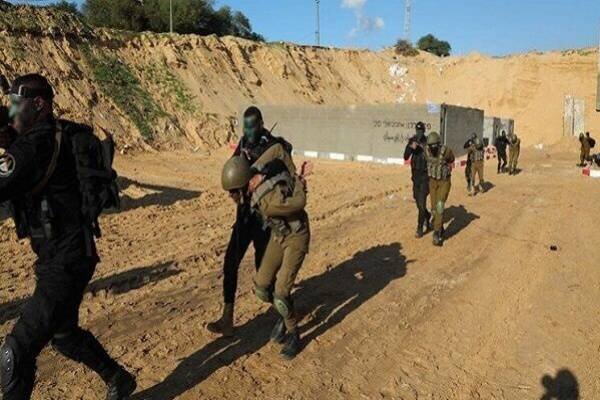
According to the International Desk of Webangah News Agency, three years after the start of Operation Al-Aqsa Storm on October 7, 2023, the developments stemming from the Palestinian issue and the transformations in the regional and international outlook since this significant event have once again returned to the center of attention. This conflict has redrawn the face of Palestine, the region, and the world, initiating major shifts in the trajectory of the Palestinian cause and the nature of related relationships and balances.
Political observers believe that October 7 brought the Palestinian issue back to the heart of the international arena and reconnected regional stability with the fate of Palestine. This event unfolded amidst the advancement of normalization plans with the Zionist entity, not only halting these plans but also identifying Tel Aviv as the common enemy of the Islamic and Arab Ummah. It re-established the Palestinian issue as a political and legal matter concerning occupation, self-determination, and the national rights of Palestinians.
Mustafa Mohammad Shaheen, a political writer and analyst, stated in an interview with the Shihab News Agency that October 7, after years of Western-Zionist efforts to marginalize the Palestinian issue in political and media priorities and new regional arrangements, has returned it to the core of the international stage. He added that the events following this operation served as a reminder that ignoring the roots of the conflict in Palestine does not mean its eradication, and the Palestinian issue is not a marginal file that can be bypassed through regional agreements.
Shaheen elaborated that October 7 redefined Palestine not merely as a humanitarian crisis in the Gaza Strip but as a political and legal issue tied to occupation, self-determination, and the national rights of the Palestinian people. He noted that international institutions are once again discussing the situation in Palestine with greater intensity, and concepts such as ‘occupation,’ ‘occupied territories,’ ‘national rights,’ and ‘political solution’ have returned to the forefront of international diplomatic discourse.
Shaheen pointed out that normalization agreements with the Zionist entity, starting in 2020, paved the way for relations between the Zionist entity and several Arab countries, during which the centrality of the Palestinian file in regional calculations had relatively diminished. Shaheen stated that what is termed the ‘failure of normalization plans’ should not be understood as the end of all existing normalization relationships, but rather as a faltering of this political idea. The war in Gaza has re-linked regional stability with the fate of Palestine, demonstrating that bypassing the issue does not mean bypassing the factors that create the conflict.
He further added that the language of international diplomacy has also evolved. Previously, the Palestinian issue was often confined to lengthy bilateral negotiations. Now, the United Nations reiterates that a lasting solution is linked to international law, the political rights of the Palestinian people, the end of occupation, and achieving a political agreement based on UN resolutions. The article notes that some intended to transform the Palestinian cause from a political issue into a security one. However, the genocide in Gaza has led to the Gaza issue being prioritized politically by countries once again. Consequently, the question posed internationally is not just ‘how to stop the war,’ but ‘how to reform the political space that generates this conflict.’
He continued that political realities are not solely constructed through agreements; political legitimacy requires a social, historical, and legal base. Otherwise, these arrangements will falter at the first major test. He indicated that attempts to build a ‘new Middle East’ without addressing the Palestinian issue have been met with its return to the center of the region’s public and political consciousness.
He also noted that the scale of destruction and human casualties in Gaza has brought the issue into global discussions from the perspective of human rights, civilian protection, humanitarian aid, and the right to self-determination. This has compelled international institutions to treat the war as a crisis whose repercussions extend beyond the borders of the Gaza Strip, affecting regional security and stability.
In conclusion, Shaheen stated that October 7 changed the ‘political environment’ governing normalization, returning Palestine to the center of regional and international calculations. It once again proved that true stability is not achieved by ignoring the Palestinian issue but by addressing its political, legal, and historical roots.
Taha Abdulaziz, a writer and political researcher, said that one of the new factors in the post-‘Operation Al-Aqsa Storm’ reality is the halt in the Zionist entity’s integration into the region and its subsequent isolation. Tel Aviv is once again recognized as the common enemy of the Arab and Islamic world, a development that could be one of the most significant factors in shaping the post-war political outlook. Hakan Fidan, the Turkish Foreign Minister, stated in this regard that “the Islamic world has finally awakened from its century-long deep slumber,” at a time when “external parties are trying to influence the region’s problems.”
Taha Abdulaziz noted that the unity of major powers in the region and the Islamic world, and the overlap of their objectives against the expansion of Zionist aggressions, was merely a futile dream before ‘Operation Al-Aqsa Storm.’ At that time, the region was preparing for a new form of ‘normalization’ where “Israel” was recognized as a reliable military ally for regional forces against one of the components of the Islamic Ummah, namely “Iran,” and the Palestinian issue was on the verge of being forgotten and erased. He indicated that a major revolutionary development on the scale of October 7 shattered the paradigms of the previous political system and the ‘political taboos’ that governed political behavior in the region and the world concerning the Palestinian issue. He added that this operation and the subsequent genocide have created a new reality and different influencing factors, some of which have taken shape and others are still in the process of formation and maturation. He emphasized in closing that the effects of major historical events extend for decades, and the conditions that follow will be unlike anything seen before.


