Paraguay President Ousted and Placed Under House Arrest Amid Severe Banking Crisis
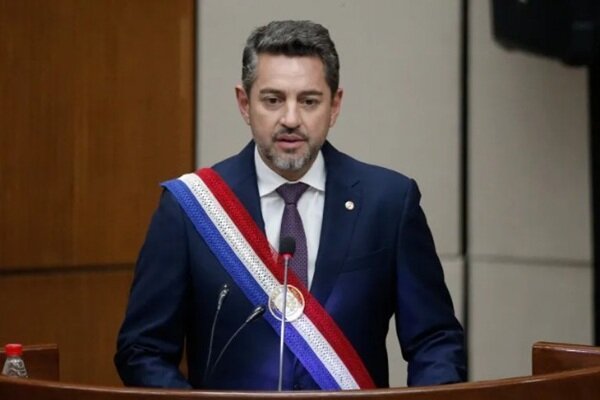
According to the International Desk of Webangah News Agency, Paraguay is currently grappling with one of the most severe financial and political crises in recent years following the collapse of the ueno digital bank and the outbreak of widespread public demonstrations. This turmoil culminated on Friday, November 6, 2026, in the removal of President Santiago Peña and the swearing-in of his former vice president, Pedro Alliana, as the new president.
The Paraguayan Senate voted overwhelmingly on Friday, securing 44 affirmative votes out of the 45 representatives present, to strip Peña of the presidency. The Senate president accused the executive leader of dereliction of his legal duties. Although Peña had submitted his resignation prior to the commencement of the vote, lawmakers chose to proceed with the impeachment process instead of accepting it.
Following these developments, Pedro Alliana was sworn in as the new president to govern the country until the conclusion of the current presidential term in August 2028. He has pledged that all depositors affected by the ueno bank crisis will recover their capital and receive compensation.
Immediately after the removal of the former president, the Paraguayan Attorney General’s Office issued a house arrest order against him. Judiciary officials emphasized that the former president must appear before competent authorities to answer prosecutors’ questions regarding the ueno bank financial case.
Judicial investigations remain ongoing, focusing on allegations such as breach of public trust, misuse of financial resources, and undue influence regarding the oversight of this banking institution and the allocation of public budgets to it, although Peña has denied all these accusations.
In addition, an arrest warrant has been issued for Carlos Carvalho, the former president of the Central Bank of Paraguay, while eight senior executives of ueno bank remain in custody. According to the Attorney General’s Office, a total of 27 managers and individuals associated with this financial institution are under judicial prosecution.
The Central Bank of Paraguay intervened and initiated restructuring measures for ueno bank on November 3, 2026, after discovering fundamental flaws in the financial foundation and capital status of the institution.
The financial institution served approximately 2.9 million customers, and its services covered a wide spectrum of Paraguayan citizens. The suspension of the bank’s operations halted customer access to personal accounts, cash withdrawals, and transactions, raising profound concerns regarding the fate of savings, employee wages, and retiree pensions.
The bank also held substantial amounts of government resources and public institution budgets, with figures indicating roughly 800 million dollars in public sector deposits residing within the institution.
The Central Bank has announced that the process of refunding a portion of deposits has begun, with sums of up to approximately 1,600 dollars being disbursed to an initial group of eligible customers in the first phase. Officials from the Deposit Guarantee Fund have also announced the gradual disclosure of settlement procedures for other depositors.
Over the past few days, the capital city of Asunción and other cities across Paraguay have witnessed massive public demonstrations protesting the collapse of ueno bank and the freezing of accounts.
Participants in these gatherings demanded the recovery of their deposits, accountability from relevant managers, and the prosecution of those responsible for this financial crisis. Police forces deployed water cannons and tear gas to disperse certain gatherings.
During one of these rallies on Friday, November 6, Payo Cubas, a former senator and 2023 presidential candidate, attempted to join the protesters but met with a negative reaction from those present. A group of youths chanted slogans, lifted him by his arms and legs, and escorted him out of the protest site, while some demonstrators threw eggs at him.
Cubas had secured nearly 22.9 percent of the vote in Paraguay’s 2023 presidential race. Local media reported that preventing his attendance stemmed from dissatisfaction with his past political positions, connections, and political endorsements.
The unfolding crisis also resulted in the resignations of the Minister of the Interior and the President of the Central Bank of Paraguay. Investigations into the political and financial ties of the bank, including Peña’s past relations with the Vasquez economic group as the parent company of ueno, are still ongoing.
Peña held shares in the parent company of the group until 2025, and opponents accuse him of interfering in bank oversight and creating a conflict of interest. Conversely, he has stated that he divested his shares and rejects the attributed allegations.
Despite guarantees from new authorities to compensate depositors for financial losses, the primary concern of Paraguay’s citizens and economic actors remains focused on the full repayment of funds and the adverse economic fallout resulting from the bank’s suspension of operations.